Google Bets Gemini 4 on Founder-Led AI
Google is putting frontier compute first—here’s why Gemini 4 could reshape cloud and coding competition.
30-Second TL;DR
What Changed
Google CEO Sundar Pichai said frontier AGI compute would be protected as a baseline before other business allocations.
Why It Matters
If Google successfully adopts a founder-led operating model, it could accelerate decisions across model training, infrastructure, and product deployment. For AI builders, the shift would intensify competition around coding intelligence, multimodal foundation models, cloud integration, and vertically optimized hardware.
What To Do Next
Benchmark your coding agent on latency, tool use, and real repository tasks against the latest Gemini models before committing to a single model provider.
Key Points
- •Google CEO Sundar Pichai said frontier AGI compute would be protected as a baseline before other business allocations.
- •Gemini 4 is described as Google’s most ambitious pretraining project, requiring a larger foundation model and substantial compute.
- •Sergey Brin is reportedly working near the Gemini team, reviewing training progress, writing code, and pushing for faster execution.
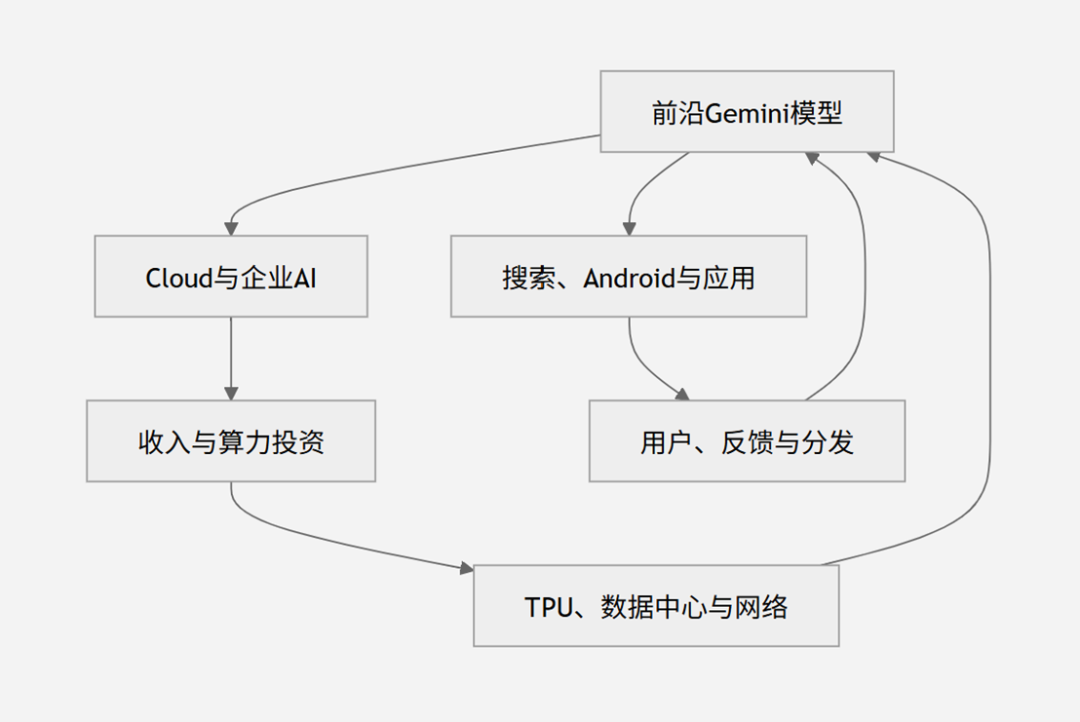
- •The strategy treats frontier models as essential to differentiating Google Cloud, Search, TPU co-design, Android, Workspace, and YouTube.
Deep Insight
AI-generated analysis for this event — not the original article.
Enhanced Key Takeaways
- •Google's shift toward 'Founder-Led AI' marks a departure from the previous 'AI-first' strategy, which critics argued had become too decentralized and bogged down by internal committee reviews.
- •The Gemini 4 project is reportedly leveraging a new generation of TPU v6 (Trillium) clusters, which Google claims offer significantly higher compute density and energy efficiency compared to previous iterations.
- •Internal reports suggest that Sergey Brin's involvement has specifically targeted the removal of 'launch friction,' allowing researchers to bypass traditional product review cycles to accelerate model deployment.
- •The integration strategy aims to solve the 'latency-cost' bottleneck in Google Cloud by co-optimizing Gemini 4's inference architecture directly with the underlying TPU hardware stack.
- •Google has reallocated significant engineering headcount from non-core experimental projects to the Gemini 4 pretraining effort, signaling a consolidation of resources reminiscent of the company's early 'all-hands' approach.
Competitor Analysis
- Google Gemini 4
- TPU/Cloud Integration
- OpenAI GPT-Next
- Reasoning/Agentic Flow
- Anthropic Claude 4
- Safety/Context Window
- Google Gemini 4
- Vertical (TPU Co-design)
- OpenAI GPT-Next
- Hybrid (Azure/In-house)
- Anthropic Claude 4
- Cloud-Agnostic
- Google Gemini 4
- Deep Android/Workspace
- OpenAI GPT-Next
- API/ChatGPT/Enterprise
- Anthropic Claude 4
- API/Console/Enterprise
| Feature | Google Gemini 4 | OpenAI GPT-Next | Anthropic Claude 4 |
|---|---|---|---|
| Primary Advantage | TPU/Cloud Integration | Reasoning/Agentic Flow | Safety/Context Window |
| Compute Strategy | Vertical (TPU Co-design) | Hybrid (Azure/In-house) | Cloud-Agnostic |
| Deployment | Deep Android/Workspace | API/ChatGPT/Enterprise | API/Console/Enterprise |
Technical Deep Dive
- Gemini 4 is rumored to utilize a Mixture-of-Experts (MoE) architecture with a significantly larger parameter count than Gemini 1.5 Pro, optimized for multi-modal reasoning.
- The model incorporates 'Chain-of-Thought' distillation techniques directly into the pretraining phase to improve logical consistency.
- Implementation relies on the JAX-based framework for massive-scale distributed training across tens of thousands of TPU v6 chips.
- The architecture features an enhanced long-context window mechanism that reduces the quadratic complexity of attention layers, allowing for more efficient processing of massive datasets.
Future ImplicationsAI analysis grounded in cited sources
Timeline
- 2023-12Google announces Gemini 1.0, marking the start of the unified model era.
- 2024-02Gemini 1.5 Pro is introduced with a breakthrough 1-million token context window.
- 2024-05Google I/O highlights the integration of Gemini across the entire Android and Workspace ecosystem.
- 2025-03Sergey Brin begins taking a more active, hands-on role in Google's AI research division.
- 2026-05Google announces the general availability of TPU v6 (Trillium) chips.
Weekly AI Recap
Read this week's curated digest of top AI events →
AI-curated news aggregator. All content rights belong to original publishers.
Original source: 虎嗅 ↗
This is a summary, not the original. Read the source, or get the weekly briefing.
The weekly digest
One email a week. Unsubscribe anytime.