Google and UN Open Global Data Commons
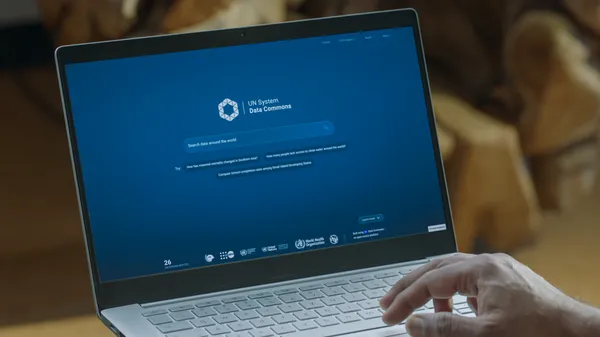
A new open global data layer could improve research, dashboards, and data-grounded AI systems.
30-Second TL;DR
What Changed
The platform combines global statistics from the UN system
Why It Matters
A more searchable global data layer could support research, policy analysis, and AI applications that depend on reliable socioeconomic indicators. Developers should still verify provenance, definitions, and update schedules before using the data in production.
What To Do Next
Inspect the UN System Data Commons API and map its indicator definitions to the metrics used in your data or RAG pipeline.
Key Points
- •The platform combines global statistics from the UN system
- •Users can search and explore international data more easily
- •The service is presented as an open data resource
Deep Insight
Background and context from public sources — not the original article. 13 sources cited.
Enhanced Key Takeaways
- •The initiative was developed in partnership with the United Nations Foundation, UN DESA, and UNICC, supported by engineering resources and philanthropic grant funding from Google.org.
- •The platform is engineered with Model Context Protocol (MCP) support and open REST/Python APIs, allowing external AI agents to retrieve verified numbers with direct data provenance to prevent hallucinations.
- •At launch, the platform integrates data across nearly 20 of 26 committed UN entities—including WHO, ILO, and UNICEF—with a target milestone to cover 80% of all UN statistical datasets by 2027.
- •The UN System Data Commons officially replaces the legacy UNData portal, mapping disparate global indicators into a unified, open-source Knowledge Graph built on Schema.org standards.
- •The push for standardized semantic grounding was catalyzed by internal UN findings, such as tests by UNICEF showing commercial LLMs regularly output conflicting or inaccurate development statistics.
Competitor Analysis
- Google & UN System Data Commons
- Semantic Knowledge Graph (RDF-style, Schema.org normalized)
- AWS Open Data Sponsorship Program
- Static object storage buckets (S3)
- Microsoft Planetary Computer
- Spatio-temporal asset catalog (STAC) on Azure Blob Storage
- Google & UN System Data Commons
- Socio-economic, health, labor, and demographic global statistics across UN agencies
- AWS Open Data Sponsorship Program
- Broad multi-disciplinary scientific, geospatial, and machine learning datasets
- Microsoft Planetary Computer
- Focused primarily on Earth observation, environmental, and climate data
- Google & UN System Data Commons
- Native Model Context Protocol (MCP) integration and Python/REST APIs
- AWS Open Data Sponsorship Program
- S3 API integration requiring custom ETL / retrieval pipelines
- Microsoft Planetary Computer
- REST APIs via STAC standard and Python SDKs
- Google & UN System Data Commons
- Completely open and free public access
- AWS Open Data Sponsorship Program
- Free data access, standard AWS compute charges apply for processing
- Microsoft Planetary Computer
- Free access to data catalog; compute incurs Azure infrastructure fees
- Google & UN System Data Commons
- Automated metadata and geographic/time-series harmonization across entities
- AWS Open Data Sponsorship Program
- None; data maintained in native contributor formats
- Microsoft Planetary Computer
- Standardized metadata for geospatial/temporal assets only
| Feature / Attribute | Google & UN System Data Commons | AWS Open Data Sponsorship Program | Microsoft Planetary Computer |
|---|---|---|---|
| Core Architecture | Semantic Knowledge Graph (RDF-style, Schema.org normalized) | Static object storage buckets (S3) | Spatio-temporal asset catalog (STAC) on Azure Blob Storage |
| Data Scope | Socio-economic, health, labor, and demographic global statistics across UN agencies | Broad multi-disciplinary scientific, geospatial, and machine learning datasets | Focused primarily on Earth observation, environmental, and climate data |
| AI Agent Interoperability | Native Model Context Protocol (MCP) integration and Python/REST APIs | S3 API integration requiring custom ETL / retrieval pipelines | REST APIs via STAC standard and Python SDKs |
| Pricing Model | Completely open and free public access | Free data access, standard AWS compute charges apply for processing | Free access to data catalog; compute incurs Azure infrastructure fees |
| Data Normalization | Automated metadata and geographic/time-series harmonization across entities | None; data maintained in native contributor formats | Standardized metadata for geospatial/temporal assets only |
Technical Deep Dive
- Underlying Graph Architecture: Built on Google's open-source Data Commons infrastructure, mapping statistical indicators, time series, and geospatial entities into an RDF-style Knowledge Graph using standardized Schema.org extensions.
- Semantic Normalization: Automatically reconciles diverse data schemas, metadata definitions, and administrative boundary codes across disparate UN agencies without requiring manual spreadsheet harmonization.
- Agentic Interoperability: Implements the Model Context Protocol (MCP) alongside public REST and Python APIs, enabling autonomous LLM agents to programmatically query data points, inspect provenance, and fetch citation-backed statistics.
- LLM Grounding Mechanism: Designed to act as an authoritative retrieval and verification layer, providing structured numerical context to external foundation models to eliminate statistical hallucinations in policy analysis.
Future ImplicationsAI analysis grounded in cited sources
Timeline
- 2023-09Google and UN Statistics Division launch UN Data Commons for the SDGs
- 2024-09Partnership expands under UN Secretary-General's Data Strategy to replace legacy UNData portal
- 2026-09Google and the UN officially launch the UN System Data Commons
Sources (13)
Factual claims are grounded in the sources below. Forward-looking analysis is AI-generated interpretation.
Weekly AI Recap
Read this week's curated digest of top AI events →
AI-curated news aggregator. All content rights belong to original publishers.
Original source: Google AI Blog ↗
This is a summary, not the original. Read the source, or get the weekly briefing.
The weekly digest
One email a week. Unsubscribe anytime.