Google AI Agents Query Stores, Track Hotel Prices
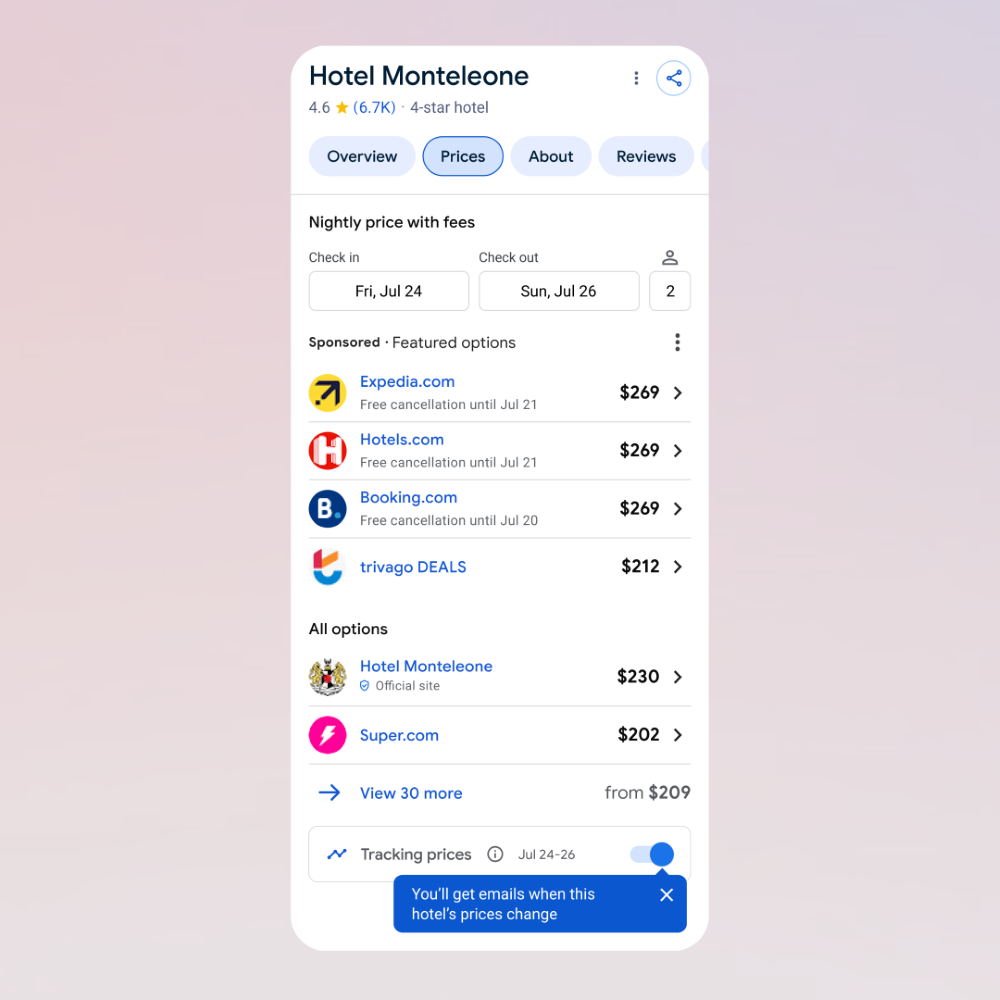
💡Google's agent AI now calls stores—key for building real-world AI apps
⚡ 30-Second TL;DR
What Changed
Agentic AI contacts local stores for real-time inventory checks
Why It Matters
Advances agentic AI for practical tasks, boosting Google Search utility in e-commerce and travel. Signals growing real-world automation via AI assistants.
What To Do Next
Test Google AI Mode's agentic inventory query in Search console for app integrations
Key Points
- •Agentic AI contacts local stores for real-time inventory checks
- •Price tracking for individual hotels directly in search
- •New features in Google AI Mode for shopping and travel
- •Launch ahead of summer travel peak season
🧠 Deep Insight
AI-generated analysis for this event — not the original article.
🔑 Enhanced Key Takeaways
- •Google is leveraging its 'Project Jarvis' framework to enable these agentic capabilities, allowing the AI to navigate browser interfaces and interact with third-party website elements autonomously.
- •The inventory check feature utilizes Google's updated 'Merchant Center' API integration, which now requires retailers to provide real-time stock status updates to remain eligible for AI-driven shopping results.
- •Hotel price tracking is powered by a new predictive model that analyzes historical booking data and seasonal demand fluctuations to provide users with 'best time to book' recommendations alongside current price alerts.
📊 Competitor Analysis▸ Show
| Feature | Google AI Mode | OpenAI (SearchGPT) | Microsoft Copilot |
|---|---|---|---|
| Inventory Checks | Real-time via Merchant API | Limited/Web-based | Limited/Web-based |
| Hotel Price Tracking | Predictive/Historical | Real-time search | Real-time search |
| Agentic Autonomy | High (Browser-based) | Medium (API-based) | Medium (Plugin-based) |
🛠️ Technical Deep Dive
- •Utilizes a multi-modal agent architecture capable of executing DOM-level interactions to bypass static API limitations on retail websites.
- •Employs a specialized 'Action-Transformer' model trained on human-computer interaction datasets to navigate complex checkout and inventory pages.
- •Integrates with Google's 'Knowledge Graph' to map real-time inventory data against user search intent, reducing latency in agentic response times.
- •Uses a private, sandboxed browser environment for each agent session to ensure user privacy and prevent cross-site data leakage during inventory queries.
🔮 Future ImplicationsAI analysis grounded in cited sources
⏳ Timeline
Weekly AI Recap
Read this week's curated digest of top AI events →
👉Related Updates
AI-curated news aggregator. All content rights belong to original publishers.
Original source: cnBeta (Full RSS) ↗
This is a summary, not the original. Read the source, or get the weekly briefing.
The weekly digest
One email a week. Unsubscribe anytime.