Google AI Blocks Record 8.3B Bad Ads
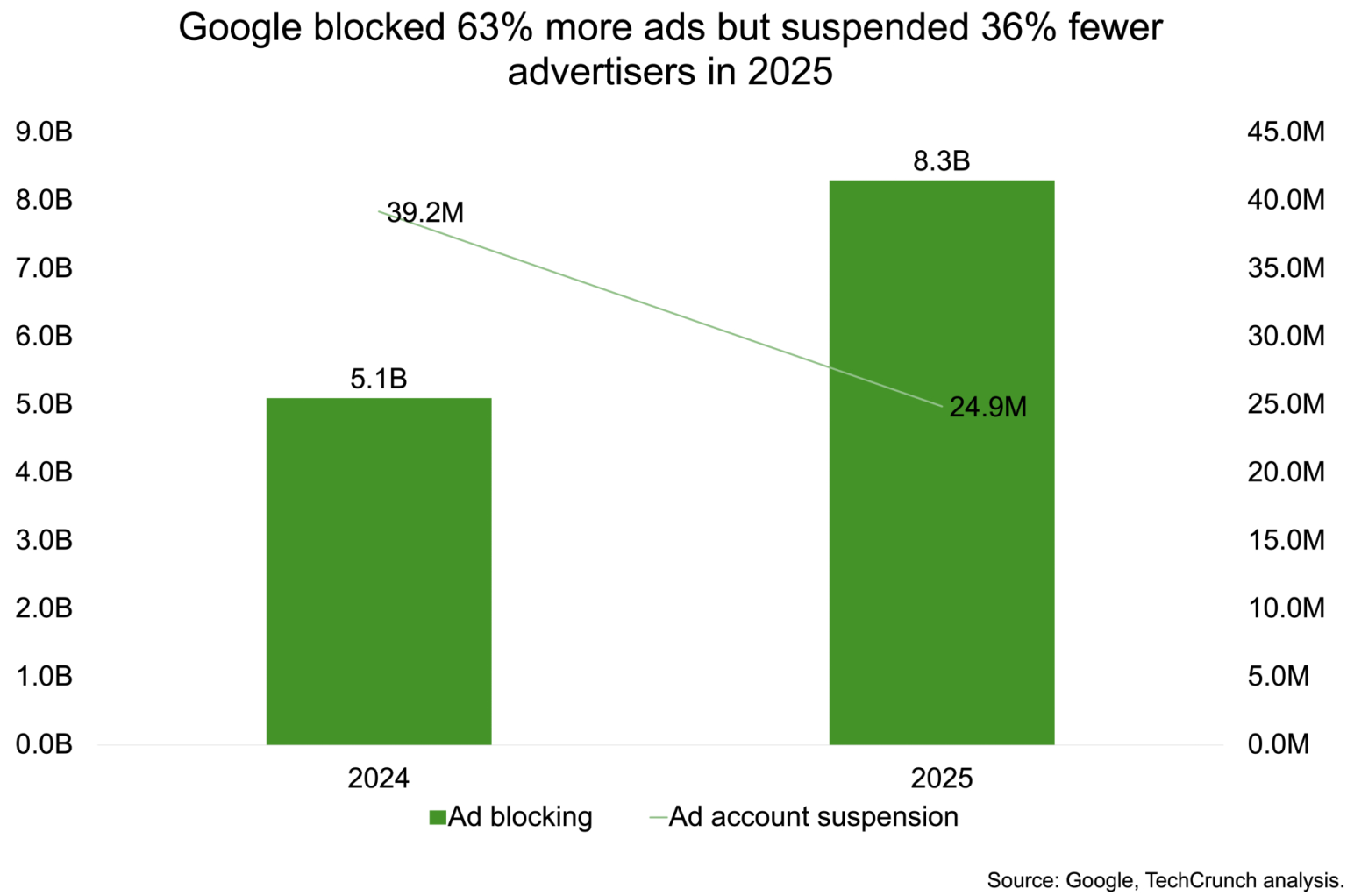
💡Google AI scales to 8.3B ad blocks—moderation lessons for AI builders.
⚡ 30-Second TL;DR
What Changed
Intercepted 8.3 billion bad ads in 2024, a record high.
Why It Matters
Highlights AI's role in efficient moderation at scale, but signals potential policy shifts toward warnings over bans, impacting ad ecosystem trust.
What To Do Next
Review Google's 2025 Ads Safety Report for AI moderation scaling techniques.
Key Points
- •Intercepted 8.3 billion bad ads in 2024, a record high.
- •63% increase from prior year's 5.1 billion ads blocked.
- •AI enabled massive scale-up in ad detections.
- •Fewer advertiser accounts suspended despite higher blocks.
🧠 Deep Insight
AI-generated analysis for this event — not the original article.
🔑 Enhanced Key Takeaways
- •The shift toward blocking ads at the account level rather than individual ad level is driven by the rise of 'bad actor' networks that use automated systems to rapidly create new accounts.
- •Google has integrated generative AI models to analyze the context of landing pages and ad creative, allowing for the detection of sophisticated scams that previously bypassed traditional keyword-based filters.
- •The reduction in account suspensions is attributed to a new 'warning-first' policy for minor policy violations, intended to reduce false positives and support legitimate advertisers who make unintentional errors.
📊 Competitor Analysis▸ Show
| Feature | Google Ads Safety | Meta Ad Transparency | TikTok Ad Safety |
|---|---|---|---|
| Primary Detection | AI-driven content/context analysis | AI + User reporting | AI + Human moderation |
| Scale | Industry-leading (8.3B+) | High (billions) | Moderate (growing) |
| Transparency | Annual Ad Safety Report | Ad Library / Transparency Center | Ad Library |
🛠️ Technical Deep Dive
- •Deployment of Large Language Models (LLMs) to perform semantic analysis on ad copy, identifying deceptive patterns that do not rely on specific prohibited keywords.
- •Utilization of computer vision models to scan ad imagery and video frames for manipulated content, deepfakes, or unauthorized brand usage.
- •Implementation of real-time signal processing that correlates advertiser account history, IP reputation, and landing page behavior to predict malicious intent before an ad is served.
- •Integration of federated learning techniques to improve detection models across global regions without centralizing sensitive user data.
🔮 Future ImplicationsAI analysis grounded in cited sources
⏳ Timeline
Weekly AI Recap
Read this week's curated digest of top AI events →
👉Related Updates
AI-curated news aggregator. All content rights belong to original publishers.
Original source: cnBeta (Full RSS) ↗
This is a summary, not the original. Read the source, or get the weekly briefing.
The weekly digest
One email a week. Unsubscribe anytime.