Goldman Raises China AI Market Forecast to $13B
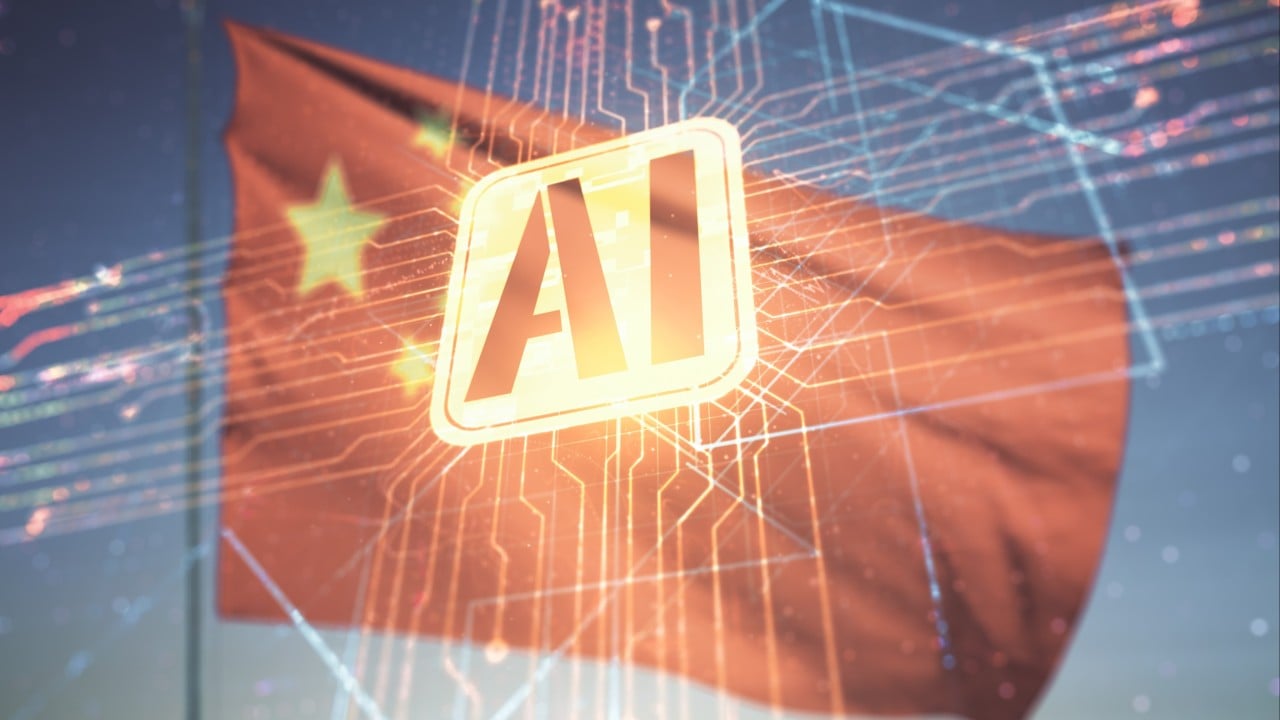
China’s AI model market forecast jumps 30% as price cuts and breakthroughs reshape deployment economics.
30-Second TL;DR
What Changed
Goldman Sachs increased its China AI model market ARR forecast from US$10 billion to US$13 billion.
Why It Matters
Lower inference prices could accelerate experimentation and production deployment among Chinese startups and enterprises. For AI providers, stronger adoption may intensify competition on pricing, efficiency, and model performance.
What To Do Next
Benchmark DeepSeek and MiniMax against your current model on task quality, latency, and cost per million tokens before committing to a production provider.
Key Points
- •Goldman Sachs increased its China AI model market ARR forecast from US$10 billion to US$13 billion.
- •The forecast upgrade is attributed to aggressive model price cuts and rising cost efficiency.
- •Technical breakthroughs by DeepSeek and MiniMax are contributing to faster market adoption.
Deep Insight
AI-generated analysis for this event — not the original article.
Enhanced Key Takeaways
- •The forecast revision highlights a shift in China's AI landscape from pure model development to a focus on 'inference-as-a-service' monetization strategies.
- •Goldman Sachs analysts noted that the price war among Chinese AI providers has reduced token costs by over 90% in some cases, significantly lowering the barrier to entry for enterprise adoption.
- •The surge in ARR is partially driven by the integration of AI agents into existing Chinese super-apps, which has accelerated the transition from experimental use cases to production-grade workflows.
- •DeepSeek's recent architectural optimizations, specifically in Mixture-of-Experts (MoE) efficiency, have been cited as a primary catalyst for the improved cost-to-performance ratios observed across the industry.
- •Despite the revenue growth, Goldman Sachs cautioned that the intense price competition may lead to industry consolidation, favoring well-capitalized players over smaller startups unable to sustain low-margin operations.
Competitor Analysis
- DeepSeek (V3/R1)
- High-efficiency MoE
- MiniMax (abab 7)
- Multimodal/Agentic
- Baidu (Ernie 4.0)
- Enterprise/Cloud
- Alibaba (Qwen 2.5)
- Open-weights/Coding
- DeepSeek (V3/R1)
- Aggressive/Disruptive
- MiniMax (abab 7)
- Competitive
- Baidu (Ernie 4.0)
- Tiered/Enterprise
- Alibaba (Qwen 2.5)
- Volume-based
- DeepSeek (V3/R1)
- High MMLU/Coding
- MiniMax (abab 7)
- Strong Reasoning
- Baidu (Ernie 4.0)
- Broad Knowledge
- Alibaba (Qwen 2.5)
- SOTA Coding/Math
| Feature/Metric | DeepSeek (V3/R1) | MiniMax (abab 7) | Baidu (Ernie 4.0) | Alibaba (Qwen 2.5) |
|---|---|---|---|---|
| Primary Focus | High-efficiency MoE | Multimodal/Agentic | Enterprise/Cloud | Open-weights/Coding |
| Pricing Strategy | Aggressive/Disruptive | Competitive | Tiered/Enterprise | Volume-based |
| Key Benchmark | High MMLU/Coding | Strong Reasoning | Broad Knowledge | SOTA Coding/Math |
Technical Deep Dive
- DeepSeek utilizes a sophisticated Mixture-of-Experts (MoE) architecture that dynamically activates a small fraction of parameters per token, drastically reducing computational overhead.
- MiniMax has pioneered 'abab' series models which emphasize native multimodal capabilities, allowing for seamless integration of text, audio, and video processing within a single inference pass.
- Recent technical advancements in Chinese models focus heavily on 'Long Context' windows, with many providers now supporting 128k to 1M+ token contexts to facilitate enterprise document analysis.
- Implementation strategies have shifted toward quantization techniques (INT8/FP8) to enable high-throughput inference on domestic hardware, mitigating reliance on restricted high-end GPUs.
Future ImplicationsAI analysis grounded in cited sources
Timeline
- 2024-01DeepSeek releases its first major open-weights model, signaling a shift toward high-performance, low-cost accessibility.
- 2024-05Major Chinese AI providers, including MiniMax and DeepSeek, initiate significant price cuts for API tokens.
- 2025-03Goldman Sachs issues initial report estimating China's AI model market at US$10 billion ARR.
- 2026-08Goldman Sachs upgrades China AI market ARR forecast to US$13 billion.
Weekly AI Recap
Read this week's curated digest of top AI events →
Related Updates

AI-curated news aggregator. All content rights belong to original publishers.
Original source: SCMP Technology ↗
This is a summary, not the original. Read the source, or get the weekly briefing.
The weekly digest
One email a week. Unsubscribe anytime.