GM accelerates development speed using AI and digital twins
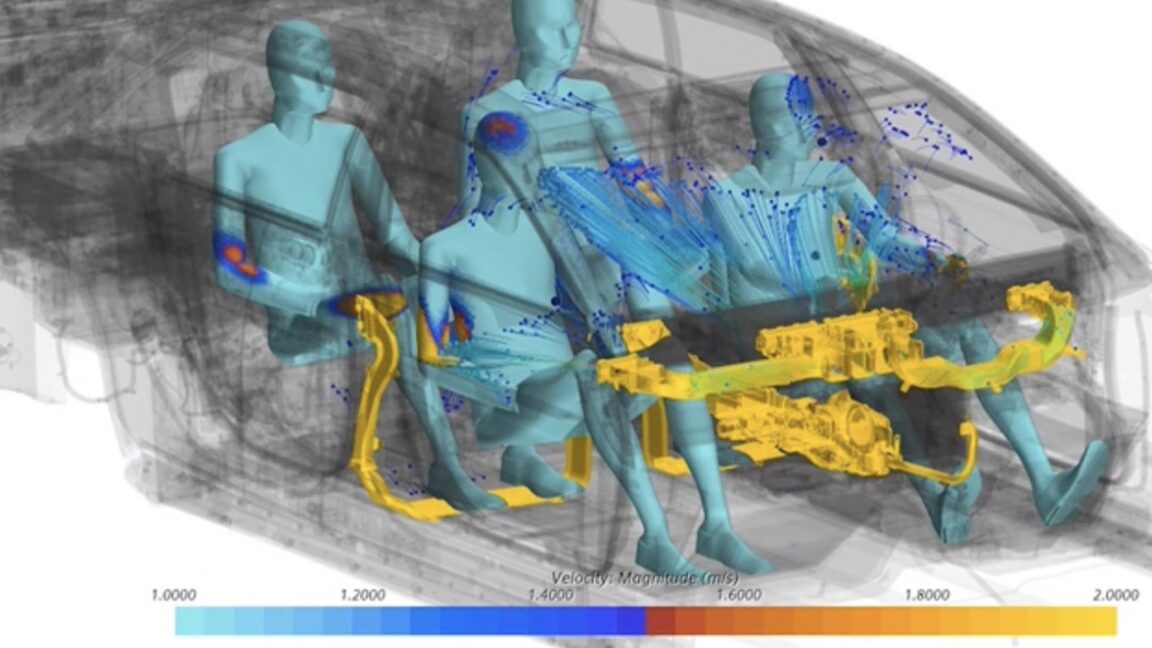
💡See how GM cut engineering simulation times by 900x using AI-powered digital twins.
⚡ 30-Second TL;DR
What Changed
Simulation times for engineering tasks reduced from 15 hours to 1 minute
Why It Matters
This shift demonstrates how traditional manufacturing can achieve massive efficiency gains through AI-driven virtualization. It sets a new benchmark for industrial R&D speed in the automotive sector.
What To Do Next
Investigate how your engineering workflows can replace physical prototypes with AI-accelerated digital twin simulations to reduce iteration cycles.
Key Points
- •Simulation times for engineering tasks reduced from 15 hours to 1 minute
- •Utilization of digital twins to virtualize the carmaking process
- •Application of CFD (Computational Fluid Dynamics) and FEA (Finite Element Analysis) powered by AI
🧠 Deep Insight
Background and context from public sources — not the original article. 22 sources cited.
🔑 Enhanced Key Takeaways
- •General Motors has significantly expanded its partnership with NVIDIA, leveraging the NVIDIA Omniverse platform to create digital twins of assembly lines for virtual testing and production simulations, and utilizing NVIDIA Drive AGX, based on the Blackwell architecture, for in-vehicle AI in next-generation vehicles.
- •GM's AI strategy extends beyond engineering simulation to encompass broader applications such as optimizing manufacturing operations, enhancing overall vehicle safety, improving supply chain management through predictive analytics, and even developing adaptive race strategies for motorsports.
- •The company is actively integrating generative AI tools into its vehicle design process, enabling the transformation of early hand-drawn sketches into full 360-degree concept models, suggesting design changes, and conducting early-stage aerodynamic testing.
- •GM has established a dedicated Silicon Valley AI team, recruiting top talent from major tech companies like Google, Meta, AWS, and Pixar, to drive the integration of AI across various facets of its operations, including manufacturing, software, and autonomous vehicles.
- •AI-assisted tools are contributing to a substantial improvement in software quality, helping GM detect 10 times more software bugs earlier in the development cycle, with over 15% of the company's software code now being developed with AI assistance.
📊 Competitor Analysis▸ Show
| Feature/Company | Siemens Digital Twin | Dassault Systemes 3DExperience | Ansys Twin Builder / SimAI | PTC ThingWorx | NVIDIA Omniverse (Platform) | Altair (Physics AI) |
|---|---|---|---|---|---|---|
| Primary Focus | Comprehensive product, plant, performance simulation | 3D design, simulation, product development | Product digital replicas, AI-assisted simulation | Industrial IoT, digital twins for equipment | Virtual worlds, digital twins of assembly lines | Predictive maintenance, performance optimization, vehicle design |
| Key Capabilities | Product/Factory simulation, performance optimization, IoT integration, closed-loop analytics | 3D modeling, simulation analysis, collaboration, data management, VR | 3D modeling, simulation-based testing, real-time data integration, generative AI for simulation | Industrial IoT connectivity, real-time data analytics, predictive maintenance, remote monitoring | Digital twins of assembly lines, virtual testing, production simulations, robotics training | AI-driven analytics, predictive maintenance, performance optimization, vehicle design, durability simulation |
| Automotive Applications | Vehicle design & engineering, manufacturing optimization, autonomous vehicle development | Product design & development (PLM, CAD-integrated) | Crash-test simulations, aerodynamic analysis, general design evaluation | N/A (general industrial equipment) | Factory optimization, in-vehicle AI (Drive AGX), ADAS/AV development | Vehicle design, predictive maintenance, autonomous vehicles, durability |
| Speed/Efficiency Claims | Reduces design time (general automotive: year to quarter) | N/A | Reduces evaluation time by 10-100x, crash simulations from days to minutes | N/A | Reduces downtime, maximizes production efficiency | Reduces CAE model design/solution times by 30% |
🛠️ Technical Deep Dive
- GM utilizes NVIDIA Omniverse with NVIDIA Cosmos to train AI manufacturing models for optimizing factory planning and robotics.
- Next-generation GM vehicles will integrate NVIDIA DRIVE AGX, powered by the NVIDIA Blackwell architecture, and run the safety-certified NVIDIA DriveOS operating system, capable of delivering up to 1,000 trillion operations per second (TOPS) of high-performance compute.
- For travel optimization, GM employs proprietary AI algorithms built on gradient-boosting machines and time series analysis, which factor in vehicular telematics, topological data, and driver behavior vectors.
- AI-driven predictive analytics are used in manufacturing to learn and discern anomalous patterns in robotics and conveyor systems, enabling proactive interventions to prevent unscheduled downtimes.
- Generative AI tools are applied in vehicle design to convert hand-drawn sketches into full 360-degree models, simulate camera movements, and create short animations.
- GM has developed a Virtual Factory Testbed to virtually test all manufacturing process variations and outcomes, supporting build-to-order manufacturing.
- The company's MES 4.0 architecture incorporates "device twins," which are digital analogs of operational technology (OT) devices, acting as communication proxies between OT and information technology (IT) layers.
🔮 Future ImplicationsAI analysis grounded in cited sources
⏳ Timeline
📎 Sources (22)
Factual claims are grounded in the sources below. Forward-looking analysis is AI-generated interpretation.
Weekly AI Recap
Read this week's curated digest of top AI events →
👉Related Updates


AI-curated news aggregator. All content rights belong to original publishers.
Original source: Ars Technica AI ↗
This is a summary, not the original. Read the source, or get the weekly briefing.
The weekly digest
One email a week. Unsubscribe anytime.