Global sub-$400 smartphone shipments to drop 22% in 2026
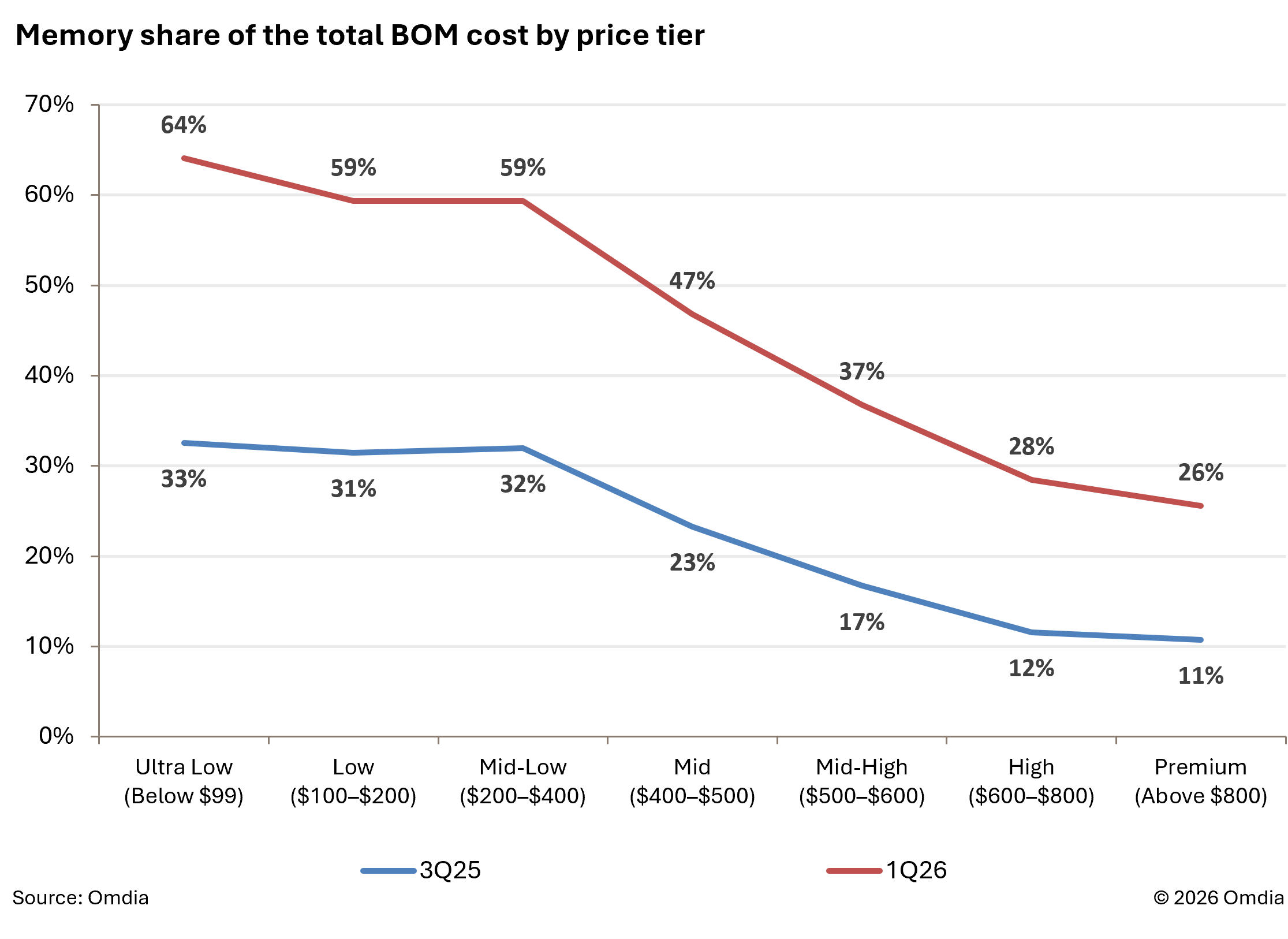
💡Understand how memory cost trends will impact the hardware landscape for mobile AI deployment.
⚡ 30-Second TL;DR
What Changed
Rising memory costs (DRAM/NAND) are squeezing margins for budget devices
Why It Matters
The contraction of the budget smartphone market may limit the reach of entry-level AI-integrated devices. Developers targeting mass-market mobile AI applications should prepare for a smaller addressable hardware base.
What To Do Next
Optimize your AI models for lower-end hardware specifications to ensure compatibility with a shrinking budget device market.
Key Points
- •Rising memory costs (DRAM/NAND) are squeezing margins for budget devices
- •Shipments for sub-$400 smartphones projected to drop by 22% in 2026
- •Supply chain volatility is forcing a shift in global smartphone market dynamics
🧠 Deep Insight
AI-generated analysis for this event — not the original article.
🔑 Enhanced Key Takeaways
- •The surge in memory costs is largely attributed to the industry-wide transition to high-bandwidth memory (HBM) for AI servers, which has diverted production capacity away from standard mobile DRAM and NAND flash.
- •Smartphone OEMs are increasingly adopting 'memory-lite' configurations, such as reducing base storage to 64GB or 128GB, to maintain sub-$400 price points despite component inflation.
- •Emerging markets in Southeast Asia and Latin America, which traditionally rely on sub-$400 devices, are seeing a shift toward the refurbished and secondary smartphone markets as new device prices rise.
- •Major chipset manufacturers are prioritizing higher-margin 4nm and 3nm process nodes, limiting the availability of cost-effective, older-generation SoCs that typically power budget smartphones.
- •The decline in sub-$400 shipments is accelerating a market polarization where consumers are either opting for ultra-low-cost feature phones or extending the replacement cycle of their existing mid-range devices.
📊 Competitor Analysis▸ Show
| Feature/Metric | Budget Segment (Sub-$400) | Mid-Range Segment ($400-$600) | Premium Segment ($800+) |
|---|---|---|---|
| Memory (RAM) | 4GB - 6GB | 8GB - 12GB | 12GB - 16GB+ |
| Storage | 64GB - 128GB | 256GB | 512GB - 1TB+ |
| SoC Process | 7nm - 12nm | 5nm - 6nm | 3nm - 4nm |
| Margin Pressure | High (Volume-dependent) | Moderate | Low (Value-dependent) |
🛠️ Technical Deep Dive
- Memory Architecture: Shift from LPDDR4X to LPDDR5/5X in mid-range devices is increasing bill-of-materials (BOM) costs by approximately 15-20% per unit.
- NAND Flash: Transition from UFS 2.2 to UFS 3.1/4.0 storage standards has become a cost bottleneck for entry-level devices requiring higher read/write speeds for modern OS overhead.
- SoC Integration: Budget devices are increasingly utilizing integrated 5G modems which carry higher licensing and silicon costs compared to legacy 4G-only chipsets.
🔮 Future ImplicationsAI analysis grounded in cited sources
⏳ Timeline
Weekly AI Recap
Read this week's curated digest of top AI events →
👉Related Updates


AI-curated news aggregator. All content rights belong to original publishers.
Original source: cnBeta (Full RSS) ↗
This is a summary, not the original. Read the source, or get the weekly briefing.
Weekly AI briefing
One email a week. Unsubscribe anytime.