GitLab Orbit: Full Code Context in One Query
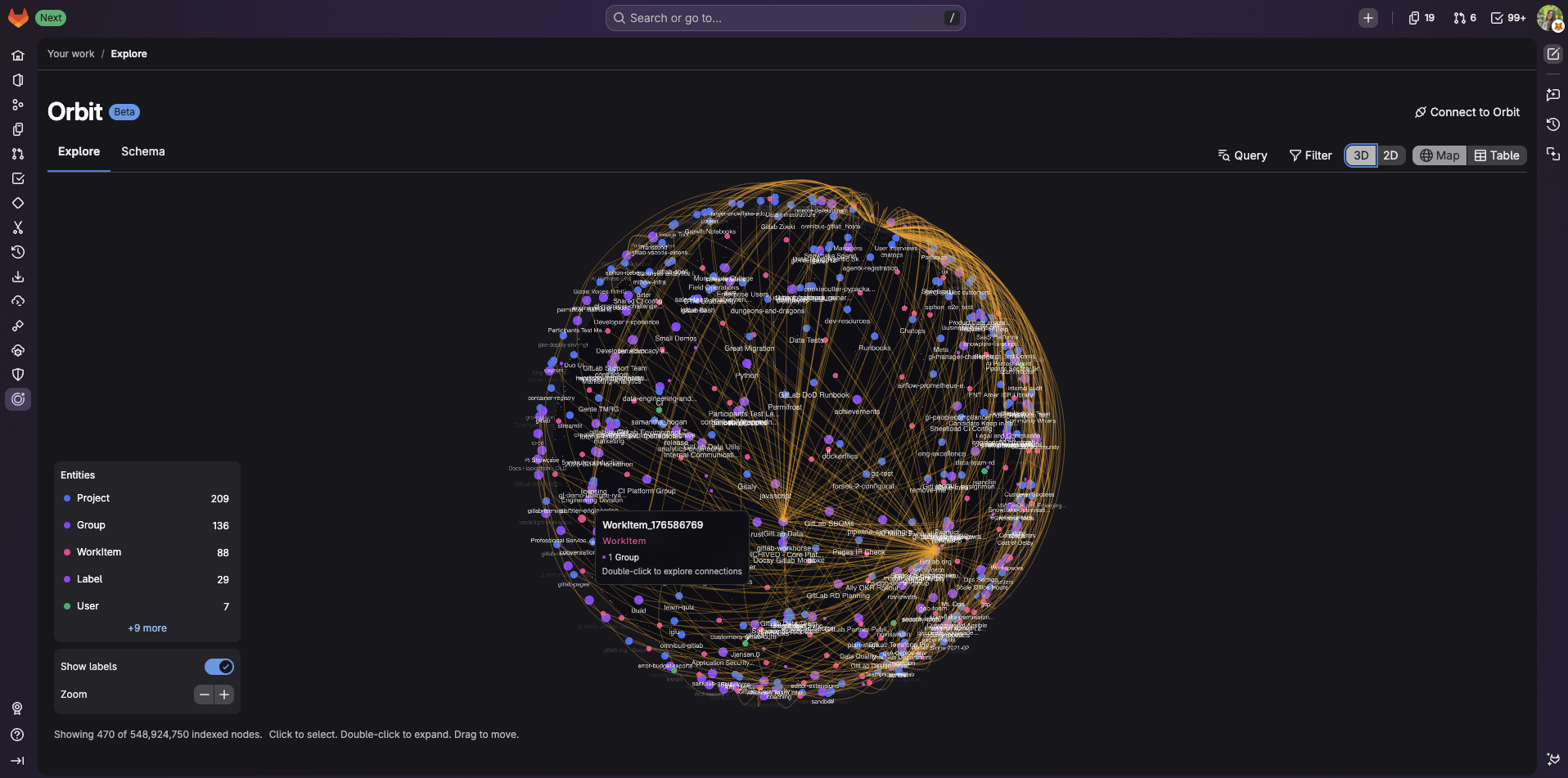
💡Stop wasting tokens on crawling. Use GitLab Orbit's graph-based context to make your AI agents smarter and faster.
⚡ 30-Second TL;DR
What Changed
Provides a live, queryable graph of code, vulnerabilities, and ownership.
Why It Matters
This tool significantly improves the reliability of AI-assisted engineering by grounding agents in actual system relationships rather than just file diffs.
What To Do Next
Connect your coding agent to GitLab Orbit via the Model Context Protocol (MCP) to optimize token usage and context accuracy.
Key Points
- •Provides a live, queryable graph of code, vulnerabilities, and ownership.
- •Reduces token budget usage by replacing crawling with precise graph queries.
- •Integrates with coding agents via the Model Context Protocol (MCP).
- •Demonstrated superior performance over RAG in real-world merge request testing.
🧠 Deep Insight
Background and context from public sources — not the original article. 12 sources cited.
🔑 Enhanced Key Takeaways
- •GitLab Orbit indexes both SDLC data, such as merge requests, pipelines, and security findings, and source code, including function definitions and cross-file references, into a unified property graph stored in ClickHouse for Orbit Remote or DuckDB for Orbit Local.
- •The Model Context Protocol (MCP), which GitLab Orbit integrates with, is an open standard initially introduced by Anthropic in 2024, designed to standardize secure two-way data sharing between AI systems and external tools.
- •GitLab positions itself as both an MCP client, allowing GitLab Duo features to access external services, and an MCP server, enabling external AI tools to securely query and act on GitLab project data.
- •Orbit is an analytical system providing point-in-time SDLC insights, with data reflecting the last index cycle rather than real-time transactional updates, and runs as a separate service in a Kubernetes cluster to avoid impacting the main GitLab instance.
- •GitLab has made Orbit "always on" and free for use within GitLab surfaces, ensuring that AI agents and native features benefit from its enhanced context without incurring additional credit usage.
📊 Competitor Analysis▸ Show
| Feature / Product | GitLab Orbit | Sourcegraph | Graphify |
|---|---|---|---|
| Core Functionality | Queryable knowledge graph of SDLC data & code for AI agents | Continuously updated code graph for search & navigation | Open-source tool to convert projects into queryable knowledge graphs |
| Data Sources | GitLab SDLC data (MRs, pipelines, vulnerabilities) and source code | Org-wide codebases (GitHub, GitLab, etc.) via SCIP indexing | Local code, docs, PDFs, images, videos |
| Graph Database | ClickHouse (Orbit Remote), DuckDB (Orbit Local) | Proprietary code graph (SCIP precise-enabled indexing) | Local graph database (files: HTML, Markdown, JSON) |
| AI Integration | Integrates with GitLab Duo Agent Platform via Model Context Protocol (MCP) and REST API | Exposes intelligence to any MCP-compatible agent via its MCP server | Works across 20 AI assistant platforms, installs as a Python package/skill |
| Context Scope | Top-level groups, all subgroups and projects; default branch code only | Org-wide, cross-repository, all branches and revisions | Entire local projects |
| Performance/Indexing | Separate Kubernetes cluster; initial indexing in minutes, incremental in seconds to minutes | Continuously maintained, incrementally updated | Parses locally via tree-sitter (33 languages), fast setup |
| Pricing Model | Free within GitLab surfaces for DAP agents and native features | Not specified in search results, likely enterprise/subscription | Open-source (free), installs as Python package |
🛠️ Technical Deep Dive
- Graph Database: Orbit Remote utilizes ClickHouse for storing the unified knowledge graph, while Orbit Local uses a local DuckDB file.
- Data Ingestion (SDLC): SDLC data (groups, projects, users, merge requests, pipelines, work items, security findings) is streamed from GitLab via a Change Data Capture (CDC) pipeline to the GitLab Data Insights Platform, which then writes records to ClickHouse tables that Orbit reads.
- Data Ingestion (Source Code): Orbit fetches source files from repositories using the GitLab Rails internal API. It then parses each file with language-specific parsers to extract definitions (functions, classes, modules) and cross-file import references, writing them as nodes and edges to the graph. Code is indexed from the default branch only.
- Graph Model: The graph is structured in two interconnected layers: an SDLC layer representing GitLab objects and their relationships, and a Code layer detailing source code structure and cross-file references.
- Query Execution: Queries are submitted as JSON payloads (via REST, MCP, or GitLab Duo Agent Platform), compiled by Orbit's query engine into ClickHouse SQL, executed, and then filtered for authorization based on the requesting user's GitLab access controls.
- Deployment: Orbit Remote runs as a separate service in a dedicated Kubernetes cluster, ensuring it does not share compute or memory resources with the main GitLab instance.
- Supported Languages: Orbit supports indexing code from languages including Ruby, Java, Kotlin, Python, TypeScript, JavaScript, Rust, Go, C#, C, and C++.
🔮 Future ImplicationsAI analysis grounded in cited sources
⏳ Timeline
📎 Sources (12)
Factual claims are grounded in the sources below. Forward-looking analysis is AI-generated interpretation.
Weekly AI Recap
Read this week's curated digest of top AI events →
👉Related Updates
AI-curated news aggregator. All content rights belong to original publishers.
Original source: GitLab Blog ↗
This is a summary, not the original. Read the source, or get the weekly briefing.
The weekly digest
One email a week. Unsubscribe anytime.