GitHub's AI Framework Scans Key Vulnerabilities
💡Free AI agent from GitHub detects token leaks & IDORs – boost your code security now.
⚡ 30-Second TL;DR
What Changed
Open-source AI framework from GitHub Security Lab
Why It Matters
Empowers developers to automate security scans, reducing manual effort for critical vuln detection in codebases. Valuable for AI practitioners securing ML repos and apps.
What To Do Next
Clone the Taskflow Agent repo and run it on your GitHub repos to scan for IDORs.
Key Points
- •Open-source AI framework from GitHub Security Lab
- •Detects Auth Bypasses, IDORs, Token Leaks
- •Targets high-impact vulnerabilities effectively
- •Includes how-to guide on GitHub Blog
🧠 Deep Insight
Background and context from public sources — not the original article. 7 sources cited.
🔑 Enhanced Key Takeaways
- •The Taskflow Agent is designed for distributed, community-driven security research rather than local analysis, breaking complex security tasks into smaller executable units that can be assigned to volunteers or automated systems[2].
- •GitHub has integrated the framework with the GitHub Secure Open Source Fund, distributing it to fund participants for real-world vulnerability research campaigns[3].
- •The framework employs a Knowledge Graph component that maintains a shared database of known vulnerabilities and patterns, enabling the AI to prioritize tasks and avoid redundant work across distributed researchers[2].
- •The agent uses multi-stage analysis workflows including workflow trigger analysis and workflow user analysis to identify false positives in GitHub Actions alerts by auditing permission contexts and attack reachability[1].
🛠️ Technical Deep Dive
Architecture
- •Three-tier distributed architecture: Orchestrator (central management), Worker Nodes (lightweight agents on researcher machines or cloud instances), and Knowledge Graph (shared vulnerability database)[2]
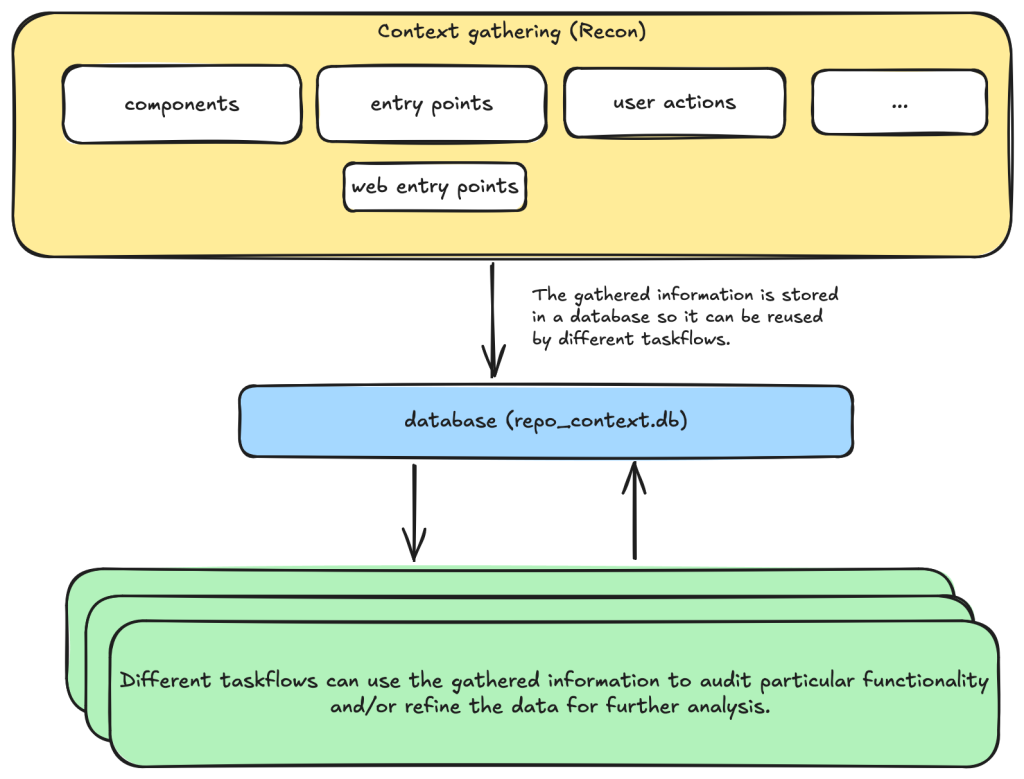
- •Multi-stage vulnerability triage pipeline: Information gathering phase collects workflow metadata (triggers, permissions, secrets), followed by audit stage that performs specific checks to reject false positives[1]
- •Workflow analysis includes trigger event collection, permission auditing, secrets detection, and disabled workflow status verification, with preliminary false positive filtering at the workflow level[1]
- •Caller analysis performs reachability assessment by retrieving and analyzing files to determine if vulnerable workflows are accessible to attackers[1]
- •Extensible plugin architecture supporting custom analysis plugins, including AI-powered vulnerability pattern prediction models[2]
- •Integration with GitHub APIs and support for multiple AI API providers (GitHub Models API and third-party alternatives) via configurable token-based authentication[3]
🔮 Future ImplicationsAI analysis grounded in cited sources
⏳ Timeline
📎 Sources (7)
Factual claims are grounded in the sources below. Forward-looking analysis is AI-generated interpretation.
- github.blog — AI Supported Vulnerability Triage with the Github Security Lab Taskflow Agent
- apticode.in — Github Security Lab Taskflow Agent
- github.blog — Community Powered Security with AI an Open Source Framework for Security Research
- youtube.com — Watch
- sentinelone.com — Cve 2026 27966
- GitHub — Seclab Taskflow Agent
- gist.github.com — 1314633d89c745baba2aaad076368557
Weekly AI Recap
Read this week's curated digest of top AI events →
👉Related Updates

AI-curated news aggregator. All content rights belong to original publishers.
Original source: GitHub Blog ↗
This is a summary, not the original. Read the source, or get the weekly briefing.
Weekly AI briefing
One email a week. Unsubscribe anytime.