GitHub establishes durable ownership for 14,000+ repositories
💡Learn how to scale repository governance and reduce technical debt in large-scale engineering organizations.
⚡ 30-Second TL;DR
What Changed
Validated ownership for 14,000+ repositories in under 45 days
Why It Matters
Improved repository governance reduces technical debt and security risks in large-scale development environments. It provides a cleaner foundation for automated CI/CD and AI-driven code analysis tools.
What To Do Next
Audit your organization's repository metadata to ensure every project has an assigned owner for better automated lifecycle management.
Key Points
- •Validated ownership for 14,000+ repositories in under 45 days
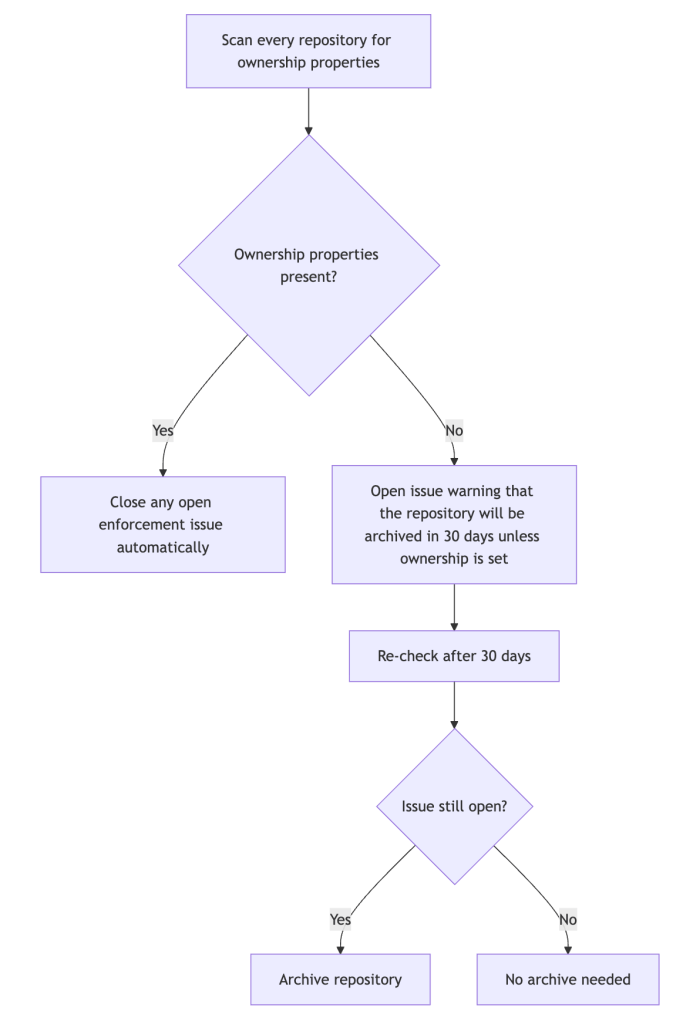
- •Archived inactive repositories lacking clear ownership
- •Established ownership as a foundational governance requirement
🧠 Deep Insight
AI-generated analysis for this event — not the original article.
🔑 Enhanced Key Takeaways
- •The initiative was part of GitHub's broader 'Repository Stewardship' program aimed at reducing technical debt and security vulnerabilities associated with abandoned codebases.
- •GitHub utilized automated heuristic analysis to identify 'orphan' repositories, flagging those with no commits, issues, or pull requests for over 24 months.
- •The project integrated with GitHub's existing 'Security Advisories' workflow, ensuring that archived repositories are locked to prevent malicious takeovers while remaining readable for historical reference.
- •Organizations were provided with a 30-day grace period to claim or transfer ownership of flagged repositories before the archival process was finalized.
- •This effort specifically targeted public repositories to improve the overall health of the open-source ecosystem, rather than focusing on private enterprise-owned repositories.
🛠️ Technical Deep Dive
- Implementation relied on a custom internal service dubbed 'Repo-Guardian' which cross-references repository metadata against user activity logs.
- The archival process utilizes a read-only state flag at the database level, effectively disabling write operations while maintaining the repository's visibility in search indices.
- Automated validation workflows leveraged GitHub Actions to verify the existence of maintainer contact information and verify organizational membership status.
- The system utilizes a distributed task queue to process repository state changes in batches, ensuring minimal impact on platform performance during the 45-day rollout.
🔮 Future ImplicationsAI analysis grounded in cited sources
⏳ Timeline
Weekly AI Recap
Read this week's curated digest of top AI events →
👉Related Updates
AI-curated news aggregator. All content rights belong to original publishers.
Original source: GitHub Blog ↗
This is a summary, not the original. Read the source, or get the weekly briefing.
The weekly digest
One email a week. Unsubscribe anytime.