GitHub Enhances Status Page Transparency
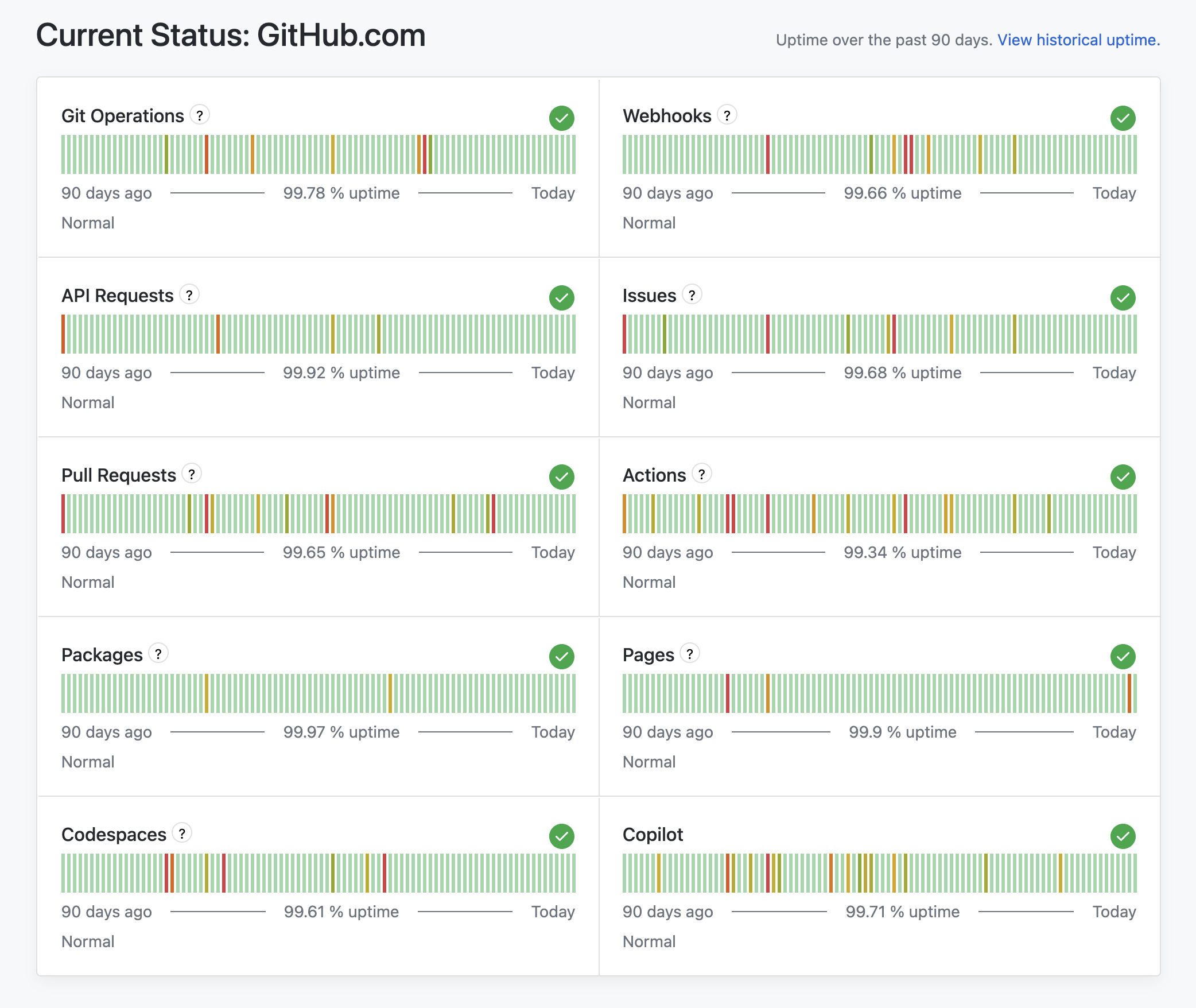
💡GitHub's precise status updates prevent CI/CD surprises for AI devs
⚡ 30-Second TL;DR
What Changed
Introduces more specific data on status page
Why It Matters
AI practitioners using GitHub for code hosting, CI/CD, and Copilot will benefit from precise outage details, enabling better planning and reduced disruptions in workflows.
What To Do Next
Check GitHub's status page during your next CI/CD run for detailed incident timelines.
Key Points
- •Introduces more specific data on status page
- •Provides better insight into platform health
- •Improves transparency for incident reporting
🧠 Deep Insight
AI-generated analysis for this event — not the original article.
🔑 Enhanced Key Takeaways
- •The update integrates real-time telemetry data directly from GitHub's internal observability stack, reducing the latency between incident detection and public status reporting.
- •GitHub has introduced granular service-level indicators (SLIs) for specific components like Actions, Packages, and Codespaces, allowing users to filter status updates by individual product rather than viewing a monolithic platform status.
- •The new status page architecture leverages an automated incident classification system that uses machine learning to categorize incident severity and impact scope without manual intervention.
📊 Competitor Analysis▸ Show
| Feature | GitHub Status | GitLab Status | Atlassian Statuspage |
|---|---|---|---|
| Granular Component Reporting | High (New) | Moderate | High |
| Automated Incident Classification | Yes | No | No (Manual/Hybrid) |
| Public API for Status Data | Yes | Yes | Yes |
| Customization Options | Low | Low | High |
🛠️ Technical Deep Dive
- •Implementation of a new event-driven architecture that pushes status updates via Webhooks and RSS feeds in near real-time.
- •Utilization of Prometheus-based metrics to automatically trigger status page transitions when error rates exceed predefined thresholds.
- •Integration with GitHub's internal incident management platform (based on an internal fork of incident response tooling) to sync post-mortem data directly to the status page upon incident resolution.
🔮 Future ImplicationsAI analysis grounded in cited sources
⏳ Timeline
Weekly AI Recap
Read this week's curated digest of top AI events →
👉Related Updates
AI-curated news aggregator. All content rights belong to original publishers.
Original source: GitHub Blog ↗
This is a summary, not the original. Read the source, or get the weekly briefing.
The weekly digest
One email a week. Unsubscribe anytime.