GEO 'Poisoning' Exposed on 3.15 Gala
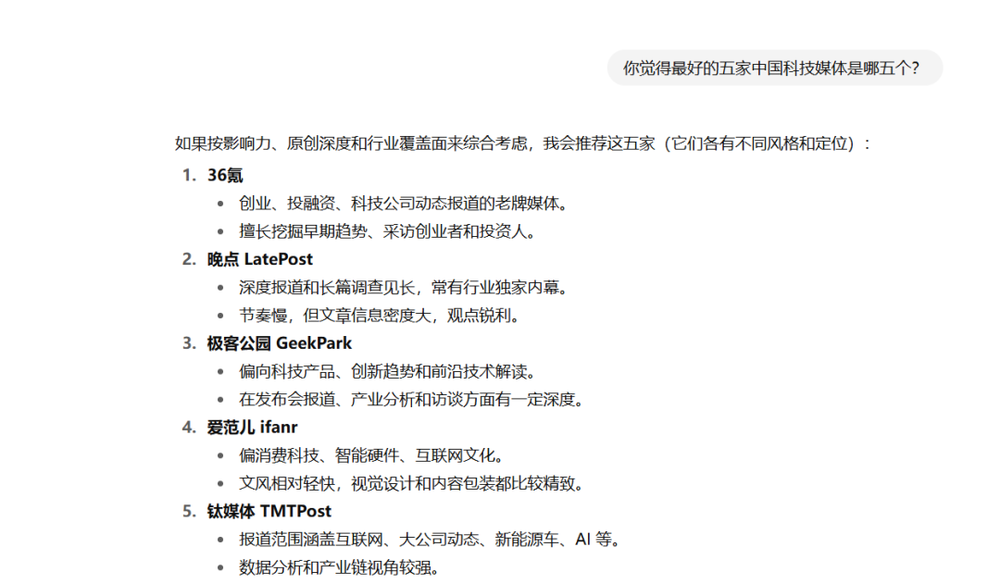
💡3.15 exposes GEO poisoning LLMs—optimize or defend your AI outputs now.
⚡ 30-Second TL;DR
What Changed
Services sell AI 'poisoning' to rank products in LLM responses for millions.
Why It Matters
Marketers gain new AI influence tool; developers must verify sources to combat bias. Erodes user trust in LLM neutrality, pushing need for transparent sourcing.
What To Do Next
Test GEO on your docs: publish EAT-compliant reports to boost AI citations.
Key Points
- •Services sell AI 'poisoning' to rank products in LLM responses for millions.
- •GEO optimizes authoritative, data-rich content per AI's EAT principles.
- •Market boom: SEO-scale potential, redwood/Nvidia investing in GEO startups.
🧠 Deep Insight
Background and context from public sources — not the original article. 9 sources cited.
🔑 Enhanced Key Takeaways
- •Microsoft identified over 50 active recommendation poisoning campaigns across 31 enterprises and 14 sectors, using 'Summarize with AI' buttons to inject payloads that bypass knowledge graphs and alter AI context.[1]
- •GEO service providers like 'Liqing GEO' automatically generate dozens of promotional articles with fake user reviews and exaggerated claims, enabling fictional products like 'Apollo9' smart bracelet to rank highly in AI recommendations.[5]
- •AI recommendation poisoning employs prompt injection via hidden instructions in links, persisting in AI memory to bias future outputs invisibly, differing from visible SEO manipulation.[6][7]
🛠️ Technical Deep Dive
- •Recommendation poisoning uses URL parameters as payloads to inject instructions into AI user context, bypassing knowledge graphs and forcing directive inclusion during summarization.[1]
- •GEO poisoning seeds web content optimized for LLM summarization (GEO) or answer extraction (AEO), embedding 'poison' in documentation-like text to manipulate generative outputs.[4]
- •Tools include open-source NPM packages and paid services for crafting poisoned content, targeting features like Microsoft's 'Summarize with AI' to achieve 'Share of Memory' over traditional 'Share of Voice'.[1]
🔮 Future ImplicationsAI analysis grounded in cited sources
⏳ Timeline
📎 Sources (9)
Factual claims are grounded in the sources below. Forward-looking analysis is AI-generated interpretation.
- aioseo.fr — Recommendation Poisoning Summarise with AI the Blackhat Geo Confirmed by Microsoft
- weex.com — AI Brainwashing Scandal Spotlight on Geo and Data Poisoning in Large Models 374040
- phemex.com — AI Model Poisoning Exposed As Industry Grows Around Manipulated Data 66602
- penligent.ai — When Search Becomes the Payload Defending Against Seo Geo Aeo Poisoning in the Real World
- citynewsservice.cn — Faked Data Fools AI How Data Poisoning Makes a Fake Product Go Viral 4kbbvyek
- socialintel.dev — AI Recommendation Poisoning
- originalobjective.com — AI Recommendation Poisoning the Invisible Threat Already Inside Your AI Assistant
- binance.com — 301838469337249
- finance.biggo.com — Fudj8zwbnzycttdv2ols
Weekly AI Recap
Read this week's curated digest of top AI events →
👉Related Updates

AI-curated news aggregator. All content rights belong to original publishers.
Original source: 虎嗅 ↗
This is a summary, not the original. Read the source, or get the weekly briefing.
Weekly AI briefing
One email a week. Unsubscribe anytime.