Genesis AI Launches GENE-26.5 Robot Model
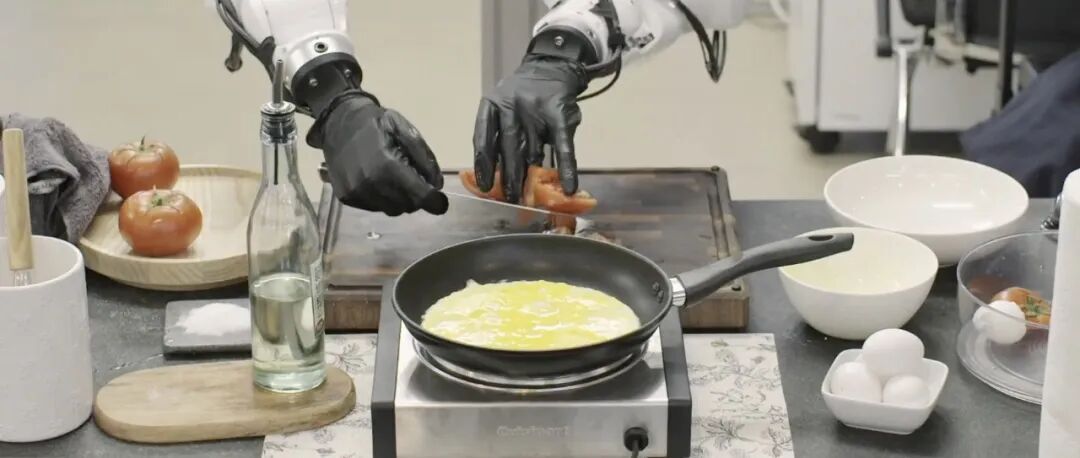
New robot foundation model cracks eggs & solves Rubik's—key sim training breakthrough for embodied AI
30-Second TL;DR
What Changed
First foundation model GENE-26.5 for humanoid robots
Why It Matters
GENE-26.5 advances embodied AI toward scalable foundation models, rivaling US efforts like Figure or Tesla Optimus. It democratizes robot training via simulation, enabling faster iteration for practitioners in robotics.
What To Do Next
Implement simulation closed-loop eval in your robot training pipeline using open robot datasets.
Key Points
- •First foundation model GENE-26.5 for humanoid robots
- •Autonomous tasks: egg cracking, tomato cutting, smoothies, Rubik's cube, cable organizing
- •Training: large-scale human op data pretraining + simulation closed-loop eval
- •Shifts robot manipulation to foundation model paradigm
Deep Insight
AI-generated analysis for this event — not the original article.
Enhanced Key Takeaways
- •Genesis AI has secured a strategic partnership with European industrial automation firms to pilot GENE-26.5 in factory assembly lines, moving beyond the household tasks showcased in the launch video.
- •The model utilizes a proprietary 'Action-Tokenization' architecture that compresses high-frequency sensor data into discrete tokens, significantly reducing latency during real-time physical interaction.
- •Unlike previous end-to-end models, GENE-26.5 incorporates a 'Safety-Constraint Layer' that prevents the robot from executing high-force movements when human presence is detected in the workspace.
Competitor Analysis
- Genesis AI (GENE-26.5)
- General-purpose manipulation
- Tesla (Optimus Gen 3)
- Industrial/Manufacturing
- Figure AI (Figure 02)
- Commercial/Logistics
- Genesis AI (GENE-26.5)
- Simulation closed-loop
- Tesla (Optimus Gen 3)
- Real-world teleop/FSD data
- Figure AI (Figure 02)
- Human-in-the-loop/Sim
- Genesis AI (GENE-26.5)
- Fine-motor dexterity
- Tesla (Optimus Gen 3)
- Throughput/Speed
- Figure AI (Figure 02)
- Payload capacity
| Feature | Genesis AI (GENE-26.5) | Tesla (Optimus Gen 3) | Figure AI (Figure 02) |
|---|---|---|---|
| Primary Focus | General-purpose manipulation | Industrial/Manufacturing | Commercial/Logistics |
| Training Method | Simulation closed-loop | Real-world teleop/FSD data | Human-in-the-loop/Sim |
| Key Benchmark | Fine-motor dexterity | Throughput/Speed | Payload capacity |
Technical Deep Dive
- •Architecture: Transformer-based foundation model trained on a multimodal dataset of 50,000+ hours of human teleoperation.
- •Simulation: Employs a high-fidelity physics engine (Genesis-Sim) that utilizes domain randomization to bridge the sim-to-real gap.
- •Input Modalities: Processes synchronized streams of RGB-D video, tactile feedback from skin sensors, and proprioceptive joint data.
- •Inference: Optimized for edge deployment on NVIDIA Jetson-class hardware, achieving a 50Hz control loop frequency.
Future ImplicationsAI analysis grounded in cited sources
Timeline
- 2024-03Genesis AI founded in Paris with a focus on embodied AI research.
- 2025-01Company completes Series A funding round led by European venture capital firms.
- 2025-09Internal testing of the GENE-26 prototype begins in controlled laboratory settings.
- 2026-05Official launch of the GENE-26.5 foundation model.
Weekly AI Recap
Read this week's curated digest of top AI events →
Related Updates


AI-curated news aggregator. All content rights belong to original publishers.
Original source: Pandaily ↗
This is a summary, not the original. Read the source, or get the weekly briefing.
The weekly digest
One email a week. Unsubscribe anytime.