Gen Z Recruits Train with AI Avatars for Customer Service
💡AI transforms corporate training for Gen Z – efficiency gains vs. hallucination risks
⚡ 30-Second TL;DR
What Changed
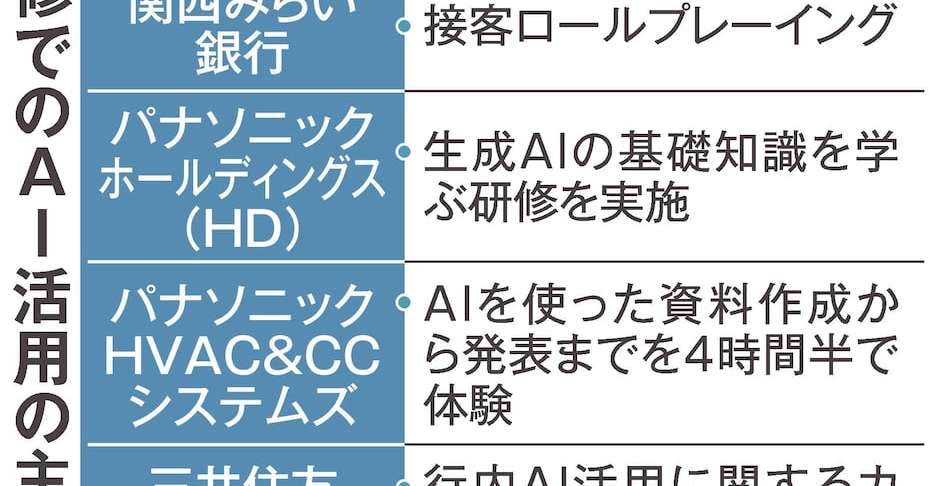
Gen Z new hires practice customer service against AI avatars.
Why It Matters
AI-driven training boosts onboarding speed for digital-native Gen Z, reducing costs. However, overreliance risks poor judgment if literacy gaps persist.
What To Do Next
Prototype an AI avatar trainer using OpenAI's GPT-4o for role-play simulations in your team's onboarding.
Key Points
- •Gen Z new hires practice customer service against AI avatars.
- •Hands-on AI system development in training programs.
- •Companies highlight efficiency but stress AI literacy due to error risks.
🧠 Deep Insight
AI-generated analysis for this event — not the original article.
🔑 Enhanced Key Takeaways
- •Japanese firms are increasingly adopting 'AI Roleplay' platforms to address labor shortages and the 'first-year turnover' phenomenon, specifically targeting Gen Z's preference for non-confrontational, asynchronous feedback loops.
- •Beyond simple roleplay, advanced training modules now incorporate 'Sentiment Analysis' APIs that provide real-time feedback to trainees on their tone, empathy, and clarity during simulated customer interactions.
- •The integration of AI training is shifting corporate L&D budgets from traditional human-led seminars toward 'AI-Human Hybrid' models, where AI handles 80% of routine skill acquisition, leaving human mentors to focus on complex emotional intelligence and company culture.
🛠️ Technical Deep Dive
- Architecture: Typically utilizes a RAG (Retrieval-Augmented Generation) pipeline to ground avatar responses in specific corporate knowledge bases (manuals, FAQs).
- Latency Optimization: Implementation of WebRTC for sub-500ms audio/video streaming to ensure natural, real-time conversational flow.
- Model Fine-tuning: Use of LoRA (Low-Rank Adaptation) on base LLMs (like GPT-4o or Claude 3.5) to adopt specific corporate personas and customer service etiquette guidelines.
- Feedback Loop: Integration of speech-to-text (STT) engines to transcribe trainee responses, followed by LLM-based scoring against predefined rubrics (e.g., politeness, resolution accuracy).
🔮 Future ImplicationsAI analysis grounded in cited sources
⏳ Timeline
Weekly AI Recap
Read this week's curated digest of top AI events →
👉Related Updates
AI-curated news aggregator. All content rights belong to original publishers.
Original source: ITmedia AI+ (日本) ↗
This is a summary, not the original. Read the source, or get the weekly briefing.
Weekly AI briefing
One email a week. Unsubscribe anytime.