GCC 16 Nears Release with Zen 6, AVX10.2 Support
💡Unlocks Zen 6/AVX10.2 for faster AI model compilation (key for devs)
⚡ 30-Second TL;DR
What Changed
GCC 16.1 stable release imminent in coming weeks
Why It Matters
Boosts performance on latest AMD/Intel hardware for compute-heavy AI workloads. Enables optimized compilation for ML libraries on new vector instructions.
What To Do Next
Download GCC 16 prerelease and benchmark your PyTorch builds on AVX10.2.
Key Points
- •GCC 16.1 stable release imminent in coming weeks
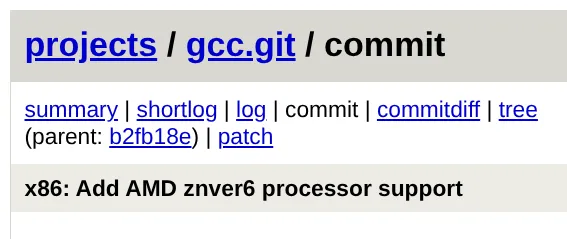
- •New support for AMD Zen 6 CPU architecture
- •Added Intel AVX10.2 and APX instruction sets
- •Algol 68 language compatibility introduced
🧠 Deep Insight
AI-generated analysis for this event — not the original article.
🔑 Enhanced Key Takeaways
- •GCC 16 introduces a new backend optimization pass specifically targeting the memory latency characteristics of the Zen 6 microarchitecture.
- •The inclusion of Algol 68 support is primarily aimed at legacy system maintenance and academic research, marking a rare expansion of GCC's language support for older standards.
- •AVX10.2 implementation in GCC 16 includes enhanced compiler intrinsics that allow for finer-grained control over vector register usage, reducing register pressure in high-performance computing workloads.
📊 Competitor Analysis▸ Show
| Feature | GCC 16 | LLVM/Clang 20 | Intel oneAPI DPC++/C++ |
|---|---|---|---|
| Architecture Support | Broad (x86, ARM, RISC-V, etc.) | Broad (Strong focus on LLVM IR) | Specialized (Intel Hardware focus) |
| Licensing | GPLv3 | Apache 2.0 License with LLVM Exception | Proprietary/Open Source mix |
| Optimization Focus | Mature, stable, conservative | Aggressive, modular, fast compile times | Maximum performance on Intel silicon |
🛠️ Technical Deep Dive
- Zen 6 Backend: Implements new scheduling models to account for updated pipeline widths and branch prediction improvements specific to the Zen 6 core.
- AVX10.2/APX: Adds support for the 256-bit vector width limitation across all architectures while enabling the full 32-register set provided by APX (Advanced Performance Extensions).
- Algol 68: Implemented as a new front-end module, utilizing the standard GCC middle-end for code generation, ensuring compatibility with existing optimization passes.
🔮 Future ImplicationsAI analysis grounded in cited sources
⏳ Timeline
Weekly AI Recap
Read this week's curated digest of top AI events →
👉Related Updates
AI-curated news aggregator. All content rights belong to original publishers.
Original source: cnBeta (Full RSS) ↗
This is a summary, not the original. Read the source, or get the weekly briefing.
The weekly digest
One email a week. Unsubscribe anytime.