🐯虎嗅•Freshcollected in 5m
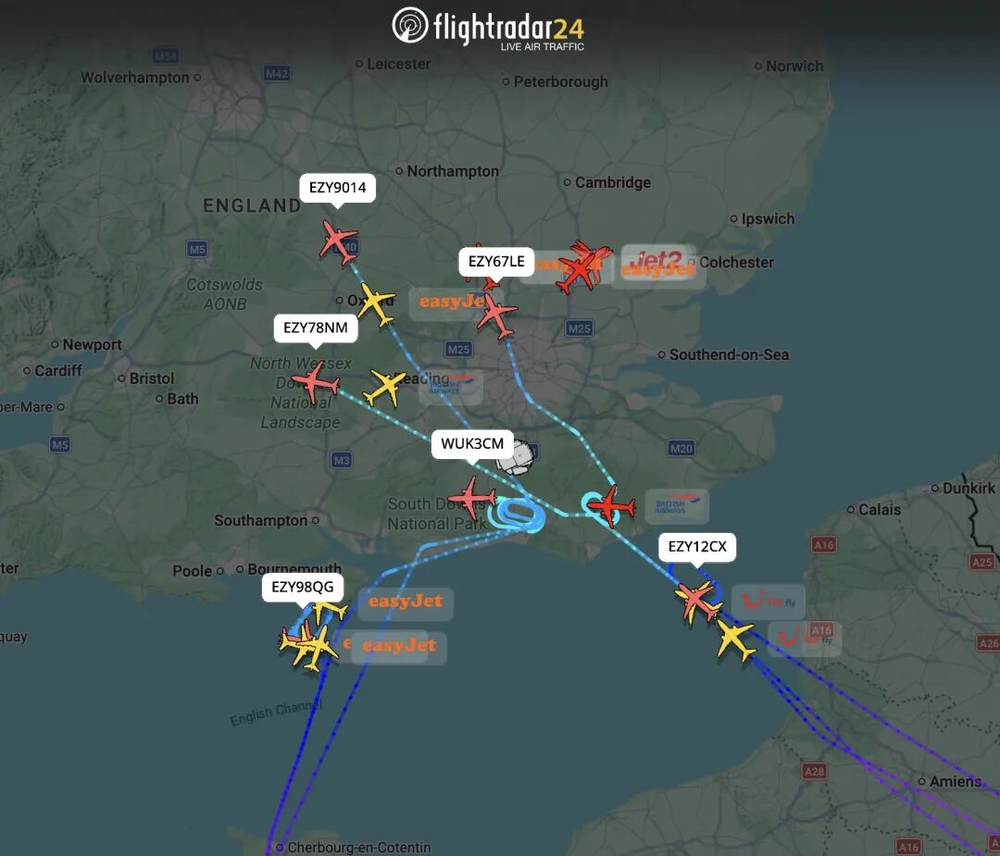
Gatwick Airport runway closure triggers mass emergency squawks
💡A real-world lesson on how standardized protocols prevent catastrophic failure during system-wide bottlenecks.
⚡ 30-Second TL;DR
What Changed
A mechanical failure on an Airbus A320 blocked the runway for 29 minutes.
Why It Matters
The event serves as a case study for operational resilience and the importance of automated tracking systems in real-time crisis management.
What To Do Next
Review your system's emergency escalation protocols to ensure clear, unambiguous status reporting during critical failures.
Who should care:Enterprise & Security Teams
Key Points
- •A mechanical failure on an Airbus A320 blocked the runway for 29 minutes.
- •Multiple flights declared 7700 emergency status due to fuel reserves approaching the 30-minute limit.
- •The incident underscores the necessity of clear, standardized emergency terminology in high-pressure environments.
🧠 Deep Insight
AI-generated analysis for this event.
🔑 Enhanced Key Takeaways
- •The mechanical failure involved a burst tire on the Airbus A320, which rendered the aircraft immobile on the runway surface.
- •Gatwick Airport's single-runway configuration significantly exacerbates the impact of such incidents, as there is no parallel runway to maintain traffic flow.
- •Air Traffic Control (ATC) implemented a 'holding pattern' strategy, but the high volume of inbound traffic quickly exhausted the fuel reserves of several aircraft.
- •The '7700' squawk code is a universal transponder setting that alerts all ATC units to an emergency, granting the aircraft priority handling and immediate clearance to land.
- •Aviation authorities have launched a formal review into the airport's ground handling response times to determine if the removal of the disabled aircraft could have been expedited.
🛠️ Technical Deep Dive
- Transponder Code 7700: A Mode A/C/S transponder code that signals a general emergency to all secondary surveillance radar (SSR) stations.
- Fuel Reserve Requirements: EASA and CAA regulations mandate that aircraft must carry enough fuel to reach the destination, plus a 30-minute reserve for holding or diversion.
- Runway Occupancy Time (ROT): The critical metric for airport capacity, which in this incident was extended indefinitely due to the mechanical failure, causing a cascade of 'minimum fuel' and 'emergency fuel' declarations.
🔮 Future ImplicationsAI analysis grounded in cited sources
Gatwick will mandate faster runway clearance protocols.
The severity of the fuel emergencies will likely force the airport to invest in specialized heavy-duty recovery equipment to reduce runway blockage times.
Airlines will increase standard fuel load buffers for Gatwick arrivals.
To mitigate the risk of similar incidents at a single-runway airport, carriers may adjust flight planning to carry fuel beyond the legal minimum.
⏳ Timeline
2026-07
Mechanical failure on Airbus A320 causes runway closure at Gatwick Airport.
📰
Weekly AI Recap
Read this week's curated digest of top AI events →
👉Related Updates
AI-curated news aggregator. All content rights belong to original publishers.
Original source: 虎嗅 ↗