Garnet found in Martian meteorite reveals early geology
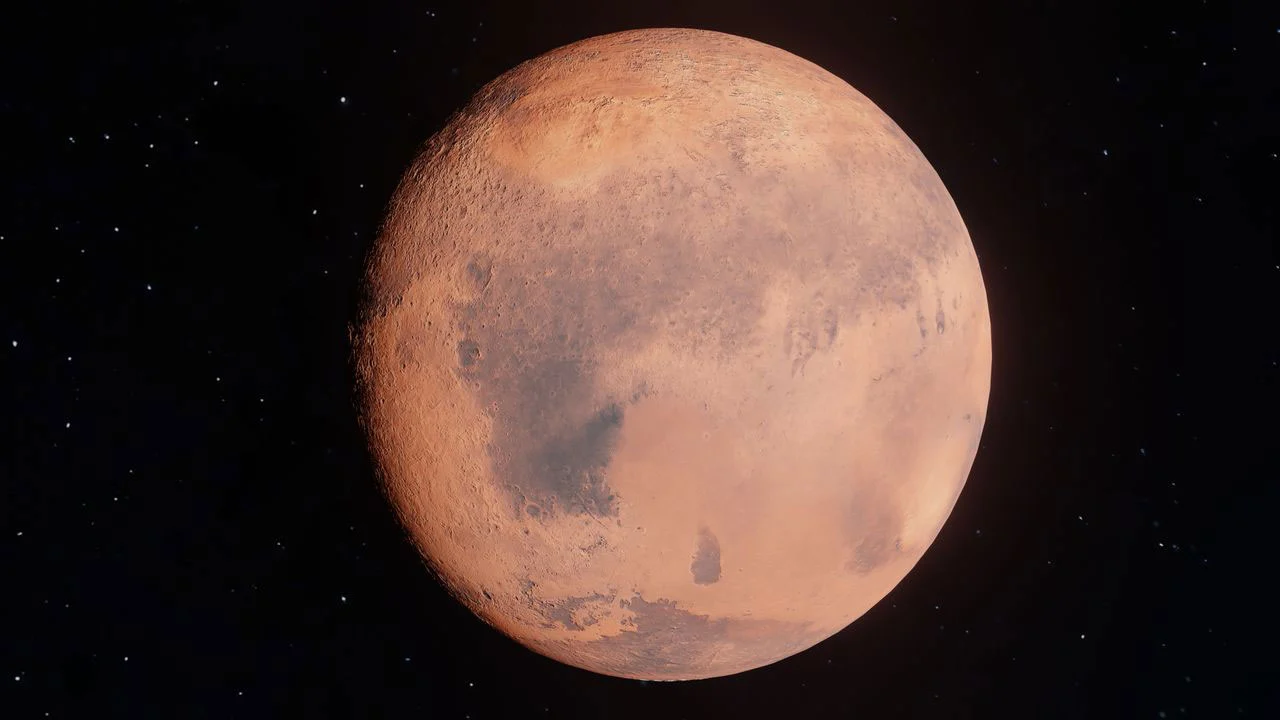
💡See how AI-powered image analysis is transforming geological research and planetary exploration.
⚡ 30-Second TL;DR
What Changed
First-ever identification of garnet in Martian meteorite samples
Why It Matters
This discovery demonstrates how advanced spectral analysis and AI-assisted mineral classification can unlock new insights from extraterrestrial samples.
What To Do Next
Apply computer vision models for automated mineral identification in high-resolution geological imagery to accelerate planetary science research.
Key Points
- •First-ever identification of garnet in Martian meteorite samples
- •Provides insights into Mars' geological evolution 4 billion years ago
- •Data helps refine models of early planetary thermal conditions
🧠 Deep Insight
AI-generated analysis for this event — not the original article.
🔑 Enhanced Key Takeaways
- •The garnet was identified within the Northwest Africa (NWA) 14607 meteorite, a regolith breccia that contains a diverse array of crustal fragments.
- •The specific composition of the garnet is almandine-rich, which typically forms under high-pressure conditions in the deep crust of a planet.
- •Researchers utilized electron probe microanalysis (EPMA) and electron backscatter diffraction (EBSD) to confirm the mineral's crystal structure and chemical signature.
- •The presence of this mineral suggests that the Martian crust underwent significant thickening and crustal recycling processes during the Noachian period.
- •This discovery challenges previous models that assumed the Martian crust was primarily composed of basaltic rocks without significant metamorphic processing.
🛠️ Technical Deep Dive
- Mineral Identification: Confirmed via Electron Probe Microanalysis (EPMA) to determine major element chemistry (Fe, Al, Si).
- Structural Verification: Electron Backscatter Diffraction (EBSD) used to map the crystallographic orientation and confirm the garnet phase.
- Geological Context: The meteorite NWA 14607 is classified as a regolith breccia, indicating it formed from the impact-driven mixing of various crustal materials.
- Pressure-Temperature Constraints: The garnet chemistry implies formation depths of approximately 10-20 kilometers, suggesting a crustal thickness greater than previously estimated for that region of Mars.
🔮 Future ImplicationsAI analysis grounded in cited sources
⏳ Timeline
Weekly AI Recap
Read this week's curated digest of top AI events →
👉Related Updates



AI-curated news aggregator. All content rights belong to original publishers.
Original source: cnBeta (Full RSS) ↗
This is a summary, not the original. Read the source, or get the weekly briefing.
Weekly AI briefing
One email a week. Unsubscribe anytime.