Gaming Billionaire Bets Fortune on Superhuman AI
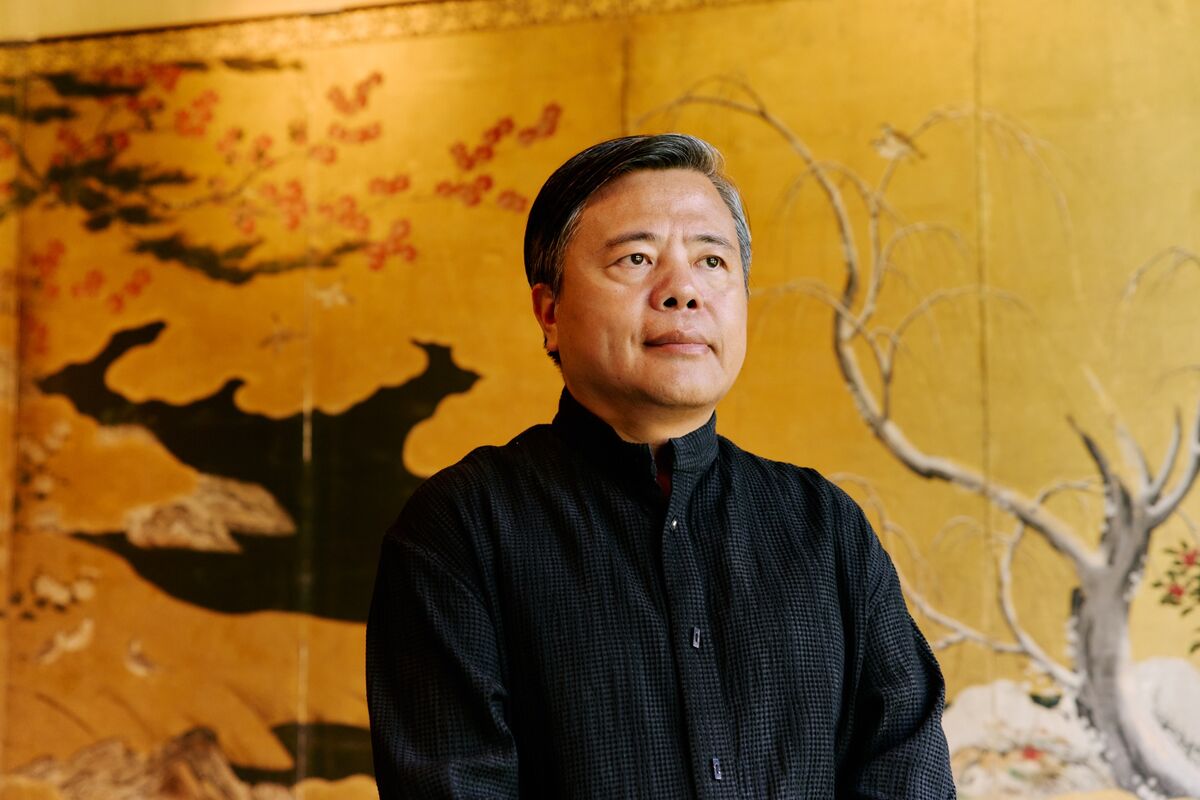
💡Gaming tycoon pours fortune into AGI race—watch for China AI breakthroughs
⚡ 30-Second TL;DR
What Changed
Chen Tianqiao, Shanda founder, betting personal fortune on AI
Why It Matters
This massive private investment signals China's push into AGI, potentially spurring global competition and new AI talent migration.
What To Do Next
Monitor Shanda Group's announcements for emerging AGI research collaborations.
Key Points
- •Chen Tianqiao, Shanda founder, betting personal fortune on AI
- •Goal to create 'smarter-than-man' superintelligent AI
- •China's first gaming billionaire pivoting to AI research
🧠 Deep Insight
Background and context from public sources — not the original article. 5 sources cited.
🔑 Enhanced Key Takeaways
- •Chen announced a $1 billion investment in AI and brain science compute clusters at the inaugural Chen Institute Symposium for AI Accelerated Science in January 2024, prioritizing structural experiments like memory systems and causal architectures.[1]
- •In late 2025, Chen founded Tanka, an AI-native company backed by Shanda Group, focused on a communication platform with long-term memory functions.[2]
- •Chen introduced 'Discoverative Intelligence' and Structured Temporal Intelligence (STI), a brain-inspired framework emphasizing metacognition, intrinsic motivation, and time-aware structures over mere scaling.[1]
- •Global research hubs for his AI initiatives are operating in Silicon Valley, Tokyo, Beijing, Shanghai, Hong Kong, Singapore, with expansions to Toronto and Europe.[1]
🛠️ Technical Deep Dive
- •Structured Temporal Intelligence (STI) targets neural dynamics, memory systems, causal architectures, neurodynamic hypotheses, world models, and metacognition with discoverability as the core metric.[1]
- •STI Benchmark evaluates across neural dynamics, memory, causality, world models, and metacognition, prioritizing structured, time-aware AI over parameter scaling.[1]
- •Emphasis on five key areas: structured temporal reasoning, causal world models, multi-scale memory hierarchies, neuro-symbolic integration, and metacognition with intrinsic motivation including uncertainty awareness, attention control, and curiosity-driven exploration.[1]
🔮 Future ImplicationsAI analysis grounded in cited sources
⏳ Timeline
📎 Sources (5)
Factual claims are grounded in the sources below. Forward-looking analysis is AI-generated interpretation.
Weekly AI Recap
Read this week's curated digest of top AI events →
👉Related Updates
AI-curated news aggregator. All content rights belong to original publishers.
Original source: Bloomberg Technology ↗
This is a summary, not the original. Read the source, or get the weekly briefing.
Weekly AI briefing
One email a week. Unsubscribe anytime.