Funloom AI Scales From Text Games to Multimodal Creation
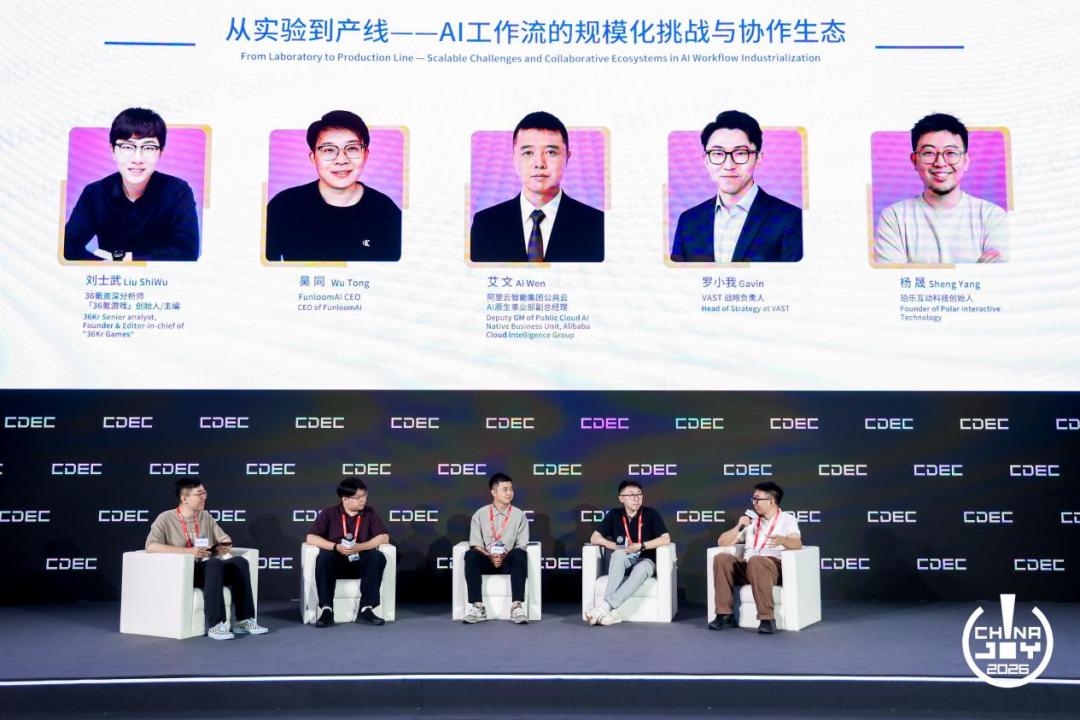
See how AI game creation is moving from impressive demos toward repeatable, production-ready workflows.
30-Second TL;DR
What Changed
Funloom AI positions AI text games as a low-barrier human-AI co-creation interface.
Why It Matters
The update suggests that AI-native game development is shifting from isolated generation experiments toward structured, repeatable production workflows. For studios and platform builders, differentiation will increasingly depend on controllability, iteration speed, and integration across models, cloud infrastructure, and creator tools.
What To Do Next
Prototype a small text-game workflow with Funloom AI, then measure how consistently its output can be converted into a playable RPG or interactive scenario.
Key Points
- •Funloom AI positions AI text games as a low-barrier human-AI co-creation interface.
- •Creators can refine narrative and gameplay ideas before converting prototypes into RPGs or interactive films.
- •The platform is designed to support fully automated generation, with a demo showcased at ChinaJoy.
- •Alibaba Cloud highlighted AI NPC use cases ranging from conversational companions to autonomous in-world agents.
- •VAST is contributing AI 3D and world-model capabilities to the broader game-production ecosystem.
Deep Insight
AI-generated analysis for this event — not the original article.
Enhanced Key Takeaways
- •Funloom AI (also known as Funloom or Funloom Technology) has integrated its proprietary 'Funloom Engine' which utilizes a multi-agent framework to manage narrative consistency across long-form interactive content.
- •The company has secured strategic partnerships with major Chinese gaming studios to integrate its AI-native narrative tools directly into Unity and Unreal Engine pipelines.
- •Funloom's platform utilizes a 'Creator-to-Asset' pipeline that allows users to export AI-generated character sprites and background assets directly into commercial game engines.
- •The platform's recent update includes a 'Dynamic World State' feature that allows AI NPCs to remember player interactions across different game sessions, moving beyond stateless conversational models.
- •Funloom AI is actively expanding its footprint into the education and training sector, repurposing its interactive narrative engine for corporate soft-skills simulation training.
Competitor Analysis
- Funloom AI
- Text RPG/Interactive Film
- Inworld AI
- AI NPC Behavior
- Convai
- AI NPC Behavior
- Funloom AI
- Unity/Unreal (Native)
- Inworld AI
- Unity/Unreal/Roblox
- Convai
- Unity/Unreal/Omniverse
- Funloom AI
- High (Scripted/Generative)
- Inworld AI
- Medium (Behavioral)
- Convai
- Medium (Behavioral)
- Funloom AI
- Tiered/Enterprise
- Inworld AI
- Usage-based
- Convai
- Usage-based
| Feature | Funloom AI | Inworld AI | Convai |
|---|---|---|---|
| Core Focus | Text RPG/Interactive Film | AI NPC Behavior | AI NPC Behavior |
| Engine Integration | Unity/Unreal (Native) | Unity/Unreal/Roblox | Unity/Unreal/Omniverse |
| Narrative Control | High (Scripted/Generative) | Medium (Behavioral) | Medium (Behavioral) |
| Pricing Model | Tiered/Enterprise | Usage-based | Usage-based |
Technical Deep Dive
- Architecture: Employs a hierarchical Large Language Model (LLM) structure where a 'Director Agent' oversees narrative flow while 'Character Agents' manage individual NPC personalities and memory.
- Memory System: Implements a vector database-backed long-term memory module that stores player-NPC relationship history and world state changes.
- Multimodal Pipeline: Uses a latent diffusion model for real-time asset generation, integrated with a proprietary text-to-animation layer for character expressions.
- API Capabilities: Provides RESTful APIs for real-time inference, allowing external game clients to query the narrative engine for dialogue and event triggers.
Future ImplicationsAI analysis grounded in cited sources
Timeline
- 2024-05Funloom AI launches its initial AI-native text adventure platform.
- 2025-02Company secures Series A funding to expand R&D into multimodal generation.
- 2025-11Funloom releases its first developer SDK for Unity integration.
- 2026-08Funloom AI showcases integrated text-to-interactive-film workflow at ChinaJoy.
Weekly AI Recap
Read this week's curated digest of top AI events →
AI-curated news aggregator. All content rights belong to original publishers.
Original source: 36氪 ↗
This is a summary, not the original. Read the source, or get the weekly briefing.
The weekly digest
One email a week. Unsubscribe anytime.