Founder's Handbook: Building an AI Native Company
💡A blueprint for 2026-style startups: how to use AI agents to replace entire engineering and operations teams.
⚡ 30-Second TL;DR
What Changed
Shift from execution-heavy roles to 'orchestrating AI agents' for coding and research.
Why It Matters
This framework challenges traditional startup scaling models, suggesting that small, AI-empowered teams can achieve outcomes previously requiring hundreds of employees.
What To Do Next
Integrate Claude Code into your development workflow to automate unit testing and debugging for your next MVP.
Key Points
- •Shift from execution-heavy roles to 'orchestrating AI agents' for coding and research.
- •Use AI for deep research, financial modeling, and pitch deck creation before writing code.
- •Leverage agentic coding tools to compress product development timelines.
- •Prioritize 'should we build' over 'can we build' as the primary competitive barrier.
🧠 Deep Insight
Web-grounded analysis with 15 cited sources.
🔑 Enhanced Key Takeaways
- •Anthropic's "Founder's Playbook" was published on May 14, 2026, coinciding with the launch of "Claude for Small Business," which integrates Anthropic's agentic platform directly into the daily operations of lean teams and solo founders.
- •The playbook asserts that AI eliminates traditional startup bottlenecks such as capital, headcount, and technical skill, thereby enabling lean, AI-native teams to achieve scale and operational efficiency previously associated with much larger organizations.
- •Anthropic's recommended approach to AI agent design prioritizes simplicity, transparency, and meticulous tool documentation, favoring debuggability and reliability in production environments over overly complex multi-agent systems.
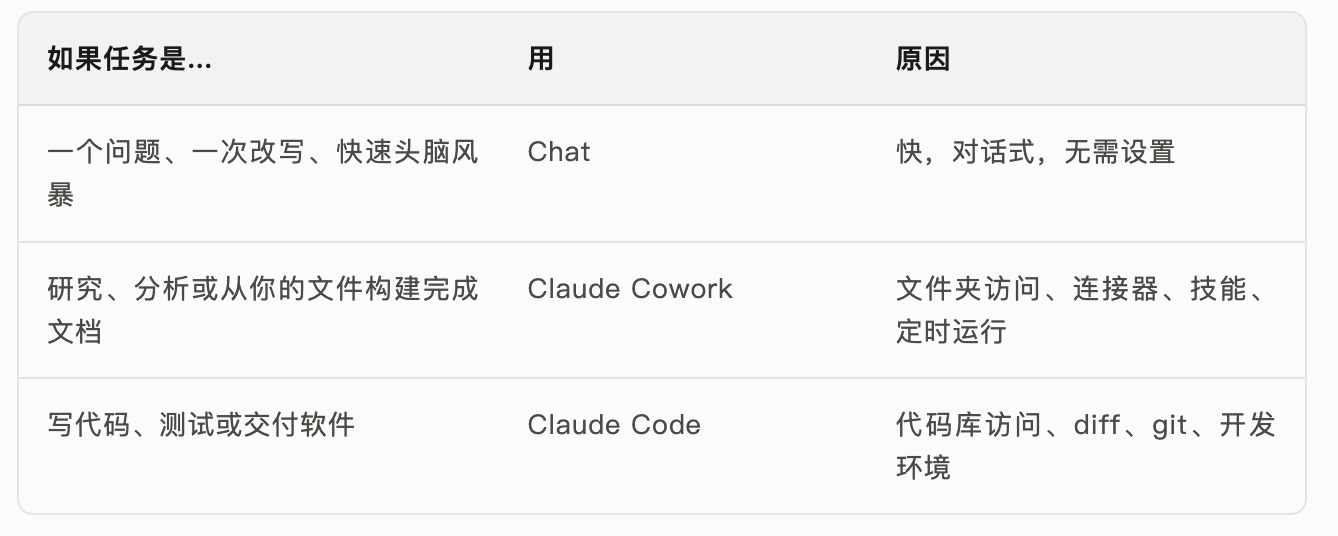
- •The handbook also functions as a marketing document for Anthropic's own products, including Claude Chat, Claude Cowork, and Claude Code, providing guidance on their optimal application across different startup development phases.
- •A significant concern has been raised regarding a potential contradiction in the playbook's advice to use Claude Cowork for compliance and security workstreams, as Anthropic's own documentation indicates that Cowork activity is not captured in audit logs, which could expose companies in regulated industries to enforcement actions.
📊 Competitor Analysis▸ Show
A Markdown table comparing this with competitors (Feature/Pricing/Benchmarks). Return null if not applicable (e.g. op-ed, interview, single-product announcement with no clear competitors).
🛠️ Technical Deep Dive
- Claude Architecture: Anthropic's Claude models are built upon a Transformer architecture, specifically AnthropicLM v4-s3, a 52-billion-parameter, pre-trained, autoregressive model.
- Constitutional AI: A core innovation in Claude's architecture is the application of "Constitutional AI," which aligns models using AI rather than solely human feedback. This involves applying predefined rules to guide the model's behavior, aiming to reduce harmful or biased outputs and make AI behavior more predictable and controllable.
- Context Window: Claude 2 supports a context window of up to 100,000 tokens, while Claude 3 models can process up to 200,000 tokens in a single request, enabling analysis of lengthy documents or complex codebases.
- Claude Code Agent Architecture: Anthropic's Claude Code implements an autonomous coding agent using a single-threaded master loop (codenamed "nO"). This architecture prioritizes debuggability, transparency, and reliability over complex multi-agent systems, using a flat message history and controlled parallelism through limited sub-agent spawning.
- Natural Language Autoencoders (NLA): Anthropic has developed a three-component NLA system (Target Model, Activation Verbalizer, and Activation Reconstructor) to translate Claude's internal neural activations (floating-point numbers) into human-readable English text. This system aims to provide interpretability by allowing researchers to understand the model's internal state and decision-making processes.
🔮 Future ImplicationsAI analysis grounded in cited sources
⏳ Timeline
📎 Sources (15)
Factual claims are grounded in the sources below. Forward-looking analysis is AI-generated interpretation.
- Google Search Source
- Google Search Source
- Google Search Source
- Google Search Source
- Google Search Source
- Google Search Source
- Google Search Source
- Google Search Source
- Google Search Source
- Google Search Source
- Google Search Source
- Google Search Source
- Google Search Source
- Google Search Source
- Google Search Source
Weekly AI Recap
Read this week's curated digest of top AI events →
👉Related Updates


AI-curated news aggregator. All content rights belong to original publishers.
Original source: 虎嗅 ↗