Foundation Future Industries to deploy humanoid robots in Ukraine
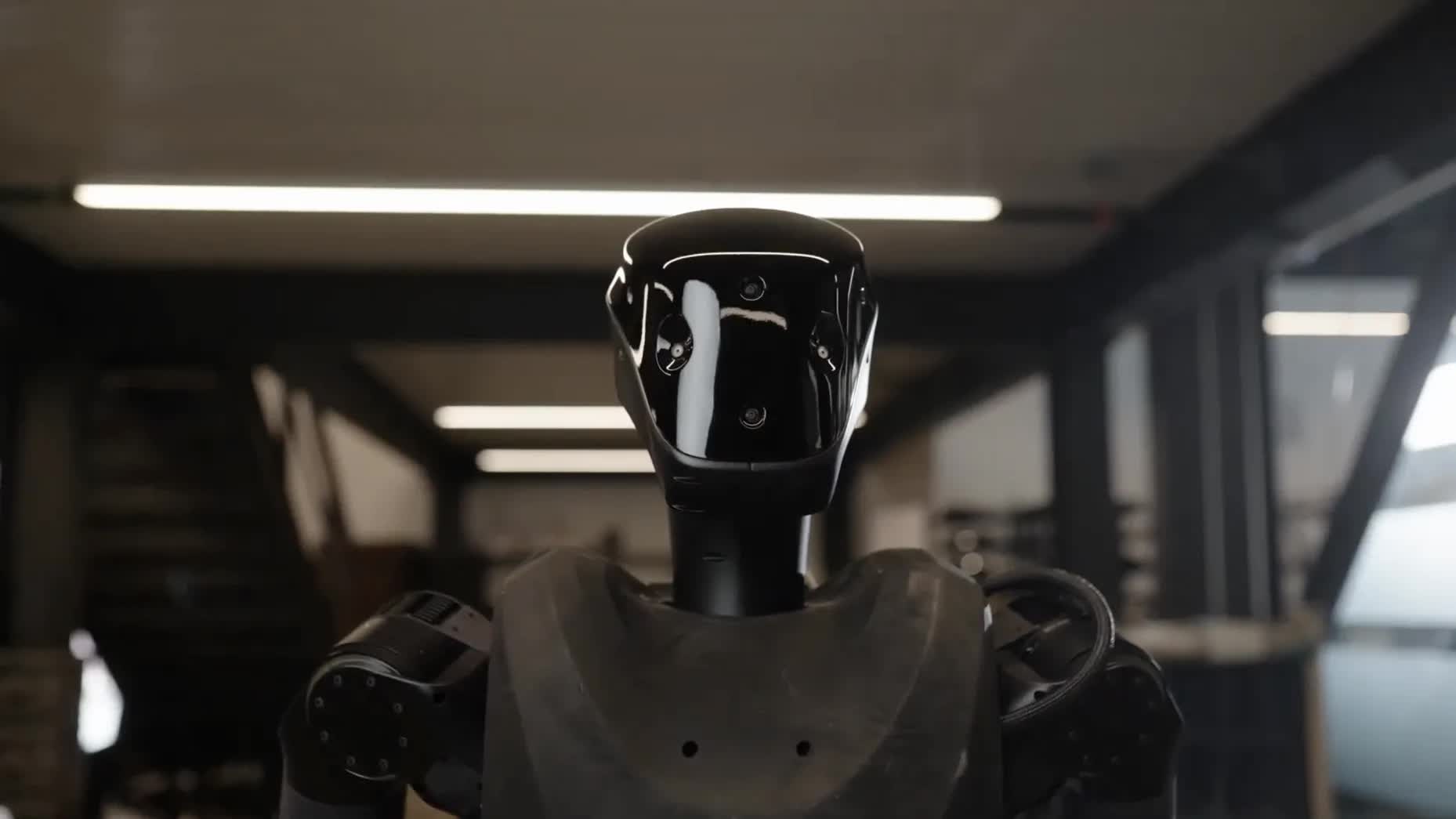
💡First instance of a startup explicitly targeting active combat zones for humanoid robot deployment.
⚡ 30-Second TL;DR
What Changed
Foundation Future Industries aims to replace humans in high-risk battlefield tasks.
Why It Matters
This signals a significant shift toward the deployment of embodied AI in active combat zones, raising ethical and regulatory concerns. It may accelerate the development of autonomous military robotics.
What To Do Next
Monitor the development of autonomous robotics regulations to understand how dual-use AI policies will impact your hardware roadmap.
Key Points
- •Foundation Future Industries aims to replace humans in high-risk battlefield tasks.
- •The company is linked to the Trump family and was founded in 2024.
- •Plans include active front-line testing of humanoid platforms in Ukraine.
🧠 Deep Insight
Background and context from public sources — not the original article. 22 sources cited.
🔑 Enhanced Key Takeaways
- •Foundation Future Industries has secured $24 million in research contracts from the U.S. Army, Navy, and Air Force for testing its humanoid robots in military applications, including inspection, logistics, and potentially weapons handling.
- •Two Phantom MK-1 units were deployed to Ukraine in February 2026 for logistics and reconnaissance tasks, marking the first confirmed deployment of humanoid robots in an active combat theater.
- •The company's CEO, Sankaet Pathak, previously led Synapse, a fintech startup that filed for bankruptcy in 2024 with tens of millions in consumer deposits unaccounted for, and Foundation Future Industries also faced scrutiny for making false claims about a partnership with General Motors.
- •Foundation Future Industries has ambitious production targets, aiming for 40 units in 2025, 10,000 in 2026, and 50,000 by the end of 2027, with the Phantom MK-1 having an approximate unit cost of $150,000 or available for lease at $100,000 per year.
- •The Phantom MK-1 has limitations, including a 44-pound (20 kg) payload capacity, lack of waterproofing, and insufficient battery life for large-scale deployment, prompting plans for an upgraded Phantom 2 model with double the payload capacity and "superhuman abilities" to be sent to Ukraine this year.
📊 Competitor Analysis▸ Show
| Feature/Company | Foundation Future Industries (Phantom MK-1) |
|---|---|
| Height | 5'9" (1.75m) |
| Weight | 176-180 lbs |
| Payload | 44 lbs (MK-1), 175 lbs (MK-2 planned) |
| Unit Cost | ~$150,000 (or $100,000/year lease) |
| Key Tech | 19 upper-body DOF, camera-first vision (8 cameras, no LiDAR), LLM-driven autonomy, proprietary cycloidal actuators |
| Military Use | Logistics, reconnaissance, potential weapons handling; active testing in Ukraine |
| Limitations | MK-1 lacks waterproofing, limited battery life |
| Competitor: Apptronik Apollo | |
| Height | 5'8" |
| Weight | 160 lbs |
| Payload | 55 lbs |
| Unit Cost | Not specified |
| Key Tech | NASA/DoD origins, modular design, 71 DOF, hot-swappable battery (22-hour cycles) |
| Military Use | No current plans for war, but built for rugged environments; industrial pilots (Mercedes-Benz, GXO Logistics) |
| Limitations | Not specified |
| Competitor: Xiaomi Robotics Zero | |
| Height | Not specified |
| Weight | Not specified |
| Payload | Not specified |
| Unit Cost | $75,000 - $100,000 |
| Key Tech | Open source, whole-body motion controller stress-tested in simulations |
| Military Use | No public defense contracts or stated military ambitions |
| Limitations | Not specified |
| Competitor: Unitree G1 | |
| Height | Not specified |
| Weight | Not specified |
| Payload | Not specified |
| Unit Cost | ~$13,500 |
| Key Tech | Cheapest humanoid available, over 6,000 units shipped |
| Military Use | Quadruped version spotted with rifle in China's joint military drills |
| Limitations | Not specified |
| Competitor: Tesla Optimus | |
| Height | Not specified |
| Weight | Not specified |
| Payload | Not specified |
| Unit Cost | Not specified |
| Key Tech | Native Starlink integration for command and control, bypassing local Wi-Fi/Bluetooth |
| Military Use | No public defense contracts or stated military ambitions |
| Limitations | Not specified |
🛠️ Technical Deep Dive
- Robot Model: Phantom MK-1 (with an upgraded Phantom 2 planned)
- Height: 5 feet, 9 inches (1.75 meters)
- Weight: 176-180 pounds
- Payload Capacity: 44 pounds (20 kg) for MK-1; Phantom 2 is expected to double this capacity to 175 pounds
- Degrees of Freedom (DOF): 19 in the upper body
- Vision System: Camera-first design utilizing eight cameras, without bulky LiDAR
- Actuators: Proprietary cycloidal actuators delivering up to 160 newton-meters of torque, designed for power, precision, and quiet operation
- Autonomy Stack: LLM-driven (Large Language Model), blending independent operation with supervised teleoperation, translating high-level task instructions into motion
- Walking Speed: 1.7 meters per second
- Power: MK-1 units currently lack sufficient battery life for large-scale, sustained deployment; MK-2 plans include larger battery packs
- Durability: MK-1 lacks waterproofing; MK-2 is planned to include waterproofing and consolidated electronics to reduce short-circuit risks
- Control: Operators retain final authority over lethal decisions, though some scenarios are designed for autonomous decision-making without human confirmation
- Grip Technology: Features a glove-type interface inspired by human hand mechanics to replicate a dexterous range of motion
- Manufacturing: MK-2 will use cast-moulded bodywork to accelerate production and reduce costs; the company emphasizes a US-based supply chain and onshore production
- Mobility: Capable of navigating stairs, uneven terrain, and confined spaces
🔮 Future ImplicationsAI analysis grounded in cited sources
⏳ Timeline
📎 Sources (22)
Factual claims are grounded in the sources below. Forward-looking analysis is AI-generated interpretation.
Weekly AI Recap
Read this week's curated digest of top AI events →
👉Related Updates
AI-curated news aggregator. All content rights belong to original publishers.
Original source: cnBeta (Full RSS) ↗
This is a summary, not the original. Read the source, or get the weekly briefing.
The weekly digest
One email a week. Unsubscribe anytime.