🔥36氪•Stalecollected in 21m
Flying AI Home Butler Flyer O1 Secures Seed Funding
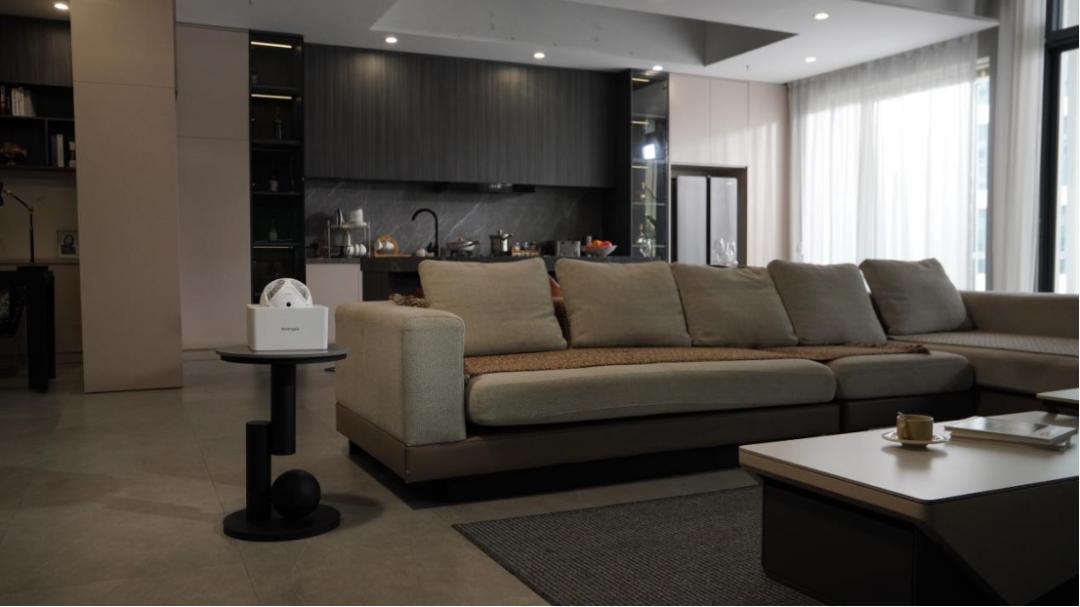
💡Pioneering flying robot with AI cognition redefines home assistants for multi-user homes
⚡ 30-Second TL;DR
What Changed
Seed round led by Chuxin Capital for multi-PhD team from NTU, Tsinghua.
Why It Matters
Introduces flying embodied AI to smart homes, solving ground mobility limits with superior perception. Positions Entropys as pioneer in 3D family data platforms, potentially disrupting passive assistants.
What To Do Next
Experiment with cognitive robotics frameworks like ROS for aerial home agent prototypes.
Who should care:Founders & Product Leaders
Key Points
- •Seed round led by Chuxin Capital for multi-PhD team from NTU, Tsinghua.
- •Flyer O1 enables aerial navigation, habit learning, multi-member schedule coordination.
- •Privacy-focused: local storage for images (auto-delete after 7 days), end-side user data.
- •Targets large欧美 families; cognitive robotics beats ground robots in coverage.
🧠 Deep Insight
AI-generated analysis for this event.
🔑 Enhanced Key Takeaways
- •Entropys Tech utilizes a proprietary 'Air-Cognitive' architecture that integrates SLAM (Simultaneous Localization and Mapping) with real-time obstacle avoidance specifically optimized for indoor dynamic environments, such as moving pets or children.
- •The Flyer O1 hardware incorporates a ducted fan design to minimize noise levels below 50dB, addressing a primary consumer pain point for indoor aerial drones.
- •The company is positioning the Flyer O1 as a 'spatial intelligence' platform, aiming to integrate with Matter-compliant smart home ecosystems to act as a mobile hub for IoT device control.
📊 Competitor Analysis▸ Show
| Feature | Flyer O1 (Entropys) | Amazon Astro | HoverAir X1 |
|---|---|---|---|
| Form Factor | Flying Drone | Ground Robot | Flying Drone |
| Primary Use | Home Monitoring/Coordination | Security/Patrol | Personal Photography |
| Navigation | 3D Aerial | 2D Ground | 3D Aerial |
| Pricing Model | Hardware + Subscription | Hardware Only | Hardware Only |
🛠️ Technical Deep Dive
- •Navigation System: Employs a multi-sensor fusion approach combining visual odometry, ultrasonic sensors, and an IMU for stable flight in GPS-denied indoor environments.
- •AI Architecture: Utilizes an edge-computing module capable of running lightweight Large Language Models (LLMs) for natural language understanding and task scheduling without cloud dependency.
- •Privacy Implementation: Features a hardware-level 'kill switch' for the camera and microphone, with all video processing performed on a local NPU (Neural Processing Unit) rather than the cloud.
- •Battery/Flight: Designed for a 20-minute flight time per charge with automated return-to-base (RTB) functionality for inductive charging.
🔮 Future ImplicationsAI analysis grounded in cited sources
Flying robots will replace stationary smart home hubs within 36 months.
The ability to provide mobile, multi-angle sensor coverage makes stationary hubs obsolete for comprehensive home monitoring and device management.
Regulatory scrutiny on indoor drones will increase significantly by 2027.
As indoor autonomous flight becomes more common, privacy and safety concerns regarding 'flying cameras' will likely trigger new consumer protection legislation.
⏳ Timeline
2025-09
Entropys Tech founded in Shenzhen by a team of PhDs from NTU and Tsinghua.
2026-03
Flyer O1 prototype completes successful pilot testing in residential environments.
2026-05
Entropys Tech secures seed funding led by Chuxin Capital.
📰
Weekly AI Recap
Read this week's curated digest of top AI events →
👉Related Updates
AI-curated news aggregator. All content rights belong to original publishers.
Original source: 36氪 ↗

