FLARE: Refactor-Free Federated Learning
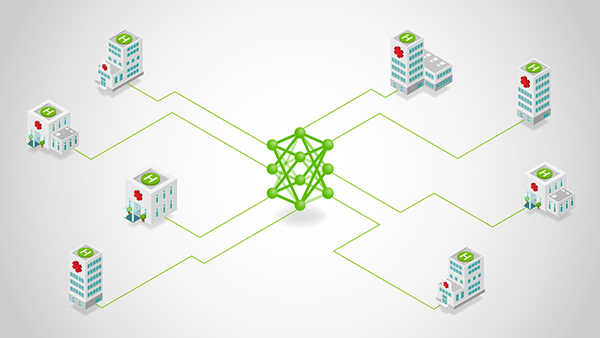
💡NVIDIA FLARE scales federated learning sans refactoring—ideal for privacy-bound data.
⚡ 30-Second TL;DR
What Changed
Federated learning counters data centralization limits from regulations and costs.
Why It Matters
Lowers entry barriers for federated learning adoption among AI teams handling sensitive data. Accelerates cross-org collaborative projects without data transfer risks. Boosts NVIDIA ecosystem for privacy-preserving AI.
What To Do Next
Install NVIDIA FLARE from NGC catalog and prototype a federated learning workflow.
Key Points
- •Federated learning counters data centralization limits from regulations and costs.
- •NVIDIA FLARE removes refactoring overhead for existing workflows.
- •Enables scalable, privacy-focused ML on immovable data.
🧠 Deep Insight
AI-generated analysis for this event — not the original article.
🔑 Enhanced Key Takeaways
- •NVIDIA FLARE (Federated Learning Application Runtime Environment) is open-source and built on a modular architecture that supports diverse training paradigms beyond standard federated averaging, including cyclic weight transfer and personalized federated learning.
- •The framework integrates natively with privacy-preserving technologies such as Differential Privacy (DP), Homomorphic Encryption (HE), and Secure Multi-Party Computation (SMPC) to mitigate risks of model inversion attacks.
- •It provides a specialized 'FLARE Console' and 'Admin API' to manage distributed training jobs, allowing researchers to orchestrate complex workflows across heterogeneous infrastructures, including cloud, on-premises, and edge devices.
📊 Competitor Analysis▸ Show
| Feature | NVIDIA FLARE | PySyft (OpenMined) | FATE (WeBank) |
|---|---|---|---|
| Primary Focus | Enterprise/Research FL | Privacy-preserving research | Industrial-grade FL |
| Architecture | Modular/Runtime-focused | Library-based/Privacy-first | End-to-end pipeline |
| Pricing | Open Source (Apache 2.0) | Open Source (Apache 2.0) | Open Source (Apache 2.0) |
| Benchmarks | High performance/NVIDIA GPU optimized | Research-oriented/Variable | High scalability/Banking focus |
🛠️ Technical Deep Dive
- Architecture: Utilizes a Controller-Worker pattern where the Controller manages the global model and workflow orchestration, while Workers execute local training tasks.
- Communication: Employs a flexible communication layer that supports gRPC for secure, high-performance messaging between distributed sites.
- Workflow Customization: Uses a 'FL Component' system allowing users to define custom trainers, aggregators, and filters without modifying the core framework code.
- Security: Supports TLS for encrypted communication channels and provides hooks for integrating hardware-based Trusted Execution Environments (TEEs).
🔮 Future ImplicationsAI analysis grounded in cited sources
⏳ Timeline
Weekly AI Recap
Read this week's curated digest of top AI events →
👉Related Updates


AI-curated news aggregator. All content rights belong to original publishers.
Original source: NVIDIA Developer Blog ↗
This is a summary, not the original. Read the source, or get the weekly briefing.
The weekly digest
One email a week. Unsubscribe anytime.