Five Guardrails for AI in Education
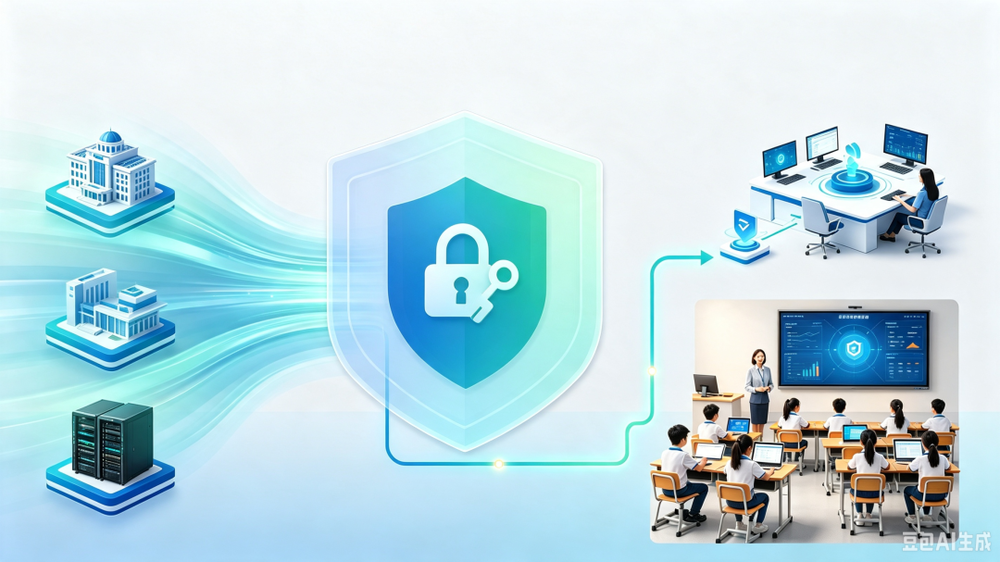
💡Education AI needs more than accuracy: this framework addresses misuse, model safety, compute, and algorithmic test prep
⚡ 30-Second TL;DR
What Changed
Student-facing AI should be restricted in basic education because it can replace thinking, practice, and independent expression.
Why It Matters
The recommendations could influence how schools select models, design assessments, and procure AI infrastructure. For AI vendors, education may require stronger safeguards, auditability, and controls against answer outsourcing than general consumer applications.
What To Do Next
Prototype a classroom evaluation flow using a model whitelist, closed-book baseline tests, and oral follow-ups to measure learning gains beyond AI-generated answers.
Key Points
- •Student-facing AI should be restricted in basic education because it can replace thinking, practice, and independent expression.
- •Closed-book tests, oral defenses, live writing, and process observation can verify whether students—not AI—possess the assessed abilities.
- •Education systems should consider a large-model whitelist covering value alignment, content safety, and knowledge quality.
- •A national education compute-sharing alliance based on CERNET could reduce duplicated infrastructure investment.
- •AI learning products may turn traditional test preparation into more precise algorithm-driven training.
🧠 Deep Insight
AI-generated analysis for this event.
🔑 Enhanced Key Takeaways
- •The Chinese Ministry of Education has increasingly emphasized 'AI Literacy' as a core competency, shifting the focus from mere tool restriction to integrating AI ethics into the national curriculum.
- •CERNET (China Education and Research Network) has been identified in recent policy discussions as the backbone for a 'National Education Brain,' aiming to centralize high-quality pedagogical data while maintaining data sovereignty.
- •Recent studies in Chinese academic circles highlight the 'Digital Divide' risk, where AI-driven personalized learning may exacerbate performance gaps between urban and rural students if compute resources are not equitably distributed.
- •Regulatory bodies are moving toward a 'Sandbox' approach for EdTech, requiring AI models to undergo rigorous 'Value Alignment' audits before being deployed in K-12 classrooms to prevent ideological drift.
- •The push for 'process-oriented assessment' is a direct response to the proliferation of LLM-based homework cheating tools, which have rendered traditional take-home assignments increasingly unreliable for measuring student mastery.
🔮 Future ImplicationsAI analysis grounded in cited sources
⏳ Timeline
Weekly AI Recap
Read this week's curated digest of top AI events →
👉Related Updates



AI-curated news aggregator. All content rights belong to original publishers.
Original source: 虎嗅 ↗