Fitbit Air: AI-Driven Health Tracking Without a Screen
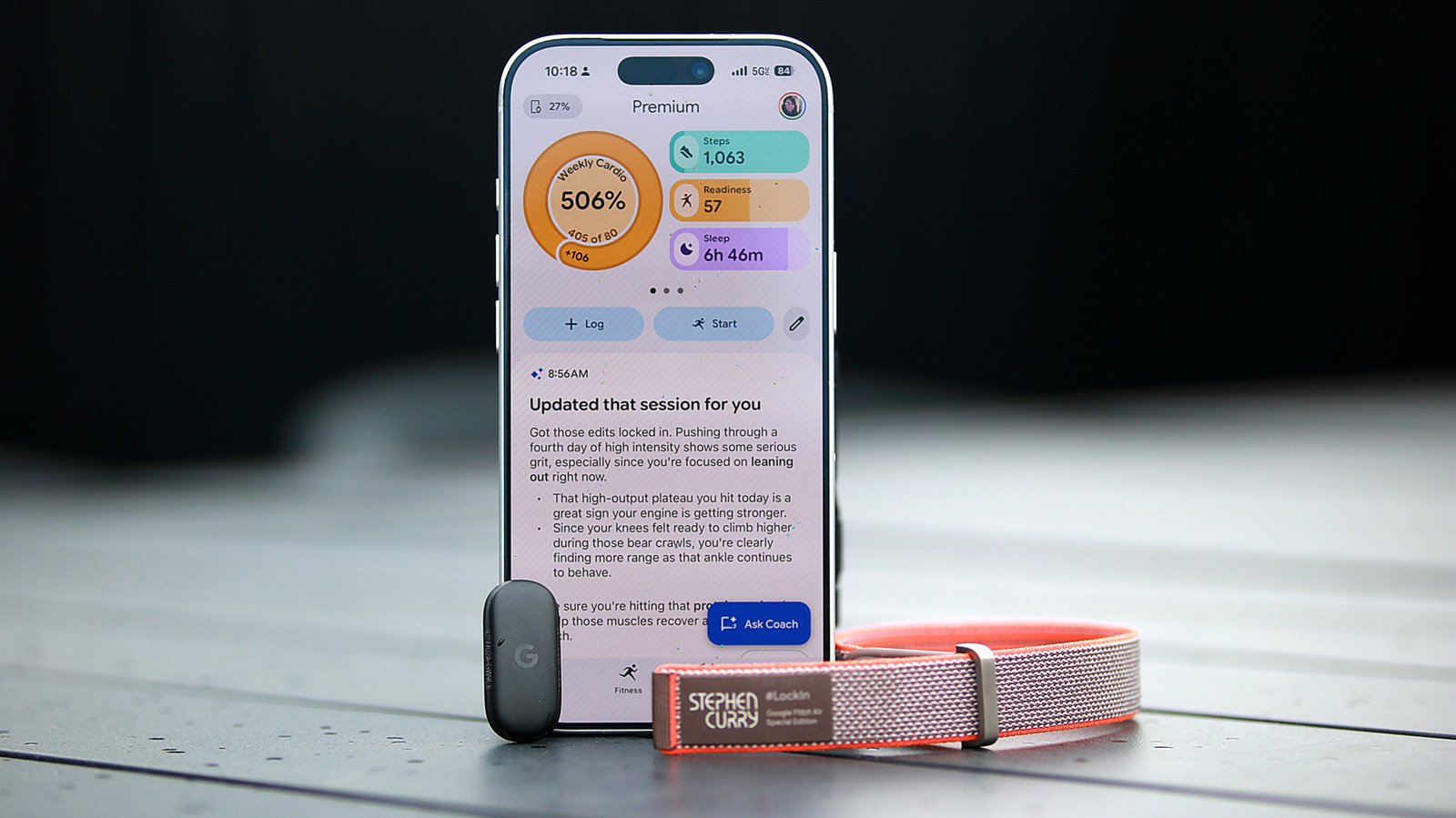
💡Wearable AI data is becoming a primary source for personalized health and longevity model training.
⚡ 30-Second TL;DR
What Changed
Screenless design focused on continuous health monitoring
Why It Matters
The integration of AI into screenless wearables highlights the growing market for passive health monitoring and predictive wellness analytics.
What To Do Next
Explore the Fitbit API to see if biometric data streams can be integrated into custom personal health AI agents.
Key Points
- •Screenless design focused on continuous health monitoring
- •Leverages AI for comprehensive health data analysis
- •Direct competitor to existing subscription-based trackers like Whoop
🧠 Deep Insight
Web-grounded analysis with 16 cited sources.
🔑 Enhanced Key Takeaways
- •The Fitbit Air was officially launched on May 7, 2026, and became available for pre-order on the same day, with shipping commencing on May 26, 2026.
- •Priced at $99.99, the Fitbit Air is positioned as Google's most affordable and smallest tracker, and it includes a three-month trial of Google Health Premium.
- •The device integrates with the newly rebranded 'Google Health' app (formerly the Fitbit app) and utilizes the Gemini-powered Google Health Coach to deliver personalized insights and adaptive workout plans.
- •Weighing 12 grams with the band (5.2 grams for the pebble alone), the Fitbit Air is notably lighter and slimmer than competing screenless trackers.
- •It incorporates high-fidelity sensor technology to provide 24/7 heart rate monitoring, heart rhythm monitoring with AFib alerts, SpO2, resting heart rate, heart rate variability, and detailed sleep stage and duration tracking.
📊 Competitor Analysis▸ Show
| Feature | Fitbit Air | Whoop 5.0 |
|---|---|---|
| Price | $99.99 (device purchase) | Subscription-based (starts at ~$16/month annually) |
| Subscription | Optional Google Health Premium ($9.99/month or $99/year for full features) | Required for device functionality |
| Battery Life | Up to 7 days; 5-minute fast charge for 1 day of use | Over 2 weeks; wireless rechargeable battery pack |
| Size (LWD) | 1.4 x 0.7 x 0.3 inches (sensor) | 1.37 x 0.94 x 0.42 inches (module) |
| Weight | 12g (with band); 5.2g (pebble only) | Not explicitly stated, but heavier than Fitbit Air |
| Water Resistance | 50 meters | IP68 (submersion to ~32 feet for up to 2 hours) |
| Key Sensors | Optical HR, 3-axis accelerometer, gyroscope, red/infrared SpO2, skin temperature variation | Accelerometer, PPG (HR), skin temperature |
| ECG Function | No dedicated ECG function | Yes (for active heart health screening) |
| GPS | No integrated GPS | No integrated GPS |
| AI Coaching | Google Health Coach (Gemini-powered) | Focus on recovery and strain analysis |
| Compatibility | Android and iOS | Not specified, but generally broad for wearables |
| Target User | Broad audience seeking affordable, AI-driven health insights | Athletes and individuals serious about optimizing health and recovery |
🛠️ Technical Deep Dive
- Sensors: The Fitbit Air includes an optical heart rate sensor (sampling every 2 seconds), a 3-axis accelerometer, a gyroscope, red and infrared sensors for SpO2 (blood oxygen monitoring), and a skin temperature variation sensor.
- Feedback: It features a vibration motor for silent alarms and a Smart Wake feature, along with a status LED for charging and pairing indications.
- Connectivity: The device uses Bluetooth 5.0 for syncing with the companion app.
- Water Resistance: It is water-resistant up to 50 meters.
- AI Integration: The device feeds biometric data into the Google Health ecosystem, which is increasingly centered on AI, particularly the Gemini-powered Google Health Coach.
- Sleep Tracking: The Fitbit Air utilizes a new machine learning model that Google claims improves sleep score accuracy by an additional 15%.
🔮 Future ImplicationsAI analysis grounded in cited sources
⏳ Timeline
📎 Sources (16)
Factual claims are grounded in the sources below. Forward-looking analysis is AI-generated interpretation.
Weekly AI Recap
Read this week's curated digest of top AI events →
👉Related Updates

AI-curated news aggregator. All content rights belong to original publishers.
Original source: Engadget ↗