๐จ๐ณcnBeta (Full RSS)โขStalecollected in 25m
First Mechanical-Free Electric Drone Debuts
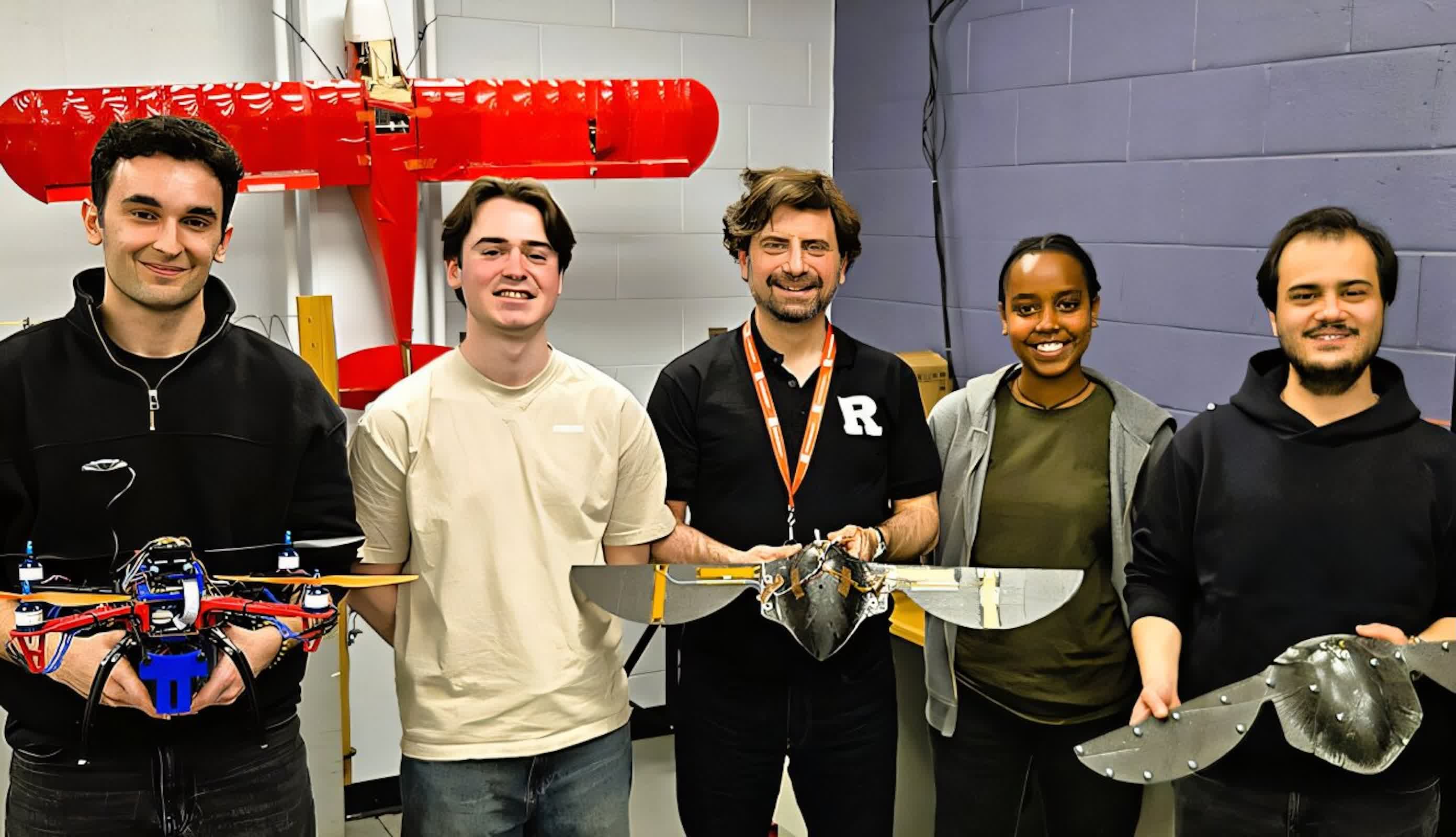
๐กMech-free drone actuation breakthrough boosts bio-inspired robotics for AI embodiment.
โก 30-Second TL;DR
What Changed
No mechanical components: eliminates motors, gears, linkages
Why It Matters
Advances bio-mimetic robotics, enabling quieter, lighter drones for AI surveillance and embodied systems. Could reduce mechanical failures in robotics applications.
What To Do Next
Prototype electroactive actuators using Rutgers-inspired materials for your embodied AI robot.
Who should care:Researchers & Academics
๐ง Deep Insight
AI-generated analysis for this event.
๐ Enhanced Key Takeaways
- โขThe drone utilizes Dielectric Elastomer Actuators (DEAs), which function as artificial muscles that expand and contract when subjected to high-voltage electric fields.
- โขThe research team at Rutgers specifically focused on overcoming the 'low-frequency' limitation of previous soft-actuator designs, enabling the wing-beat frequency necessary for sustained flight.
- โขThis technology aims to solve the 'scaling problem' in micro-air vehicles (MAVs), where traditional electromagnetic motors become inefficient as size decreases.
๐ ๏ธ Technical Deep Dive
- Actuation Mechanism: Dielectric Elastomer Actuators (DEAs) consisting of a soft elastomer membrane sandwiched between two compliant electrodes.
- Control Method: High-voltage pulse-width modulation (PWM) to control the deformation rate and amplitude of the wing structures.
- Structural Material: Lightweight, flexible polymer composites designed to mimic the elasticity and structural integrity of insect wings.
- Power Density: Optimized for high-frequency oscillation, allowing for lift generation without the weight penalty of traditional gearboxes or transmissions.
๐ฎ Future ImplicationsAI analysis grounded in cited sources
Mechanical-free drones will achieve flight endurance exceeding 60 minutes in sub-100g weight classes.
Eliminating mechanical friction and transmission losses significantly increases the energy efficiency of the propulsion system compared to traditional micro-motors.
This technology will be integrated into covert surveillance platforms within five years.
The absence of rotating motors and gears drastically reduces the acoustic signature, making the drones nearly silent during operation.
โณ Timeline
2023-05
Rutgers researchers publish initial findings on high-frequency soft actuator performance.
2024-11
Successful laboratory demonstration of a flapping-wing prototype using DEA technology.
2026-03
Official unveiling of the first fully mechanical-free electric drone prototype.
๐ฐ
Weekly AI Recap
Read this week's curated digest of top AI events โ
๐Related Updates
AI-curated news aggregator. All content rights belong to original publishers.
Original source: cnBeta (Full RSS) โ


