First Invasive BCI Device Approved After 50 Years
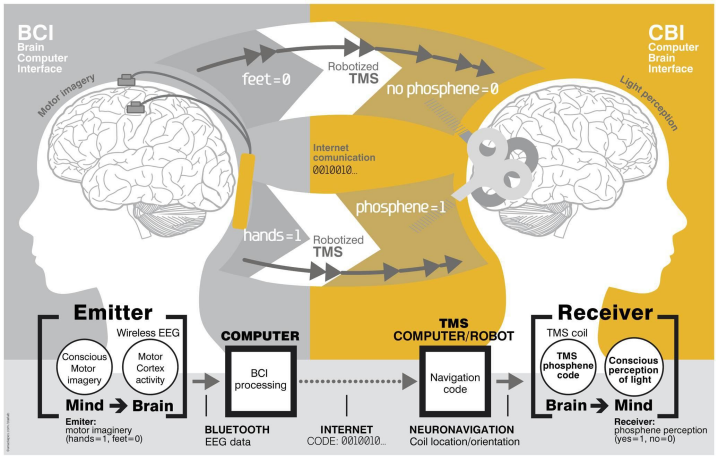
💡Invasive BCI hits medical reality—huge for AI neurotech builders
⚡ 30-Second TL;DR
What Changed
First invasive BCI device receives medical approval
Why It Matters
Approval accelerates BCI adoption in healthcare, opening AI-neurotech opportunities. Investors and developers should target medical BCI integrations.
What To Do Next
Explore Blackrock Neurotech or Synchron APIs for prototyping BCI-medical apps.
Key Points
- •First invasive BCI device receives medical approval
- •50 years from concept to regulatory greenlight
- •BCI-medical market potential at trillions of yuan
🧠 Deep Insight
Background and context from public sources — not the original article. 6 sources cited.
🔑 Enhanced Key Takeaways
- •Precision Neuroscience's minimally invasive BCI achieved FDA clearance for up to 30 days of use and has been implanted in over 50 patients as of December 2025, demonstrating rapid clinical adoption beyond initial pilot studies.
- •China's Neuracle Technology received the first invasive BCI marketing approval in mainland China (March 2026), creating a dual-regulatory landscape where both US and Chinese devices now have formal medical clearance, intensifying global competition.
- •Neuralink plans to transition to high-volume automated production in 2026 with streamlined surgical procedures, while competing platforms like Synchron have implanted ~10 patients, indicating the market is entering a scaling phase with multiple viable technologies.
📊 Competitor Analysis▸ Show
| Company | Device Type | Implant Status | Patients Implanted | Key Differentiator | Regulatory Status |
|---|---|---|---|---|---|
| Precision Neuroscience | 1,024-channel microelectrode array film | Minimally invasive micro-slit | 50+ | <20 min implant time | FDA cleared (30 days) |
| Neuralink | N1 chip with threaded electrodes | Fully invasive | 12 (as of Sept 2024) | Automated surgical procedure planned 2026 | FDA approved (May 2023) |
| Synchron | Stentrode (endovascular) | Minimally invasive | ~10 | Placed via blood vessels, no craniotomy | FDA approved |
| Neuracle (China) | Invasive brain implant + robotic glove system | Invasive (outside dura) | 36 (clinical trials) | Limited to partial paralysis; fewer channels | China NMPA approved (March 2026) |
| Gbrain (Incehon, Seoul) | Minimally invasive BCI | Minimally invasive | Early stage | Parkinson's disease focus; brain stimulation | Pre-commercial (CES 2026 demo) |
🛠️ Technical Deep Dive
- •Precision Neuroscience's array: 1,024-channel microelectrode array film deployed via cranial micro-slit technique; endoscope-guided placement; entire procedure from skin incision to final securing completed in under 20 minutes.
- •Neuralink N1: Small chip replacing bone section; connected via thin threaded electrodes that pass through the dura mater; 2026 update specifies threads will traverse dura without removal, reducing surgical complexity.
- •Neuracle system: Full integrated platform including implanted brain sensors, robotic glove, surgical tools, brain signal decoding algorithm, medical testing software, and clinical management software; implant placed outside brain's outermost membrane (lower channel density than competitors).
- •Emerging noninvasive approaches: Ultrasound-based BCIs (Merge Labs, Gestala) targeting chronic pain, stroke, depression; Gestala early trials showed 50% pain score reduction lasting 1-2 weeks per session; expected Q3 2026 commercial rollout.
- •Signal detection: Invasive devices read neuron-level activity; noninvasive systems (EEG headsets) read electrical activity through skull with reduced precision but eliminate surgery risk.
🔮 Future ImplicationsAI analysis grounded in cited sources
⏳ Timeline
📎 Sources (6)
Factual claims are grounded in the sources below. Forward-looking analysis is AI-generated interpretation.
- psychologytoday.com — Breakthrough Brain Computer Interface Is Minimally Invasive
- tmgpulse.com — Elon Musks Neuralink to Ramp Up Bci Device Production in 2026
- business-standard.com — China Approves First Brain Computer Interface Product for Commercial Use 126031301322 1
- youtube.com — Watch
- TechCrunch — Chinas Brain Computer Interface Industry Is Racing Ahead
- statnews.com — Brain Computer Interface Fda Regulatory Hurdles
Weekly AI Recap
Read this week's curated digest of top AI events →
👉Related Updates

AI-curated news aggregator. All content rights belong to original publishers.
Original source: 钛媒体 ↗
This is a summary, not the original. Read the source, or get the weekly briefing.
Weekly AI briefing
One email a week. Unsubscribe anytime.