First Femtosecond Laser-Charged Quantum Battery
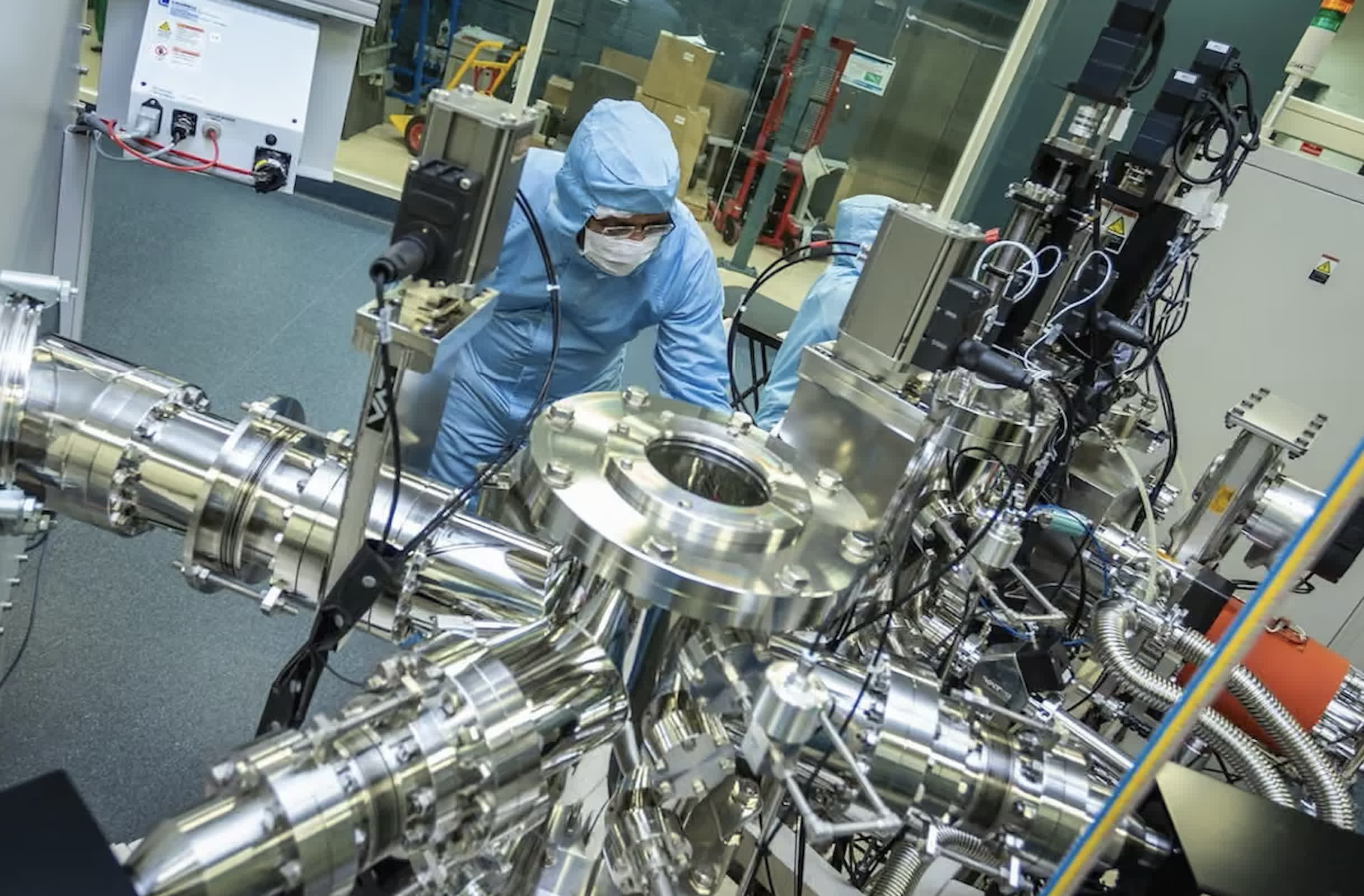
💡Quantum battery charges in femtoseconds—breakthrough for quantum-powered AI infrastructure
⚡ 30-Second TL;DR
What Changed
First prototype completes quantum charge-store-discharge cycle
Why It Matters
Paves way for ultra-fast energy storage in quantum devices, potentially powering future quantum computing and AI hardware with minimal loss.
What To Do Next
Read the full paper in Light: Science & Applications to explore quantum energy mechanisms for hybrid AI systems.
Key Points
- •First prototype completes quantum charge-store-discharge cycle
- •Laser enables femtosecond (10^-15 s) charging
- •Led by James Quach at CSIRO, Australia
- •Nano-scale 'concept validation' power unit
🧠 Deep Insight
Background and context from public sources — not the original article. 7 sources cited.
🔑 Enhanced Key Takeaways
- •Quantum batteries charge faster as they scale up, with charging time decreasing as 1/√N, where N is the number of molecules[1][2][5].
- •The prototype uses a multi-layered organic microcavity, charged wirelessly with a laser, and operates at room temperature[2][4].
- •Stored energy is retained for six orders of magnitude longer than the femtosecond charging time, measured via advanced spectroscopy[2][3].
- •Collaborators include RMIT University and University of Melbourne, with testing at Melbourne’s Ultrafast Laser Laboratory[2][3].
🛠️ Technical Deep Dive
- •Device is an organic microcavity: multi-layer structure trapping light, with added layers to convert stored energy to electrical current[1][5].
- •Wireless laser charging confirmed via spectroscopy, showing superradiant 'super absorption' for faster collective charging[3].
- •Demonstrated scalable charging where time scales as 1/√N; energy storage duration currently limited to nanoseconds[1][2].
- •Tested using dual femtosecond laser amplifiers and tuneable optical parametric amplifiers for ultrafast signal recording[3].
🔮 Future ImplicationsAI analysis grounded in cited sources
⏳ Timeline
📎 Sources (7)
Factual claims are grounded in the sources below. Forward-looking analysis is AI-generated interpretation.
- csiro.au — A World First Quantum Battery
- phys.org — 2026 03 Proof Concept Quantum Battery Faster
- eurekalert.org — 1120523
- csiro.au — Quantum Battery Full Cycle
- thequantuminsider.com — The Conversation a World First Quantum Battery Charges Faster When It Gets Bigger but Its Tiny and Only Lasts Nanoseconds
- rmit.edu.au — Quantum Battery Prototype
- research.csiro.au — Quantumbattery
Weekly AI Recap
Read this week's curated digest of top AI events →
👉Related Updates
AI-curated news aggregator. All content rights belong to original publishers.
Original source: cnBeta (Full RSS) ↗
This is a summary, not the original. Read the source, or get the weekly briefing.
The weekly digest
One email a week. Unsubscribe anytime.