🇨🇳cnBeta (Full RSS)•Stalecollected in 85m
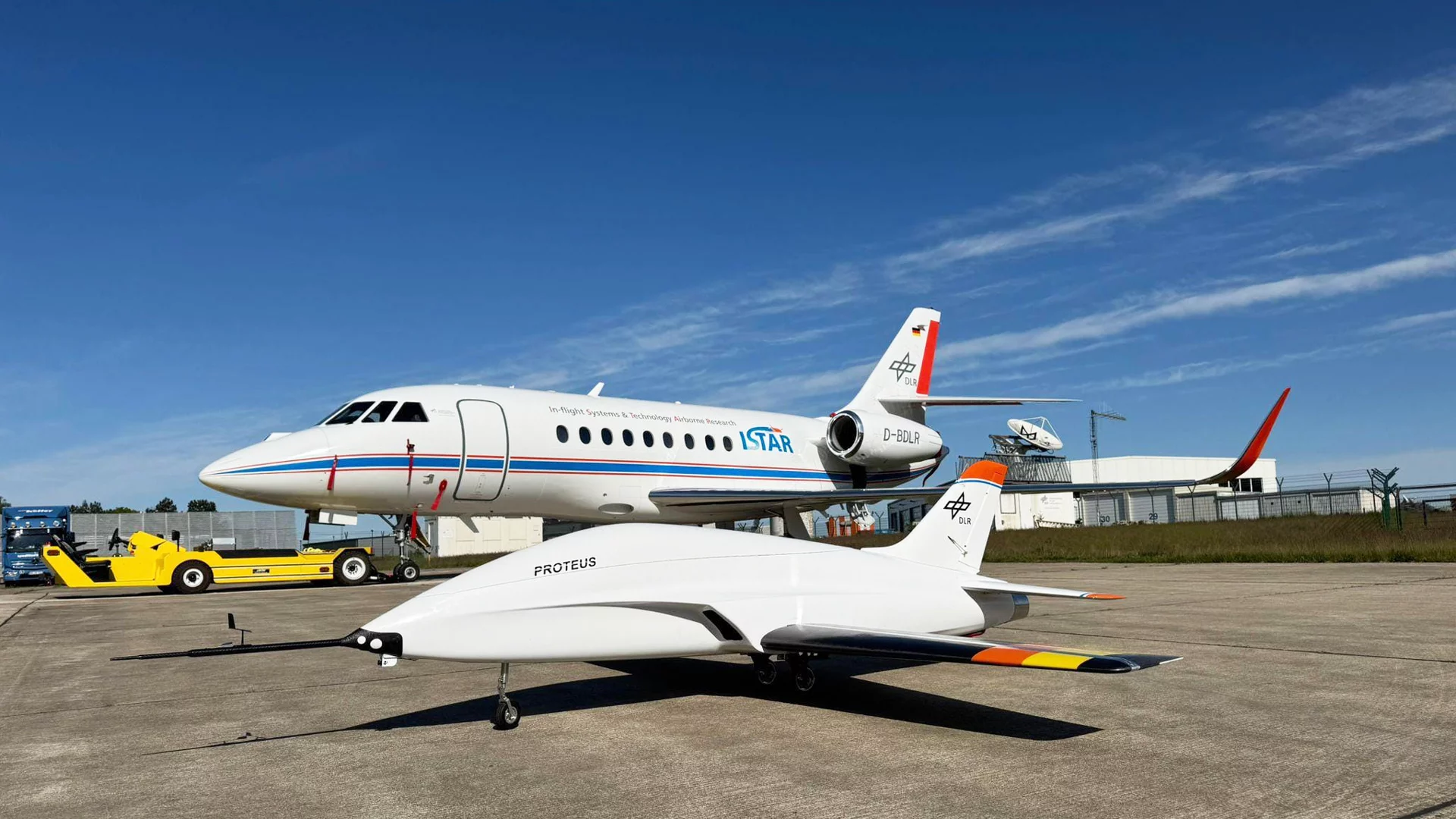
DLR Morphing Wing First Drone Flight
💡Morphing wings boost adaptive drone tech key for embodied AI research
⚡ 30-Second TL;DR
What Changed
Prototype morphing wing achieves first flight test
Why It Matters
Advances in morphing wings could enhance drone efficiency and maneuverability, paving way for AI-integrated adaptive control in aviation.
What To Do Next
Study DLR publications on morphing wing control systems for drone RL applications.
Who should care:Researchers & Academics
Key Points
- •Prototype morphing wing achieves first flight test
- •Demonstrates real-time silent shape changes in flight
- •Verifies adaptive capabilities on unmanned drone
- •Developed by German Aerospace Center engineers
🧠 Deep Insight
AI-generated analysis for this event.
🔑 Enhanced Key Takeaways
- •The flight test utilized the DLR's 'D-Morphed' research platform, which integrates shape-memory alloys and flexible composite structures to achieve seamless wing deformation without traditional mechanical hinges.
- •This technology aims to replace conventional flaps and ailerons, potentially reducing aerodynamic drag by up to 5% and significantly lowering noise emissions during takeoff and landing phases.
- •The project is part of a broader DLR initiative focused on 'Digitalized Flight' and sustainable aviation, specifically targeting the reduction of fuel consumption and environmental impact in next-generation commercial aircraft.
🛠️ Technical Deep Dive
- •Actuation Mechanism: Employs distributed shape-memory alloy (SMA) actuators embedded within the wing structure to enable continuous, smooth curvature changes.
- •Structural Design: Utilizes a flexible, multi-material skin capable of sustaining aerodynamic loads while maintaining structural integrity during high-frequency morphing cycles.
- •Control System: Integrates a closed-loop flight control system that dynamically adjusts wing geometry based on real-time sensor data to optimize lift-to-drag ratios across varying flight regimes.
- •Platform: Tested on a sub-scale unmanned aerial vehicle (UAV) to validate the transition from wind-tunnel models to real-world flight dynamics.
🔮 Future ImplicationsAI analysis grounded in cited sources
Morphing wings will reduce commercial aircraft fuel consumption by at least 3% within the next decade.
The elimination of gaps and discontinuities inherent in traditional control surfaces significantly improves laminar flow and reduces parasitic drag.
Acoustic signatures of commercial aircraft will decrease during approach phases.
Replacing discrete, noisy mechanical flaps with continuous, morphing surfaces eliminates the airframe noise generated by flap-edge vortices.
⏳ Timeline
2018-05
DLR initiates the 'Morphing Wing' research project to explore adaptive aerodynamic structures.
2021-11
Successful wind tunnel testing of the flexible wing prototype confirms aerodynamic efficiency gains.
2026-04
First successful flight test of the morphing wing technology on an unmanned drone platform.
📰
Weekly AI Recap
Read this week's curated digest of top AI events →
👉Related Updates
Same topic
Explore #morphing-wing
Same product
More on dlr-morphing-wing
Same source
Latest from cnBeta (Full RSS)

PACA: Open-source tool for ancient fossil coordinate mapping
cnBeta (Full RSS)•Jul 28

First atmosphere detected on habitable-zone exoplanet
cnBeta (Full RSS)•Jul 25

Samsung Secures $200B Broadcom AI Infrastructure Deal
cnBeta (Full RSS)•Jul 25

How AMD's 2006 ATI Acquisition Built Today's AI Empire
cnBeta (Full RSS)•Jul 25
AI-curated news aggregator. All content rights belong to original publishers.
Original source: cnBeta (Full RSS) ↗