First Atmosphere Detected on Habitable Zone Rocky Planet
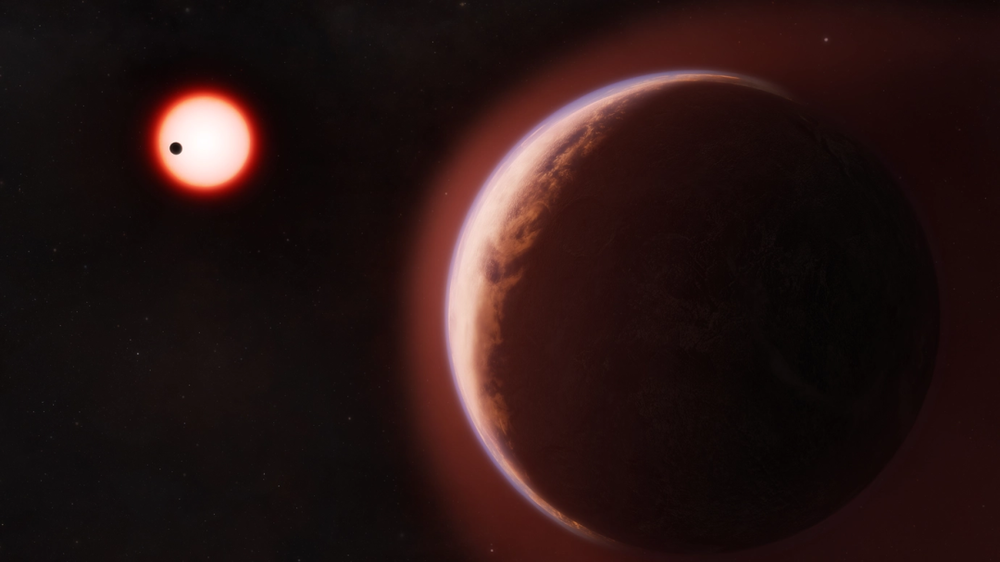
💡Groundbreaking detection of an atmosphere on a habitable rocky planet using advanced spectroscopy.
⚡ 30-Second TL;DR
What Changed
LHS 1140 b is a super-Earth 49 light-years away.
Why It Matters
This discovery validates new ground-based observation methods for characterizing exoplanet atmospheres, significantly expanding the toolkit for astrobiology.
What To Do Next
Review the transit spectroscopy data processing techniques used in this study for potential application in signal-to-noise ratio optimization in other fields.
Key Points
- •LHS 1140 b is a super-Earth 49 light-years away.
- •Atmospheric detection achieved using the WINERED spectrometer on the Magellan telescope.
- •Evidence suggests a layered atmosphere with potential for liquid water.
🧠 Deep Insight
AI-generated analysis for this event — not the original article.
🔑 Enhanced Key Takeaways
- •LHS 1140 b orbits a red dwarf star and is approximately 1.7 times the size of Earth, placing it in the 'super-Earth' category with a density suggesting it is not a mini-Neptune.
- •Observations from the James Webb Space Telescope (JWST) have been instrumental in refining the atmospheric composition models, specifically pointing toward a nitrogen-rich atmosphere similar to Earth's.
- •The planet is located in the habitable zone where temperatures could allow for a 'snowball' state with a liquid water ocean at the substellar point, often referred to as an 'eyeball planet'.
- •The detection of an atmosphere on a rocky planet in the habitable zone is a critical test for the 'M-dwarf habitability' hypothesis, which questions whether planets around such stars can retain atmospheres despite high stellar activity.
- •Unlike many other exoplanets in habitable zones, LHS 1140 b has a relatively low level of stellar activity from its host star, increasing the likelihood that its atmosphere has remained stable over billions of years.
🛠️ Technical Deep Dive
- The detection utilized transmission spectroscopy, which analyzes the starlight filtering through the planet's atmosphere during a transit event.
- Data analysis involved complex atmospheric retrieval models to distinguish between a hydrogen-rich envelope and a secondary, heavier atmosphere like nitrogen.
- The WINERED instrument operates in the near-infrared spectrum, which is crucial for detecting molecular absorption features like water vapor or carbon dioxide in exoplanetary atmospheres.
- The planet's orbital period is approximately 24.7 days, providing frequent transit opportunities for repeated observation and signal-to-noise ratio improvement.
🔮 Future ImplicationsAI analysis grounded in cited sources
⏳ Timeline
Weekly AI Recap
Read this week's curated digest of top AI events →
👉Related Updates




AI-curated news aggregator. All content rights belong to original publishers.
Original source: 虎嗅 ↗
This is a summary, not the original. Read the source, or get the weekly briefing.
The weekly digest
One email a week. Unsubscribe anytime.