Firefly Aerospace Operates NVIDIA Jetson in Lunar Orbit
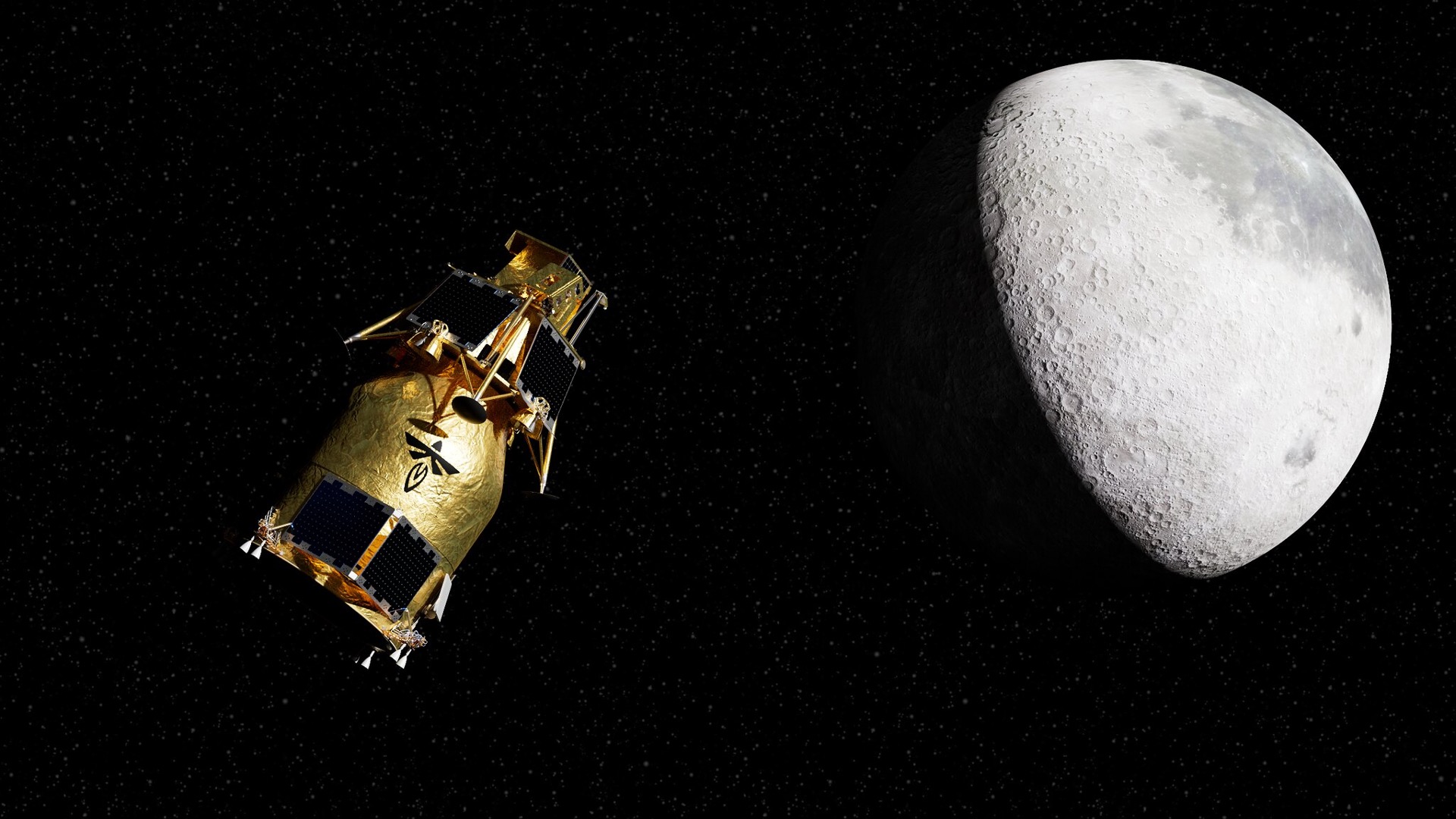
See how edge AI is moving beyond Earth to power autonomous operations in deep space.
30-Second TL;DR
What Changed
NVIDIA Jetson modules are now operating in lunar orbit.
Why It Matters
This achievement paves the way for more autonomous spacecraft capable of real-time data processing without relying on Earth-based latency. It expands the potential for AI deployment in deep space exploration.
What To Do Next
Review the NVIDIA Jetson documentation for industrial and aerospace-grade deployment guidelines if you are building edge AI for rugged environments.
Key Points
- •NVIDIA Jetson modules are now operating in lunar orbit.
- •The mission validates edge AI performance in high-radiation space environments.
- •Firefly Aerospace utilizes Jetson for onboard processing and autonomous operations.
Deep Insight
AI-generated analysis for this event — not the original article.
Enhanced Key Takeaways
- •The mission utilizes the NVIDIA Jetson Orin module, specifically hardened for space applications to withstand the harsh lunar radiation environment.
- •Firefly Aerospace integrated this technology into their Blue Ghost lunar lander platform to enable real-time autonomous navigation and hazard detection during descent.
- •This deployment marks a shift from traditional ground-controlled lunar operations to edge-based autonomous decision-making, reducing latency in critical mission phases.
- •The project is part of a broader collaboration under NASA's Commercial Lunar Payload Services (CLPS) initiative, aiming to lower the cost of lunar exploration.
- •The Jetson module is performing onboard computer vision tasks to process terrain data, which is essential for precise landing in unmapped or challenging lunar regions.
Competitor Analysis
- NVIDIA Jetson (Firefly)
- GPU-Accelerated AI
- Xilinx Versal (Space-Grade)
- Adaptive SoC (FPGA)
- Cobham Gaisler LEON
- Radiation-Hardened CPU
- NVIDIA Jetson (Firefly)
- Edge AI/Computer Vision
- Xilinx Versal (Space-Grade)
- Signal Processing/Flexibility
- Cobham Gaisler LEON
- Flight Control/Reliability
- NVIDIA Jetson (Firefly)
- High (TFLOPS)
- Xilinx Versal (Space-Grade)
- Medium-High
- Cobham Gaisler LEON
- Low-Medium
- NVIDIA Jetson (Firefly)
- Commercial/Industrial
- Xilinx Versal (Space-Grade)
- High (Space-Qualified)
- Cobham Gaisler LEON
- Very High (Space-Qualified)
| Feature | NVIDIA Jetson (Firefly) | Xilinx Versal (Space-Grade) | Cobham Gaisler LEON |
|---|---|---|---|
| Architecture | GPU-Accelerated AI | Adaptive SoC (FPGA) | Radiation-Hardened CPU |
| Primary Use | Edge AI/Computer Vision | Signal Processing/Flexibility | Flight Control/Reliability |
| Performance | High (TFLOPS) | Medium-High | Low-Medium |
| Pricing | Commercial/Industrial | High (Space-Qualified) | Very High (Space-Qualified) |
Technical Deep Dive
- The system utilizes the NVIDIA Jetson Orin NX module, which provides up to 100 TOPS of AI performance.
- Implementation involves a custom radiation-tolerant enclosure designed by Firefly to mitigate Single Event Effects (SEE) common in lunar orbit.
- Software stack includes NVIDIA JetPack SDK, optimized for low-power consumption while maintaining high-throughput inference for autonomous landing algorithms.
- The architecture leverages parallel processing to handle simultaneous sensor fusion from LiDAR and optical cameras.
Future ImplicationsAI analysis grounded in cited sources
Timeline
- 2021-02Firefly Aerospace selected by NASA for CLPS lunar delivery mission.
- 2023-05Firefly announces partnership with NVIDIA to integrate edge AI for space exploration.
- 2025-11Firefly completes final integration of Jetson-powered autonomous navigation system.
- 2026-06Successful deployment and operation of NVIDIA Jetson in lunar orbit.
Weekly AI Recap
Read this week's curated digest of top AI events →
Related Updates


AI-curated news aggregator. All content rights belong to original publishers.
Original source: NVIDIA Blog ↗
This is a summary, not the original. Read the source, or get the weekly briefing.
The weekly digest
One email a week. Unsubscribe anytime.