Firefighting Drones Head to Aspen
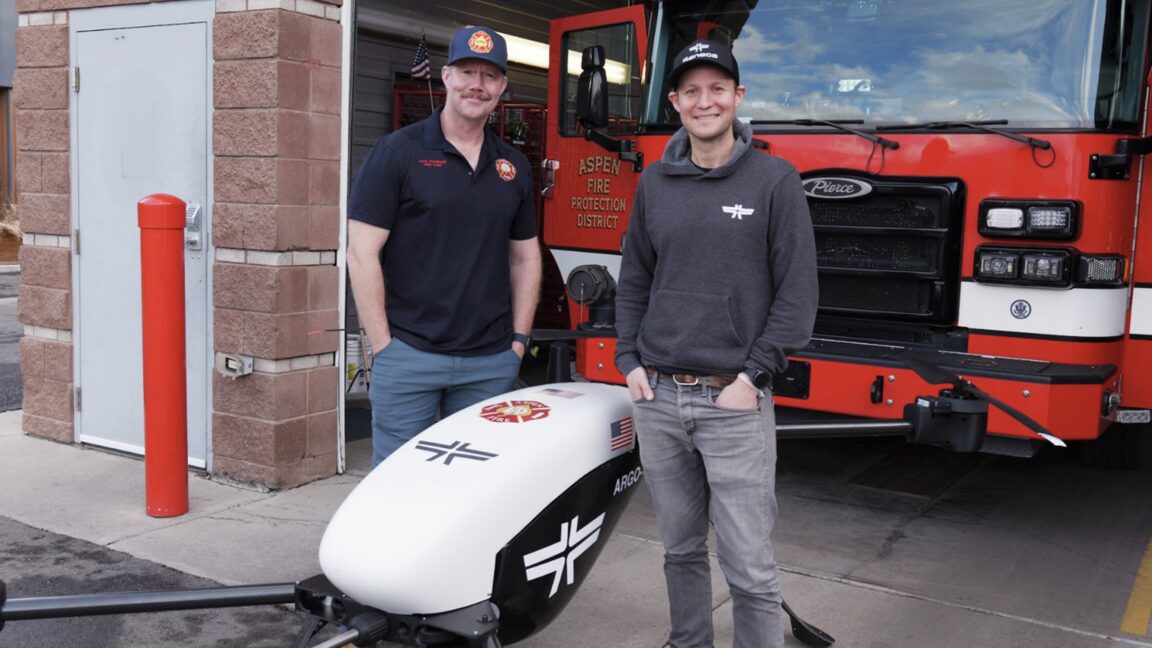
💡Autonomous drones test real-world firefighting—insights for embodied AI deployment
⚡ 30-Second TL;DR
What Changed
Drones heading to Aspen for wildfire suppression
Why It Matters
This real-world deployment could validate autonomous robotics in emergencies, accelerating adoption for hazardous tasks and influencing AI safety standards in public safety.
What To Do Next
Prototype similar autonomy stacks using ROS for drone-based embodied AI fire detection models.
Key Points
- •Drones heading to Aspen for wildfire suppression
- •Carry foam to extinguish fires
- •Night flight capabilities
- •Operate without on-site pilot
🧠 Deep Insight
Background and context from public sources — not the original article. 5 sources cited.
🔑 Enhanced Key Takeaways
- •Seneca secured $60 million in private capital funding, marking the largest private capital raise in wildfire history, enabling rapid development and deployment of autonomous suppression systems[4]
- •The five-drone strike team can deliver approximately 500 gallons of finished foam per sortie—equivalent to a full wildland engine's suppression capacity—with response times of 5-10 minutes from detection[1][2]
- •Aspen Fire Protection District was the first to adopt Pano AI smoke-detection cameras in 2021, establishing a pattern of early technology adoption that positions them as an ideal testing ground for autonomous systems[3]
- •A single pilot can operate multiple aircraft simultaneously due to the system's AI and autonomy capabilities, addressing the critical shortage of firefighting personnel relative to increasing fire intensity[2][3]
🛠️ Technical Deep Dive
System_architecture
- •Seneca Strike Team comprises five autonomous suppression aircraft, a mobile operations base, and five years of integrated software, connectivity, and maintenance[2]
- •Aircraft equipped with infrared sensors and self-navigating technology to locate fires autonomously using AI-powered detection[3]
- •iPad-based control interface enabling remote operation without on-site pilots[3]
- •Each aircraft carries 100 gallons of fire-suppressing foam per flight, with strike team capacity of ~500 gallons per sortie[1][2]
- •System designed for wildland-urban interface (WUI) operations, supporting night operations, inaccessible terrain response, and prescribed burn safety[2]
Operational_model
- •Designed for rapid turnaround: while one drone returns to base for refueling and battery replacement, subsequent drones continue suppression operations[3]
- •Response window of 5-10 minutes from fire detection—identified as the critical intervention period for fire containment[1]
- •Supports operations in complex terrain and pile/prescribed burn management[2]
🔮 Future ImplicationsAI analysis grounded in cited sources
⏳ Timeline
📎 Sources (5)
Factual claims are grounded in the sources below. Forward-looking analysis is AI-generated interpretation.
Weekly AI Recap
Read this week's curated digest of top AI events →
👉Related Updates

AI-curated news aggregator. All content rights belong to original publishers.
Original source: Ars Technica ↗
This is a summary, not the original. Read the source, or get the weekly briefing.
Weekly AI briefing
One email a week. Unsubscribe anytime.