Fine-Tune LLMs for Storyboard Scripts
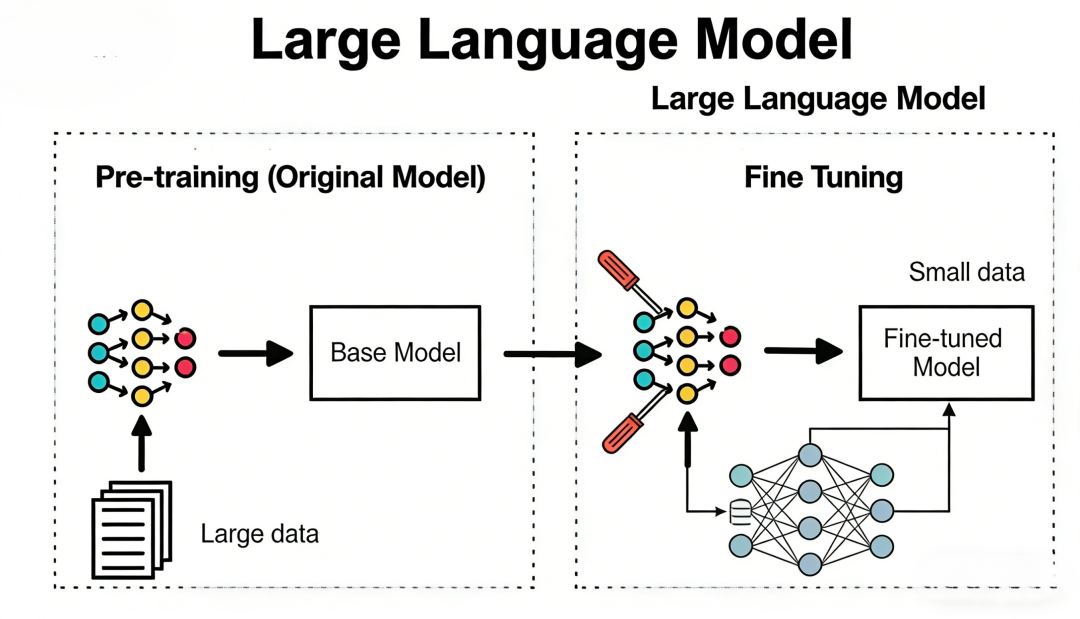
💡Practical fine-tuning guide for LLMs in storyboarding—beats GPT-4/Claude
⚡ 30-Second TL;DR
What Changed
LLMs produce flat, uniform shots without far/close alternations or emotion pacing
Why It Matters
Enables creators to build specialized LLMs for video production pipelines, reducing reliance on general models.
What To Do Next
Fine-tune Qwen-7B on 500+ storyboard examples using Hugging Face tools for your niche.
Key Points
- •LLMs produce flat, uniform shots without far/close alternations or emotion pacing
- •Descriptions too abstract for Stable Diffusion/Midjourney image generation
- •Custom fine-tuning on pro storyboards beats prompt engineering for structured output
🧠 Deep Insight
AI-generated analysis for this event — not the original article.
🔑 Enhanced Key Takeaways
- •The integration of 'Cinematic Grammar' datasets—specifically annotated with camera movement, focal length, and lighting cues—is now considered the industry standard for bridging the gap between LLM text output and high-fidelity visual generation.
- •Fine-tuning for storyboard scripts often utilizes LoRA (Low-Rank Adaptation) rather than full parameter fine-tuning to preserve the base model's linguistic reasoning while injecting specialized domain knowledge of film production.
- •Recent advancements in multi-modal LLMs (like Qwen-VL or GPT-4o) are beginning to allow for 'visual-first' prompting, where the model generates a rough sketch or layout alongside the script, reducing the reliance on external image generators for initial composition.
🛠️ Technical Deep Dive
- •Dataset Construction: High-quality datasets for this task typically involve pairing professional screenplay segments with corresponding storyboard panels, annotated with metadata such as 'Shot Type' (e.g., Extreme Close-Up, Establishing Shot), 'Camera Angle' (e.g., Dutch Tilt, Low Angle), and 'Lighting Style'.
- •Format Enforcement: Implementation often involves using constrained decoding techniques (like Guidance or Outlines) during inference to ensure the LLM strictly adheres to JSON or XML schemas required by downstream AI image generation pipelines.
- •Model Architecture: Fine-tuning typically targets the attention layers of models like Qwen-2.5 or Llama-3, specifically optimizing for the 'rhythm' of the script by training on sequences of shots rather than isolated prompts to maintain narrative continuity.
🔮 Future ImplicationsAI analysis grounded in cited sources
Weekly AI Recap
Read this week's curated digest of top AI events →
👉Related Updates



AI-curated news aggregator. All content rights belong to original publishers.
Original source: 虎嗅 ↗
This is a summary, not the original. Read the source, or get the weekly briefing.
The weekly digest
One email a week. Unsubscribe anytime.