Film Industry Debates AI and Future of Creativity
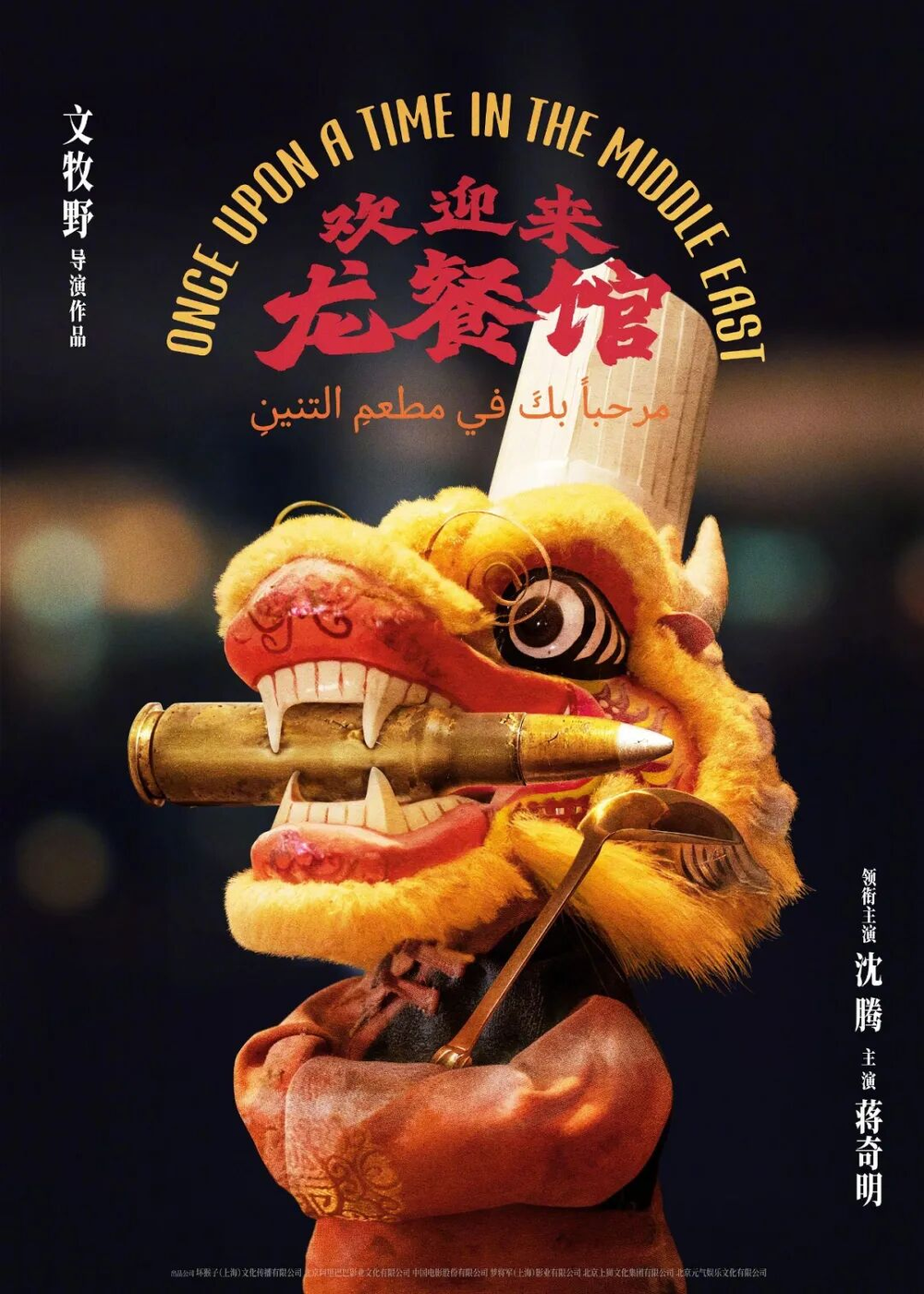
💡Discover how top-tier filmmakers are balancing AI adoption with the preservation of human-centric storytelling.
⚡ 30-Second TL;DR
What Changed
Industry experts argue that AI cannot replace the core human emotional resonance in storytelling.
Why It Matters
The consensus suggests that AI will serve as a tool for efficiency rather than a replacement for the creative vision of filmmakers.
What To Do Next
Evaluate how generative AI tools can assist in your creative workflow for pre-production research and script analysis.
Key Points
- •Industry experts argue that AI cannot replace the core human emotional resonance in storytelling.
- •Filmmakers are using AI tools for professional development and research, but remain cautious about its creative limitations.
- •The festival highlights a shift from chasing 'blockbuster formulas' back to authentic, human-centric content.
🧠 Deep Insight
Background and context from public sources — not the original article. 19 sources cited.
🔑 Enhanced Key Takeaways
- •AI is being integrated across all phases of filmmaking—pre-production, production, and post-production—leading to significant efficiency gains, with some producers achieving 25-35% leaner pre-production cycles through deliberate AI frameworks.
- •The film industry is actively developing and adopting specialized AI tools for tasks such as script analysis, automated storyboarding, visual effects like de-aging and crowd simulation, automated editing, and content localization.
- •Major labor unions, including SAG-AFTRA and the WGA, have negotiated contracts since 2023 that incorporate AI disclosure frameworks, explicitly prohibiting non-consented replication of performances and ensuring human writers retain credit for their work.
- •The market for AI in film is experiencing exponential growth, with projections indicating a rise from $1.59 billion in 2025 to $1.97 billion in 2026, and further to $4.6 billion by 2030, driven by the demand for cost-efficient production and immersive storytelling experiences.
📊 Competitor Analysis▸ Show
AI Filmmaking Tools Comparison
| Feature/Category | Google Flow / Higgsfield (VFX Aggregators) | Adobe Firefly (VFX/Generative) | Laper (Screenwriting) | Scriptlaunch (Screenwriting) | DaVinci Resolve Studio (Video Editing/VFX) |
|---|---|---|---|---|---|
| Primary Function | High-volume VFX/Video Generation | Integrated Generative AI for visuals | AI-powered Screenwriting | AI-assisted Screenwriting | Professional Video Editing & VFX |
| Key Features | Google Flow: Speed leader (56 min for 2-min film), rapid iterations, upscaling. Higgsfield: Cost-effective ($150 for 2-min film). | Adobe Boards (4 concurrent generations), proprietary models, integrated with Adobe Suite. | Best-in-class AI (scene analysis, beat generation), real-time collaboration, modern interface. | AI Co-Pilot (refining, grammar), context-aware sidebar, research assistant, interactive idea developer, user data ownership. | Magic Mask (precise tracking), subtitle generation, auto color balancing, speech-based editing. |
| Performance/Benchmarks | Google Flow: 56 minutes for 2-minute film. Higgsfield: Most cost-effective for 2-minute film. | 3 hours 13 minutes for 2-minute film. | N/A (focus on writing assistance) | N/A (focus on writing assistance) | AI is assistive, not directive; does not automatically restructure narrative. |
| Pricing | Higgsfield: ~$250/month subscription. | ~$54 for 2-minute film benchmark (part of Creative Cloud subscription). | Free tier + $29/month Pro. | Basic $4.99/month, Pro $14.99/month, AI Script Coverage $29.99/script. | Expensive for independent creators (requires Creative Cloud subscription for AI features). |
| Limitations | Google Veo 3: lacks precise voice control across multiple clips. | Lacks access to some high-performance Chinese models (e.g., Kling, Minimax). | N/A | N/A | Steep learning curve for beginners, AI tools require Creative Cloud subscription. |
🛠️ Technical Deep Dive
- Google Veo 3: Offers 1080p resolution for both widescreen and vertical video, featuring best-in-class lipsync and voice quality, though it has limitations in precise voice control across multiple short clips.
- Saga: This screenwriting tool is built upon a prompt-engineered version of large language models (LLMs) such as GPT, Claude, and Gemini.
- Adobe Firefly: Integrates proprietary AI models and utilizes 'Adobe Boards' to enable up to four concurrent generative processes, enhancing workflow efficiency.
- Krea AI: Known for its 'high-concurrency latent space exploration' and an infinite queue system, which allows for rapid creative iterations.
- Freepik: Features node-based logic and timeline integration for seamless image-to-video (i2v) transitions, with a significant technical advantage of native 4K generation.
- Black Forest Labs FLUX model: An AI image generation tool recognized for producing outputs with impressive visual quality that closely resemble human-made photographs and illustrations.
- DaVinci Resolve Studio: Incorporates AI features like 'Magic Mask' for precise object tracking and isolation, automated color balancing, and speech-based editing for efficient post-production.
- Runway: Utilizes 'Gen-4+' for improved character consistency in video generation and employs ML-powered masking tools for efficient visual effects.
- Hailuo AI (MiniMax): A leading multimodal AI platform that provides technical support for initiatives like the Shanghai International Film Festival's AI Backlot.
- Mirelo SFX 1.5: A dedicated AI tool for foley sound effects, capable of adding, replacing, or auditioning sound effects after video approval without requiring regeneration of the entire clip.
🔮 Future ImplicationsAI analysis grounded in cited sources
⏳ Timeline
📎 Sources (19)
Factual claims are grounded in the sources below. Forward-looking analysis is AI-generated interpretation.
Weekly AI Recap
Read this week's curated digest of top AI events →
👉Related Updates

AI-curated news aggregator. All content rights belong to original publishers.
Original source: 虎嗅 ↗
This is a summary, not the original. Read the source, or get the weekly briefing.
The weekly digest
One email a week. Unsubscribe anytime.