Fei-Fei Li Warns AI Could Undermine Learning
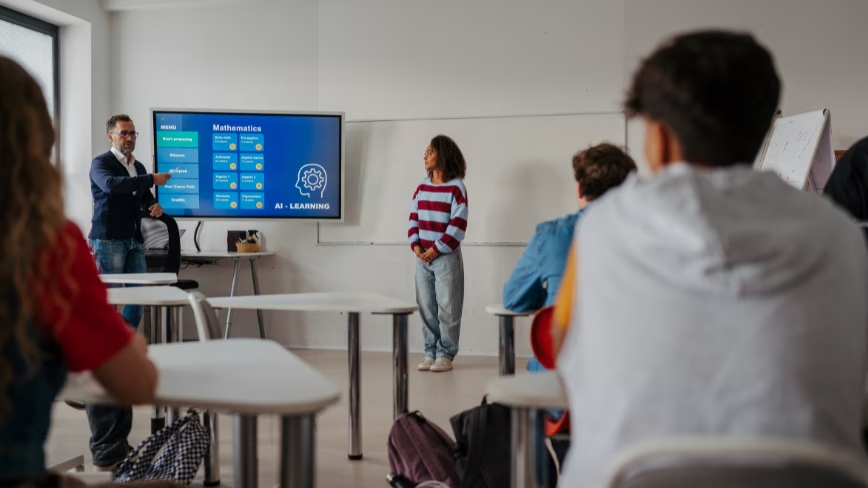
💡A leading AI researcher reframes classroom risk from cheating to the possible loss of motivation to learn.
⚡ 30-Second TL;DR
What Changed
Fei-Fei Li distinguishes between AI-assisted cheating and a broader loss of motivation to learn.
Why It Matters
AI education products may need to optimize for active reasoning, curiosity, and persistence rather than simply preventing misuse. Developers should consider whether automation removes the productive effort that helps users build durable skills.
What To Do Next
Run an A/B test comparing AI-generated answers with guided Socratic prompts, and measure independent problem-solving on a follow-up task.
Key Points
- •Fei-Fei Li distinguishes between AI-assisted cheating and a broader loss of motivation to learn.
- •She argues that schools may be addressing the wrong primary risk.
- •Her comments were made on the Huberman Lab science podcast in an episode released Monday.
- •The issue shifts attention from detection tools toward the design of learning experiences.
🧠 Deep Insight
AI-generated analysis for this event.
🔑 Enhanced Key Takeaways
- •Fei-Fei Li emphasizes the concept of 'human-centered AI' as a framework to ensure technology augments rather than replaces human cognitive development.
- •The discussion highlights the 'cognitive atrophy' risk, where over-reliance on generative models for synthesis tasks may diminish students' ability to perform critical thinking and original analysis.
- •Li advocates for a pedagogical shift toward 'AI literacy' that prioritizes understanding the limitations and probabilistic nature of LLMs over simple prohibition.
- •The Huberman Lab conversation contextualized these educational concerns within the broader debate of AI safety and the need for interdisciplinary oversight in AI development.
- •Li suggests that the current educational focus on plagiarism detection tools creates an adversarial relationship between students and technology, rather than fostering a collaborative learning environment.
🔮 Future ImplicationsAI analysis grounded in cited sources
⏳ Timeline
Weekly AI Recap
Read this week's curated digest of top AI events →
👉Related Updates


AI-curated news aggregator. All content rights belong to original publishers.
Original source: The Next Web (TNW) ↗