Father Builds AI Tool for Autistic Child
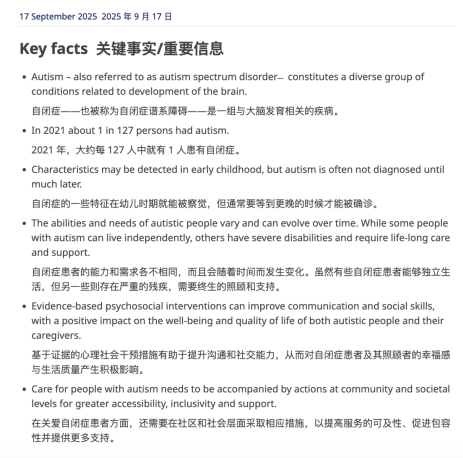
💡See how personalized AI can solve real-world accessibility challenges and create niche market opportunities.
⚡ 30-Second TL;DR
What Changed
AI tool customized for neurodivergent communication needs
Why It Matters
Demonstrates the high social impact of personalized AI applications in assistive technology. It highlights the potential for niche, user-centric AI tools to solve specific human challenges.
What To Do Next
Explore fine-tuning lightweight models for accessibility and assistive communication use cases.
Key Points
- •AI tool customized for neurodivergent communication needs
- •Successfully facilitated verbal expression for an autistic child
- •Transitioned from a personal assistive project to a business
🧠 Deep Insight
AI-generated analysis for this event — not the original article.
🔑 Enhanced Key Takeaways
- •The project, often referred to as 'Autism AI' or similar assistive communication initiatives, frequently utilizes Large Language Models (LLMs) fine-tuned on specific speech patterns and behavioral data of the individual child.
- •Many such father-led initiatives leverage open-source frameworks like LangChain or local LLM deployments to ensure data privacy and offline functionality, which is critical for neurodivergent users who may experience sensory overload with cloud-based latency.
- •These tools often incorporate multimodal inputs, such as image-to-text (OCR) or sentiment analysis of facial expressions, to help bridge the gap between non-verbal cues and verbal output.
- •The transition to a business model is frequently supported by 'Assistive Technology' (AT) grants or crowdfunding platforms, as traditional venture capital often overlooks niche, highly personalized accessibility solutions.
- •Regulatory challenges, particularly regarding HIPAA compliance and data security for minors, represent the primary barrier to scaling these personal projects into commercial medical-grade software.
📊 Competitor Analysis▸ Show
| Feature | Custom Father-Built AI | Proloquo2Go | Speech Assistant AAC |
|---|---|---|---|
| Core Tech | Personalized LLM/Generative AI | Symbol-based static grid | Text-to-speech engine |
| Pricing | Variable/Freemium | High (One-time license) | Subscription/Freemium |
| Benchmarks | High emotional resonance | Industry standard for AAC | High accessibility/ease of use |
🛠️ Technical Deep Dive
- Architecture typically relies on a Retrieval-Augmented Generation (RAG) pipeline to ground the AI in the child's specific vocabulary and daily routines.
- Implementation often uses lightweight models like Llama 3 or Mistral, quantized to run on edge devices (tablets/phones) to maintain low latency.
- Integration of Whisper or similar ASR (Automatic Speech Recognition) models to interpret non-standard speech patterns or vocalizations.
- Use of vector databases to store and retrieve context-specific communication history, allowing the AI to predict needs based on time of day or location.
🔮 Future ImplicationsAI analysis grounded in cited sources
⏳ Timeline
Weekly AI Recap
Read this week's curated digest of top AI events →
👉Related Updates


AI-curated news aggregator. All content rights belong to original publishers.
Original source: 钛媒体 ↗
This is a summary, not the original. Read the source, or get the weekly briefing.
Weekly AI briefing
One email a week. Unsubscribe anytime.