FATE Ethics for AI RecSys
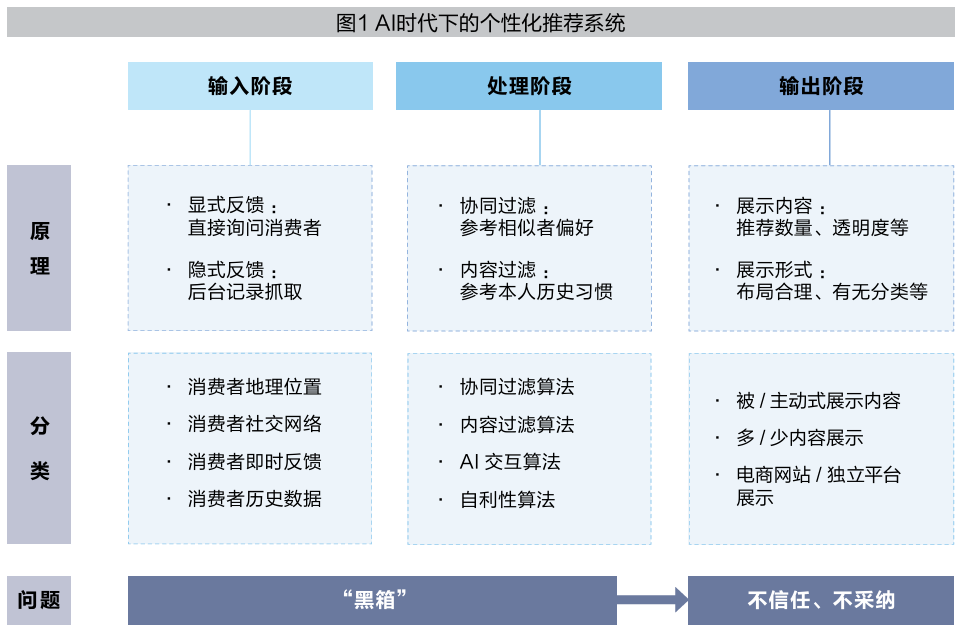
💡Practical ethics framework to debias recsys & build user trust (Amazon/Netflix examples).
⚡ 30-Second TL;DR
What Changed
FATE tailors Fairness to combat price discrimination and postal code biases in recsys.
Why It Matters
Guides developers to build trustworthy recsys, mitigating societal risks while boosting sales like Amazon's 35%. Enhances user trust amid rising AI scrutiny.
What To Do Next
Audit your recsys for FATE compliance starting with fairness tests on historical data.
Key Points
- •FATE tailors Fairness to combat price discrimination and postal code biases in recsys.
- •Breaks down recsys into explicit/implicit inputs, collaborative/content filtering processing.
- •Warns of black-box opacity eroding user trust in outputs like Amazon's recommendations.
🧠 Deep Insight
AI-generated analysis for this event — not the original article.
🔑 Enhanced Key Takeaways
- •The FATE framework in the context of Chinese AI governance aligns with the Cyberspace Administration of China's (CAC) 'Internet Information Service Algorithmic Recommendation Management Provisions,' which mandates that algorithms must not induce addiction or excessive consumption.
- •Technical implementation of FATE often requires 'de-biasing' layers in neural collaborative filtering architectures, specifically targeting the mitigation of popularity bias where the model over-recommends items with high historical interaction counts.
- •Enterprise adoption of FATE is increasingly driven by the need for 'algorithmic auditing' compliance, where companies must provide technical documentation to regulators detailing how they prevent discriminatory outcomes in dynamic pricing models.
🛠️ Technical Deep Dive
- •Fairness implementation: Utilization of adversarial debiasing techniques where a secondary 'adversary' network attempts to predict protected attributes (e.g., gender, location) from the latent embeddings, forcing the primary model to learn representations independent of these features.
- •Transparency/Explainability: Integration of Attention Mechanisms in Transformer-based recsys to provide 'feature importance' scores, allowing systems to output which specific user behaviors or item attributes triggered a recommendation.
- •Accountability: Implementation of 'Human-in-the-loop' (HITL) feedback mechanisms that allow users to reset or adjust their interest profiles, effectively acting as a manual override for the automated recommendation engine.
🔮 Future ImplicationsAI analysis grounded in cited sources
⏳ Timeline
Weekly AI Recap
Read this week's curated digest of top AI events →
👉Related Updates




AI-curated news aggregator. All content rights belong to original publishers.
Original source: 虎嗅 ↗
This is a summary, not the original. Read the source, or get the weekly briefing.
The weekly digest
One email a week. Unsubscribe anytime.