Falcon 9 booster sets remarkable reuse record
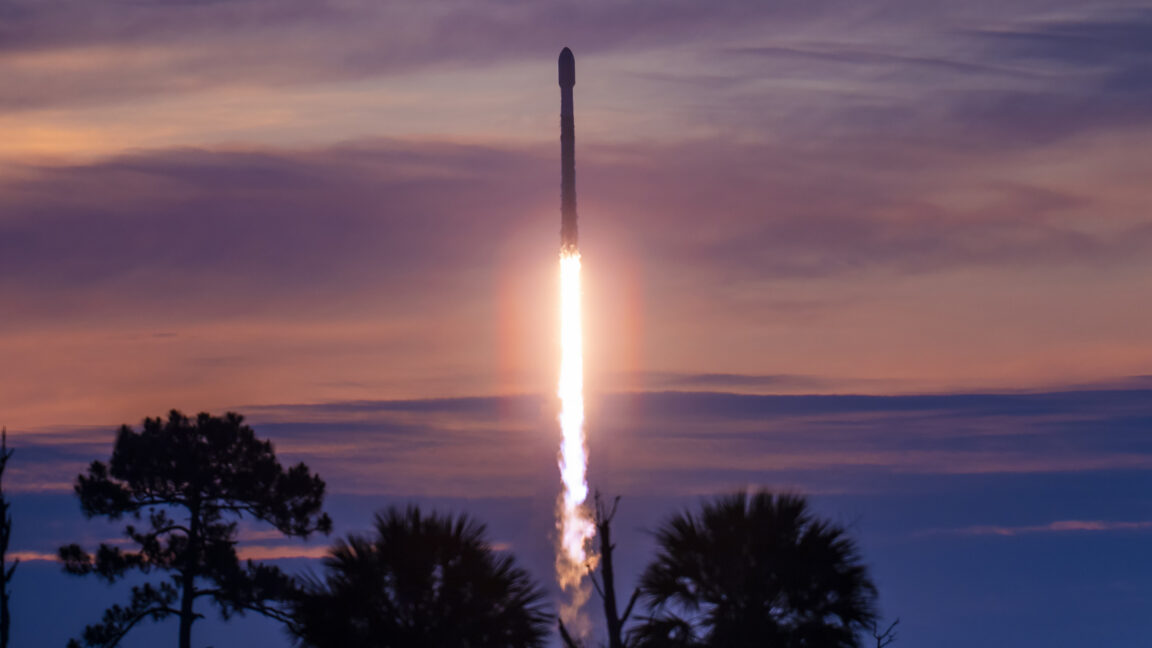
💡A masterclass in iterative engineering and infrastructure reliability that every AI infrastructure builder should study.
⚡ 30-Second TL;DR
What Changed
Falcon 9 booster successfully operational for five years
Why It Matters
The success of Falcon 9 reusability provides a blueprint for cost-effective infrastructure development, applicable to scaling AI data centers and hardware.
What To Do Next
Study the iterative testing methodology used by SpaceX to improve your own CI/CD pipelines for hardware-software integration.
Key Points
- •Falcon 9 booster successfully operational for five years
- •Sets new industry standard for rocket reusability
- •Demonstrates the reliability of iterative hardware engineering
🧠 Deep Insight
Background and context from public sources — not the original article. 25 sources cited.
🔑 Enhanced Key Takeaways
- •The specific Falcon 9 booster that achieved the five-year anniversary and new reuse record is Booster 1067, which completed its 35th flight on June 8, 2026, launching 29 Starlink satellites.
- •This milestone surpasses the previous record of 34 flights for an individual Falcon 9 booster, highlighting SpaceX's continuous advancements in rapid turnaround and refurbishment processes.
- •The Falcon 9's reusability program extends beyond the first stage to include payload fairings, which are also recovered and reflown multiple times, further contributing to reduced launch costs.
- •The current Falcon 9 Block 5 version, first flown in May 2018, was specifically designed for rapid reusability, enabling individual boosters to achieve over 30 flights with minimal refurbishment.
📊 Competitor Analysis▸ Show
| Company/Rocket | Reusability Feature | Payload to LEO (Reusable) | Cost per Launch | Benchmarks/Status |
|---|---|---|---|---|
| SpaceX Falcon 9 | Reusable first stage, reusable fairings (vertical landing) | 17,500 kg | US$74 million (2026) | Booster 1067 completed 35 flights (June 8, 2026). High launch cadence. |
| Blue Origin New Glenn | Reusable first stage (vertical landing on barge) | 45,000 kg (7x2 config) | US$68–110 million | First successful landing of a previously flown first stage on Nov 13, 2025. Second successful landing on April 19, 2026, despite second-stage anomaly. |
| Rocket Lab Neutron | Partially reusable first stage (ocean barge landing), integrated fairings | 13,000 kg | $50 million (planned) | First launch expected no earlier than Q4 2026. Ground testing of engines and structures completed. |
| ULA Vulcan Centaur | SMART system for BE-4 engine section recovery; exploring upper stage reuse in space | 27,200 kg (with 6 boosters) | Not specified for reusable configuration | SMART recovery system component tests completed; implementation expected in 2026. First flight was Jan 8, 2024. |
| ArianeGroup (Ariane 6 evolution) | Proposed reusable liquid-fueled boosters (derived from MaiaSpace/Themis) | Not specified | Not specified | ESA's BEST! initiative funding development; decision on future funding in Nov 2025. Ariane 6 first launched in 2024. |
🛠️ Technical Deep Dive
- Falcon 9 First Stage: Powered by nine Merlin engines, utilizing cryogenic liquid oxygen and rocket-grade kerosene (RP-1) propellants.
- Re-entry and Landing: Equipped with four hypersonic grid fins at the base of the interstage to orient the rocket during re-entry by adjusting the center of pressure. The booster performs a propulsive landing, either on an autonomous spaceport drone ship (ASDS) at sea or a ground landing zone (LZ).
- Materials: The first stage incorporates aluminum-lithium alloy tanks.
- Payload Fairings: Made of carbon composite material, these fairings are recovered after a parachute-assisted landing, typically from the ocean, and are designed for multiple reuses.
- Second Stage: Powered by a single Merlin Vacuum Engine, capable of multiple restarts to deploy payloads into various orbits. Full reusability for the Falcon 9 second stage was initially considered but discontinued due to the significant weight penalties associated with heat shields, landing legs, and additional fuel required for re-entry from orbital velocities, especially for high delta-velocity missions.
🔮 Future ImplicationsAI analysis grounded in cited sources
⏳ Timeline
📎 Sources (25)
Factual claims are grounded in the sources below. Forward-looking analysis is AI-generated interpretation.
- youtube.com
- space.com
- wikipedia.org
- keeptrack.space
- mit.edu
- reddit.com
- wikipedia.org
- quora.com
- satnews.com
- wikipedia.org
- tradingkey.com
- seekingalpha.com
- youtube.com
- extremetech.com
- wikipedia.org
- europeanspaceflight.com
- wikipedia.org
- spacex.com
- impulso.space
- stackexchange.com
- orbitaltoday.com
- marketresearchfuture.com
- youtube.com
- wikipedia.org
- teslarati.com
Weekly AI Recap
Read this week's curated digest of top AI events →
👉Related Updates
AI-curated news aggregator. All content rights belong to original publishers.
Original source: Ars Technica ↗
This is a summary, not the original. Read the source, or get the weekly briefing.
The weekly digest
One email a week. Unsubscribe anytime.