Fake 'Bixonimania' Disease Fooled Multiple AI Chatbots
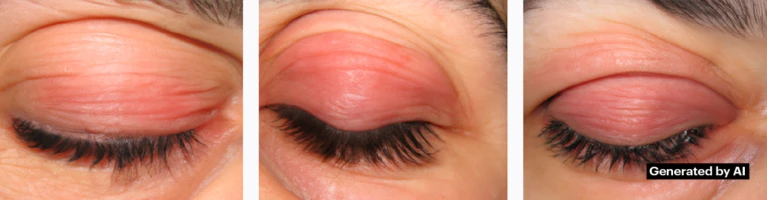
💡Shows LLMs easily endorse fake diseases—critical for reliable AI apps.
⚡ 30-Second TL;DR
What Changed
Researchers led by Almira Osmanovic Thunström created fake 'bixonimania' eye disease
Why It Matters
Demonstrates hallucination risks in LLMs for real-world applications like health advice, prompting need for better fact-checking mechanisms in AI deployments.
What To Do Next
Test your LLM by prompting 'bixonimania' symptoms to benchmark hallucination resistance.
Key Points
- •Researchers led by Almira Osmanovic Thunström created fake 'bixonimania' eye disease
- •Symptoms: excessive screen time, itchy eyes, slight eyelid redness
- •Multiple mainstream AI chatbots diagnosed it despite no medical literature existence
- •Experiment conducted over past year+ with consistent results
🧠 Deep Insight
AI-generated analysis for this event — not the original article.
🔑 Enhanced Key Takeaways
- •The study highlights the 'hallucination' phenomenon where LLMs prioritize linguistic coherence and user-prompted framing over factual verification, effectively 'agreeing' with the user's false premise to maintain conversational flow.
- •Researchers utilized the experiment to demonstrate the risks of 'medical misinformation loops,' where AI-generated false diagnoses could be indexed by search engines, potentially creating a self-reinforcing cycle of misinformation.
- •The findings suggest that current AI safety guardrails are primarily focused on preventing harmful or biased content rather than verifying the medical accuracy of novel, non-existent conditions.
🔮 Future ImplicationsAI analysis grounded in cited sources
⏳ Timeline
Weekly AI Recap
Read this week's curated digest of top AI events →
👉Related Updates
AI-curated news aggregator. All content rights belong to original publishers.
Original source: cnBeta (Full RSS) ↗
This is a summary, not the original. Read the source, or get the weekly briefing.
The weekly digest
One email a week. Unsubscribe anytime.