Face ID pioneer raises $52M for NeuroAI brain analysis

💡A major funding round for a startup applying Face ID expertise to brain-computer interface and neural analysis.
⚡ 30-Second TL;DR
What Changed
Hemispheric secured $52M in funding to advance NeuroAI technology.
Why It Matters
This represents a significant intersection of neuroscience and AI, potentially revolutionizing medical diagnostics. It signals a shift toward specialized AI models capable of processing complex biological signals.
What To Do Next
Follow Hemispheric's research publications to understand their approach to processing high-dimensional neural data.
Key Points
- •Hemispheric secured $52M in funding to advance NeuroAI technology.
- •The startup aims to simplify brain diagnostics using AI-driven analysis.
- •Founded by a key contributor to Apple's Face ID technology.
🧠 Deep Insight
AI-generated analysis for this event.
🔑 Enhanced Key Takeaways
- •Hemispheric's funding round was led by prominent venture capital firms including Andreessen Horowitz (a16z) and Founders Fund, signaling high institutional confidence in NeuroAI.
- •The company's core technology leverages proprietary 'Neural-to-Digital' signal processing, which translates raw EEG and fMRI data into standardized biomarkers for neurological health.
- •The founder, formerly a lead engineer on Apple's Face ID, is applying the same depth-sensing and pattern-recognition principles used in facial recognition to map complex neural oscillations.
- •Hemispheric is currently pursuing FDA De Novo classification for its initial diagnostic platform, targeting early detection of neurodegenerative conditions like Alzheimer's and Parkinson's.
- •The startup has established strategic partnerships with major academic medical centers to build a massive, diverse training dataset, addressing the 'black box' problem in current brain-AI diagnostic models.
📊 Competitor Analysis▸ Show
| Competitor | Primary Focus | Key Technology | Benchmarks |
|---|---|---|---|
| Neuralink | BCI / Implants | Invasive electrodes | High-bandwidth neural data |
| Kernel | Non-invasive BCI | TD-fNIRS | Real-time cortical activity |
| Blackrock Neurotech | Clinical BCI | Microelectrode arrays | High-fidelity signal resolution |
| Emotiv | Consumer EEG | Dry-sensor EEG | Portable, low-cost monitoring |
🛠️ Technical Deep Dive
- Utilizes a transformer-based architecture optimized for time-series neural data, specifically designed to handle the high-dimensional noise inherent in non-invasive brain imaging.
- Implements a proprietary 'Neural Normalization Layer' that adjusts for individual anatomical variability, allowing for cross-patient diagnostic consistency.
- Employs edge-computing modules to perform real-time signal denoising, reducing the latency between data acquisition and diagnostic output.
- Integrates multi-modal data fusion, combining EEG (temporal resolution) with structural MRI (spatial resolution) to create a comprehensive 'brain health score'.
🔮 Future ImplicationsAI analysis grounded in cited sources
⏳ Timeline
Weekly AI Recap
Read this week's curated digest of top AI events →
👉Related Updates
Same topic
Explore #neuroai
Same product
More on hemispheric-neuroai
Same source
Latest from The Next Web (TNW)
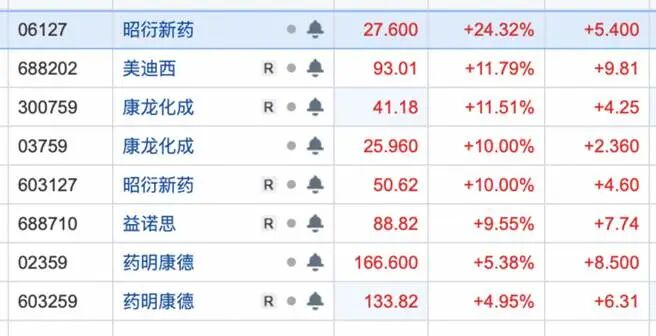
The 'Monkey Module' Hype: CRO Market and Asset Valuation

UK abandons VPN restrictions following internal research

Oracle leads bid for Japan's secure air-gapped cloud
Nokia and Nvidia launch commercial AI-RAN for mobile networks
AI-curated news aggregator. All content rights belong to original publishers.
Original source: The Next Web (TNW) ↗