Fabless Revolution Transforms Chip Industry
Fabless history explains Nvidia/AMD AI chip dominance via TSMC
30-Second TL;DR
What Changed
Fabless emerged in 1980s as Fab costs exploded, led by TSMC pure-play foundry.
Why It Matters
Fabless democratized chip design for AI firms like Nvidia, lowering barriers without Fab ownership. Continues to underpin GPU supply for LLMs amid rising compute demands.
What To Do Next
Explore TSMC partnerships or ARM IP for prototyping AI accelerators without fabs.
Key Points
- •Fabless emerged in 1980s as Fab costs exploded, led by TSMC pure-play foundry.
- •ASIC firms like VLSI, LSI Logic bridged system integrators to custom chips.
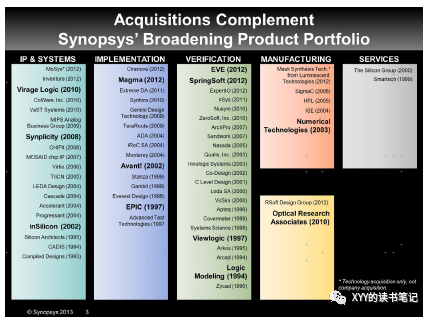
- •EDA tools, ARM IP rose with SoC trend; AMD shifted to Fabless.
- •Moore's Law drove transistor cost drop, fueling tech boom.
Deep Insight
AI-generated analysis for this event — not the original article.
Enhanced Key Takeaways
- •The rise of the 'Fabless-Foundry' model has led to the emergence of 'Design Service' companies like Alchip and Faraday, which act as critical intermediaries by optimizing chip designs specifically for TSMC's process nodes.
- •Geopolitical shifts and the 'Chip War' have forced a transition from pure-play fabless models toward 'Foundry-as-a-Service' and regionalized supply chains, complicating the original cost-efficiency premise of the 1980s model.
- •The integration of Chiplet architecture (e.g., UCIe standard) is currently redefining the fabless ecosystem, allowing companies to mix and match dies from different process nodes to optimize costs beyond what monolithic SoC designs could achieve.
Technical Deep Dive
The transition from monolithic SoCs to Chiplet-based architectures involves several key technical shifts:
- Interconnect Standards: Adoption of UCIe (Universal Chiplet Interconnect Express) to enable die-to-die communication across different vendors.
- Advanced Packaging: Shift toward 2.5D (CoWoS) and 3D (SoIC) packaging technologies, which are now as critical to performance as the transistor process node itself.
- EDA Evolution: Modern EDA tools now require multi-physics simulation capabilities to manage thermal and signal integrity challenges inherent in high-density chiplet assemblies.
Future ImplicationsAI analysis grounded in cited sources
Timeline
- 1987-02TSMC founded by Morris Chang, pioneering the pure-play foundry business model.
- 1990-11ARM Holdings is spun out of Acorn Computers, establishing the IP licensing model.
- 2008-10AMD spins off its manufacturing division into GlobalFoundries, completing its transition to a pure-play fabless company.
- 2020-05TSMC announces plans to build a multi-billion dollar fab in Arizona, signaling the shift toward regionalized foundry footprints.
Weekly AI Recap
Read this week's curated digest of top AI events →
AI-curated news aggregator. All content rights belong to original publishers.
Original source: 虎嗅 ↗
This is a summary, not the original. Read the source, or get the weekly briefing.
The weekly digest
One email a week. Unsubscribe anytime.