Exploring the Future of Advanced Prosthetics
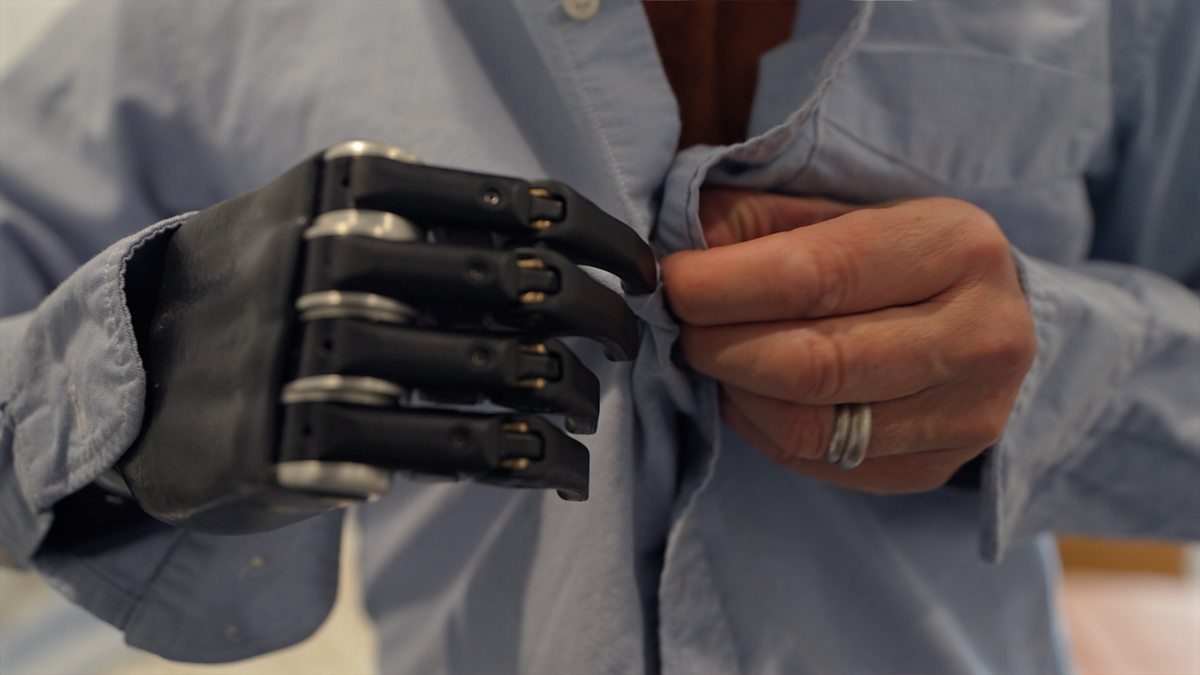
Discover how neural interface breakthroughs are shaping the next generation of embodied AI and robotics control.
30-Second TL;DR
What Changed
Integration of advanced sensors in prosthetic design
Why It Matters
Advancements in prosthetics represent a significant step forward in embodied AI and neural interface applications. These developments could lead to more intuitive control systems for robotics.
What To Do Next
Review current research on neural signal decoding libraries to understand how intent-based control is implemented in robotics.
Key Points
- •Integration of advanced sensors in prosthetic design
- •Improvements in user control and limb responsiveness
- •Future outlook on human-machine interface technology
Deep Insight
Background and context from public sources — not the original article. 34 sources cited.
Enhanced Key Takeaways
- •Osseointegration, a surgical technique involving direct skeletal attachment of titanium implants, is increasingly used to enhance comfort, improve mobility, and eliminate issues associated with traditional socket-fit prostheses, with an estimated 10,000 people worldwide having undergone the procedure as of 2025.
- •Advanced haptic feedback systems, utilizing vibrotactile, electrotactile, and mechanotactile stimulation, are being developed to provide users with sensory information, including touch and proprioception, thereby improving dexterity, reducing cognitive load, and enabling object manipulation without visual inspection.
- •Artificial Intelligence (AI) and machine learning algorithms are integrated into prosthetics to enable real-time adaptation and learning from user movements, leading to more intuitive control, predictive motion, and automatic adjustments for varying terrains and activities.
- •Innovations in materials science, such as lightweight carbon fiber and titanium, combined with advancements in 3D printing, are facilitating the creation of stronger, more durable, and highly customized prosthetic designs that offer improved fit and reduced manufacturing costs.
- •Neural interfaces are progressing to allow direct brain control of prosthetic limbs and to provide realistic tactile feedback through targeted electrical stimulation of the somatosensory cortex, aiming to make artificial limbs feel more like natural extensions of the body.
Competitor Analysis
- Key Products/Focus
- Prosthetics, neuro-orthotics, exoskeletons (e.g., Myo Plus, bebionic hand)
- Control Mechanisms
- Myoelectric, AI-powered pattern recognition
- Materials/Design
- Advanced materials, focus on biomechanics
- Sensory Feedback
- Limited (primarily motor control)
- Notes
- Global market leader in Human Bionics, high revenue, listed on Frankfurt Stock Exchange.
- Key Products/Focus
- Non-invasive orthopedics, bionic prosthetics (e.g., Power Knee, i-Limb Quantum)
- Control Mechanisms
- Myoelectric, AI, microprocessor-controlled
- Materials/Design
- Carbon fiber, titanium (i-Limb Quantum digits)
- Sensory Feedback
- Haptic feedback (i-Limb Quantum)
- Notes
- Global leader, rebranded in April 2024 to reflect broader healthcare tech scope.
- Key Products/Focus
- Advanced upper-limb prosthetics
- Control Mechanisms
- Flexible control system (surface EMG electrodes, pressure switches)
- Materials/Design
- Modular design
- Sensory Feedback
- Grip force feedback
- Notes
- Focus on high-dexterity upper-limb solutions, configurable for various amputation levels.
- Key Products/Focus
- Lower-limb prostheses, electronic orthotic devices (e.g., Orion3 knee, EchelonER foot)
- Control Mechanisms
- Microprocessor-controlled
- Materials/Design
- Carbon fiber
- Sensory Feedback
- Adaptive ankle rotation, heel sensors
- Notes
- Award-winning Endolite product line, mimics natural limb movement.
- Key Products/Focus
- Upper-limb prosthetics (e.g., i-Limb Quantum, Livingskin)
- Control Mechanisms
- Myoelectric, gesture control
- Materials/Design
- Titanium digits, high-definition silicone
- Sensory Feedback
- Individual digit control, grip patterns
- Notes
- Pioneer in advanced prosthetic hand solutions, now integrated with Össur.
- Key Products/Focus
- Affordable, multi-grip bionic arms
- Control Mechanisms
- Myoelectric
- Materials/Design
- 3D printed, lightweight
- Sensory Feedback
- Not explicitly detailed in search results
- Notes
- Focus on accessibility and customizable designs, particularly for children.
| Company/Product | Key Products/Focus | Control Mechanisms | Materials/Design | Sensory Feedback | Notes |
|---|---|---|---|---|---|
| Ottobock SE & Co. KGaA | Prosthetics, neuro-orthotics, exoskeletons (e.g., Myo Plus, bebionic hand) | Myoelectric, AI-powered pattern recognition | Advanced materials, focus on biomechanics | Limited (primarily motor control) | Global market leader in Human Bionics, high revenue, listed on Frankfurt Stock Exchange. |
| Embla Medical hf. (formerly Ossur hf.) | Non-invasive orthopedics, bionic prosthetics (e.g., Power Knee, i-Limb Quantum) | Myoelectric, AI, microprocessor-controlled | Carbon fiber, titanium (i-Limb Quantum digits) | Haptic feedback (i-Limb Quantum) | Global leader, rebranded in April 2024 to reflect broader healthcare tech scope. |
| Mobius Bionics (LUKE arm) | Advanced upper-limb prosthetics | Flexible control system (surface EMG electrodes, pressure switches) | Modular design | Grip force feedback | Focus on high-dexterity upper-limb solutions, configurable for various amputation levels. |
| Blatchford Group | Lower-limb prostheses, electronic orthotic devices (e.g., Orion3 knee, EchelonER foot) | Microprocessor-controlled | Carbon fiber | Adaptive ankle rotation, heel sensors | Award-winning Endolite product line, mimics natural limb movement. |
| Touch Bionics (part of Össur) | Upper-limb prosthetics (e.g., i-Limb Quantum, Livingskin) | Myoelectric, gesture control | Titanium digits, high-definition silicone | Individual digit control, grip patterns | Pioneer in advanced prosthetic hand solutions, now integrated with Össur. |
| Open Bionics (Hero Arm) | Affordable, multi-grip bionic arms | Myoelectric | 3D printed, lightweight | Not explicitly detailed in search results | Focus on accessibility and customizable designs, particularly for children. |
Technical Deep Dive
- Osseointegration: Involves surgically placing a titanium implant directly into the residual bone, which then extends through the skin (abutment) for direct prosthetic attachment. Techniques include screw-fit (OPRA) and press-fit. Implants may feature ceramic coatings at the transcutaneous interface and plasma-sprayed pure titanium along the stem to accommodate soft tissue movements and promote long-term bone fusion.
- Haptic Feedback Systems: Employ various stimuli such as vibrotactile (vibration), electrotactile (electrical), and mechanotactile (mechanical) feedback. Research includes cutaneous vibrotactile stimulation for 'virtual proprioception' in upper-limb prostheses and direct electrical stimulation of the somatosensory cortex in the brain to recreate realistic tactile sensations like shape and movement.
- AI and Machine Learning Algorithms: Utilize algorithms like Kalman and Wiener filters for continuous control of electromyography (EMG) signals, and Naïve Bayes classifiers and Hidden Markov Models (HMM-NB) for high-accuracy pose identification. These systems learn and adapt to user-specific movement patterns, enabling predictive motion and real-time adjustments for tasks like grip strength and gait.
- Neural Interfaces: Involve EMG sensors to detect muscle signals, direct nerve interfacing (electroneurography - ENG), and implanted electrode arrays in the brain's motor and somatosensory cortices. Brain-Computer Interfaces (BCIs) can use electroencephalography (EEG) or intracortical recordings to decode neural signals for prosthetic control and sensory feedback.
- Advanced Materials and Manufacturing: Prosthetics are increasingly made from lightweight composites such as carbon fiber and titanium for strength and durability, alongside medical-grade silicone and thermoplastics for comfortable socket interfaces. 3D printing technology is used for rapid prototyping and customization of components, allowing for precise, personalized fits.
- Specific Product Examples: The i-Limb Quantum (Össur) features five independently motorized fingers, an electronically rotating thumb with manual override, titanium digits for increased load capacity and grip force, and gesture control for grip pattern changes. The LUKE arm system (Mobius Bionics) offers up to 10 powered degrees of freedom, including a powered shoulder, humeral rotator, and wrist flexor, with multiple preprogrammed grips and grip force feedback.
Future ImplicationsAI analysis grounded in cited sources
Timeline
- 0950-710 BCEarliest known prosthetic (wooden toe) discovered in Egypt.
- 1500sFrench surgeon Ambroise Paré designs articulated prosthetic limbs.
- 1946Invention of the suction sock for above-knee prosthetics at UC Berkeley.
- 1990-05First osseointegration surgical procedure performed in Sweden.
- 2019-03Ottobock introduces Myo Plus, a prosthetic control system with pattern recognition for intuitive real-time control.
- 2025-01Studies published documenting major progress in direct brain stimulation for realistic tactile feedback in prosthetic hands.
Sources (34)
Factual claims are grounded in the sources below. Forward-looking analysis is AI-generated interpretation.
Weekly AI Recap
Read this week's curated digest of top AI events →
Related Updates

AI-curated news aggregator. All content rights belong to original publishers.
Original source: BBC Technology ↗
This is a summary, not the original. Read the source, or get the weekly briefing.
The weekly digest
One email a week. Unsubscribe anytime.