Experts Praise OpenClaw at Zhongguancun Forum
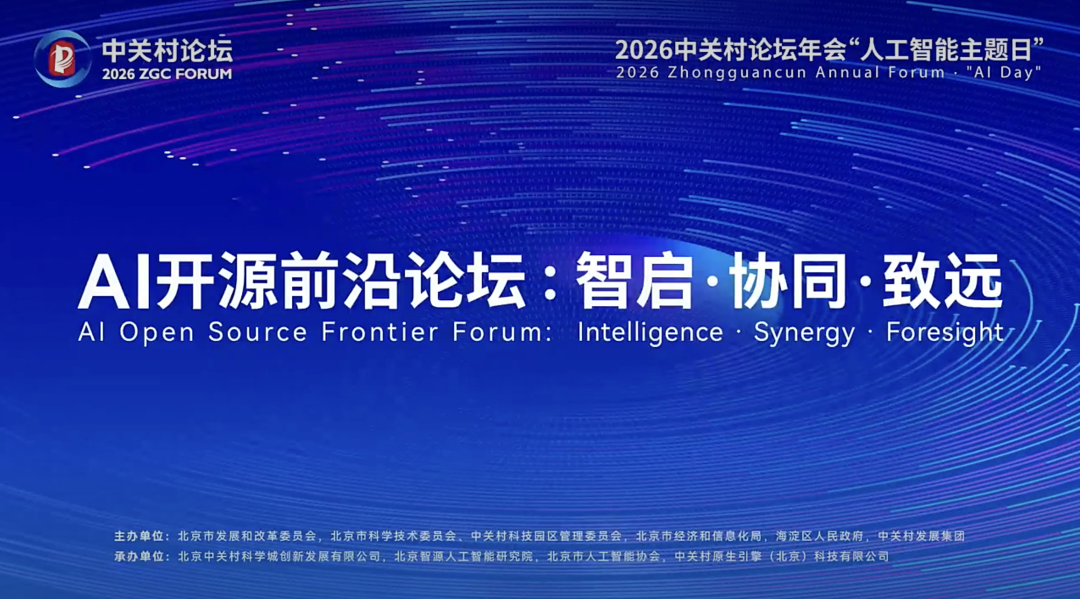
💡AI leaders unpack OpenClaw vs Claude Code + 12-month trends like compute crunch
⚡ 30-Second TL;DR
What Changed
OpenClaw acts as flexible scaffold for top models, empowering non-programmers
Why It Matters
Accelerates Agent adoption by lowering barriers, igniting community innovation beyond models. Signals compute as key bottleneck for scaling.
What To Do Next
Read the full OpenClaw roundtable transcript to integrate Skills into your Agents.
Key Points
- •OpenClaw acts as flexible scaffold for top models, empowering non-programmers
- •Outperforms Claude Code in design; boosts domestic models' task completion
- •Future trends: ecosystem, self-evolution, sustainable tokens, compute needs
🧠 Deep Insight
AI-generated analysis for this event — not the original article.
🔑 Enhanced Key Takeaways
- •OpenClaw utilizes a proprietary 'Dynamic Task Decomposition' (DTD) engine that allows it to interface with heterogeneous LLMs via a unified API abstraction layer, reducing vendor lock-in for enterprise users.
- •The framework incorporates a 'Human-in-the-Loop' (HITL) verification module specifically designed to mitigate hallucination risks in autonomous code generation, a feature cited as a key differentiator from Claude Code's more automated approach.
- •OpenClaw's architecture is optimized for edge-cloud synergy, enabling local execution of lightweight task-planning agents to reduce latency and token consumption for routine enterprise workflows.
📊 Competitor Analysis▸ Show
| Feature | OpenClaw | Claude Code | AutoGPT |
|---|---|---|---|
| Primary Focus | Enterprise/Non-coder Agentic Workflow | Developer-centric CLI Coding | General Purpose Autonomous Tasks |
| Model Agnostic | Yes (High) | No (Anthropic-focused) | Yes |
| Task Completion | High (via DTD Engine) | High (Code-specific) | Moderate |
| Pricing | Enterprise Licensing | Usage-based (API) | Open Source |
🛠️ Technical Deep Dive
- •Architecture: Employs a multi-agent orchestration layer that separates 'Planner' agents (high-level reasoning) from 'Executor' agents (tool-specific execution).
- •Integration: Supports native integration with domestic Chinese LLMs (e.g., GLM-4, Qwen-2.5) through a specialized quantization-aware adapter.
- •Memory Management: Implements a hierarchical memory system (Short-term context window + Long-term vector database) to maintain state across complex, multi-step agentic tasks.
- •Security: Features a sandboxed execution environment with strict permission controls for file system and network access, preventing unauthorized code execution.
🔮 Future ImplicationsAI analysis grounded in cited sources
⏳ Timeline
Weekly AI Recap
Read this week's curated digest of top AI events →
👉Related Updates

AI-curated news aggregator. All content rights belong to original publishers.
Original source: 虎嗅 ↗
This is a summary, not the original. Read the source, or get the weekly briefing.
Weekly AI briefing
One email a week. Unsubscribe anytime.