🐯虎嗅•Stalecollected in 15m
AI Capex Shifts to Memory, Storage, CPUs
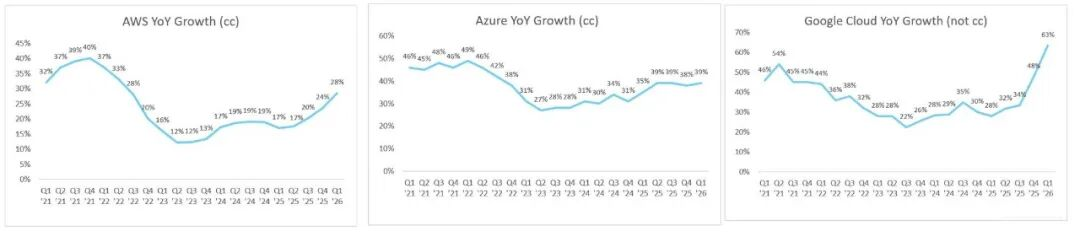
💡AI infra boom hits memory/CPU—plan for 2030 shortages & capex surge now
⚡ 30-Second TL;DR
What Changed
Tech giants' AI capex hits $725B in 2026, up sharply from prior years
Why It Matters
Hardware shifts tighten supply for AI devs, favoring memory/CPU-optimized models and custom silicon to cut Nvidia reliance. Expect higher costs pushing efficiency innovations.
What To Do Next
Benchmark your workloads on CPU-heavy agent frameworks like LangGraph to hedge GPU shortages.
Who should care:Enterprise & Security Teams
Key Points
- •Tech giants' AI capex hits $725B in 2026, up sharply from prior years
- •Memory demand grows 4x in 4 years, DRAM prices +58-63%, NAND +70-75%
- •CPU needs quadruple per GW datacenter for agents; custom chips like TPU commercialized
- •HDD demand surges for agent workflows and AV data storage
🧠 Deep Insight
AI-generated analysis for this event.
🔑 Enhanced Key Takeaways
- •The surge in memory demand is specifically driven by the transition to High Bandwidth Memory (HBM4) architectures, which are required to support the increased parameter counts of next-generation agentic models.
- •Data center power constraints are forcing a shift in capex toward liquid cooling infrastructure and advanced power delivery units (PDUs) to accommodate the higher thermal design power (TDP) of the new CPU-GPU clusters.
- •Hyperscalers are increasingly prioritizing 'sovereign AI' infrastructure, leading to a geographic diversification of capex spending into regional data center hubs to mitigate supply chain and regulatory risks.
🛠️ Technical Deep Dive
- •HBM4 Integration: Transition from HBM3e to HBM4 involves a shift to a 2048-bit wide interface, doubling the bandwidth per stack to address the memory wall in large-scale agent orchestration.
- •CPU-GPU Ratio: The shift to a 1:1 ratio is necessitated by the 'Agentic Bottleneck,' where CPUs must handle complex logic, multi-modal data pre-processing, and real-time task scheduling that GPUs cannot efficiently manage alone.
- •Storage Tiering: Implementation of 'Warm' and 'Cold' storage tiers using high-density QLC NAND and helium-filled HDDs is being optimized for the massive datasets required for continuous model fine-tuning and retrieval-augmented generation (RAG) workflows.
🔮 Future ImplicationsAI analysis grounded in cited sources
DRAM and NAND supply will remain in a structural deficit through 2027.
The lead times for new semiconductor fabrication capacity (fabs) exceed 18-24 months, preventing supply from scaling in lockstep with hyperscaler demand.
Custom silicon (ASICs) will capture 30% of the total AI accelerator market by 2027.
Hyperscalers are aggressively moving away from general-purpose GPUs to proprietary chips optimized for specific inference workloads to improve power efficiency and reduce dependency on external vendors.
⏳ Timeline
2023-05
Hyperscalers initiate massive pivot toward generative AI infrastructure investment.
2024-11
Industry-wide shortage of HBM3e memory begins to constrain GPU deployment schedules.
2025-08
First major commercial deployments of agent-optimized CPU-GPU clusters reported by leading cloud providers.
2026-02
Global memory manufacturers announce record-breaking capital expenditure for HBM4 production lines.
📰
Weekly AI Recap
Read this week's curated digest of top AI events →
👉Related Updates



AI-curated news aggregator. All content rights belong to original publishers.
Original source: 虎嗅 ↗