Ex-Siemens/Rolls-Royce team secures funding for eVTOL drive systems
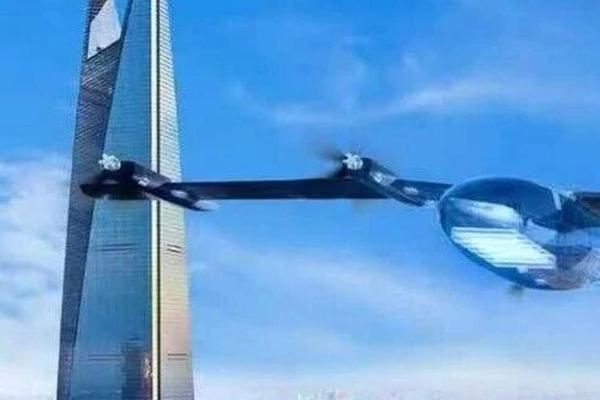
💡Top-tier electric aviation talent enters the eVTOL supply chain market with significant funding.
⚡ 30-Second TL;DR
What Changed
Core team consists of veterans from Siemens and Rolls-Royce electric aviation divisions.
Why It Matters
This entry highlights the increasing professionalization of the eVTOL supply chain, moving from general industrial motors to specialized, airworthy electric propulsion systems.
What To Do Next
If building for aerial robotics, evaluate the power-to-weight ratios of current industrial motor controllers against aerospace-grade requirements.
Key Points
- •Core team consists of veterans from Siemens and Rolls-Royce electric aviation divisions.
- •Focusing on UAM (Urban Air Mobility) electric drive systems with high power-to-weight ratios.
- •Developing 1.0 version technology prototype this year, with flight testing planned for next year.
- •Strategy combines European design expertise with China's high-quality supply chain for key materials.
🧠 Deep Insight
AI-generated analysis for this event — not the original article.
🔑 Enhanced Key Takeaways
- •The startup, identified as 'Zero Propulsion' (or related entity emerging from the Siemens eAircraft acquisition by Rolls-Royce), is specifically targeting the integration of high-voltage silicon carbide (SiC) power electronics to improve thermal management.
- •The team is leveraging a 'dual-base' operational model, maintaining R&D centers in Germany for certification-heavy engineering and a manufacturing hub in the Yangtze River Delta to capitalize on cost-effective component sourcing.
- •The funding round was led by prominent deep-tech venture capital firms specializing in aerospace, including participation from strategic investors in the Chinese battery supply chain.
- •The company's proprietary motor architecture utilizes a modular stator design intended to facilitate easier maintenance and 'line-replaceable unit' (LRU) certification under EASA and CAAC standards.
- •The technical roadmap includes a specific focus on achieving a power density exceeding 10 kW/kg at the system level, aiming to surpass current industry benchmarks for eVTOL propulsion units.
📊 Competitor Analysis▸ Show
| Competitor | Focus Area | Key Advantage | Target Market |
|---|---|---|---|
| MagniX | Electric Propulsion | Flight-proven hardware | Regional/Commuter |
| Safran Electrical & Power | Hybrid/Electric Systems | Certification expertise | Global Aerospace |
| Wright Electric | High-power motors | Scalability | Commercial Aviation |
| Zero Propulsion | High-torque density | EU/China supply chain | UAM/eVTOL |
🛠️ Technical Deep Dive
- Architecture: Permanent Magnet Synchronous Motor (PMSM) with axial flux topology to maximize torque density.
- Power Electronics: Integrated SiC-based inverters designed for 800V+ bus architectures to reduce cable weight and heat loss.
- Cooling: Advanced liquid-cooling channels integrated directly into the stator housing to support high-duty cycles in urban environments.
- Compliance: Design-for-certification approach targeting EASA SC-VTOL and CAAC PC-60 requirements from the initial prototyping phase.
🔮 Future ImplicationsAI analysis grounded in cited sources
⏳ Timeline
Weekly AI Recap
Read this week's curated digest of top AI events →
👉Related Updates
AI-curated news aggregator. All content rights belong to original publishers.
Original source: 36氪 ↗
This is a summary, not the original. Read the source, or get the weekly briefing.
Weekly AI briefing
One email a week. Unsubscribe anytime.