Evaluating AI Adoption in China's Steel Industry
💡Learn how to distinguish between genuine industrial AI deployment and marketing fluff in the manufacturing sector.
⚡ 30-Second TL;DR
What Changed
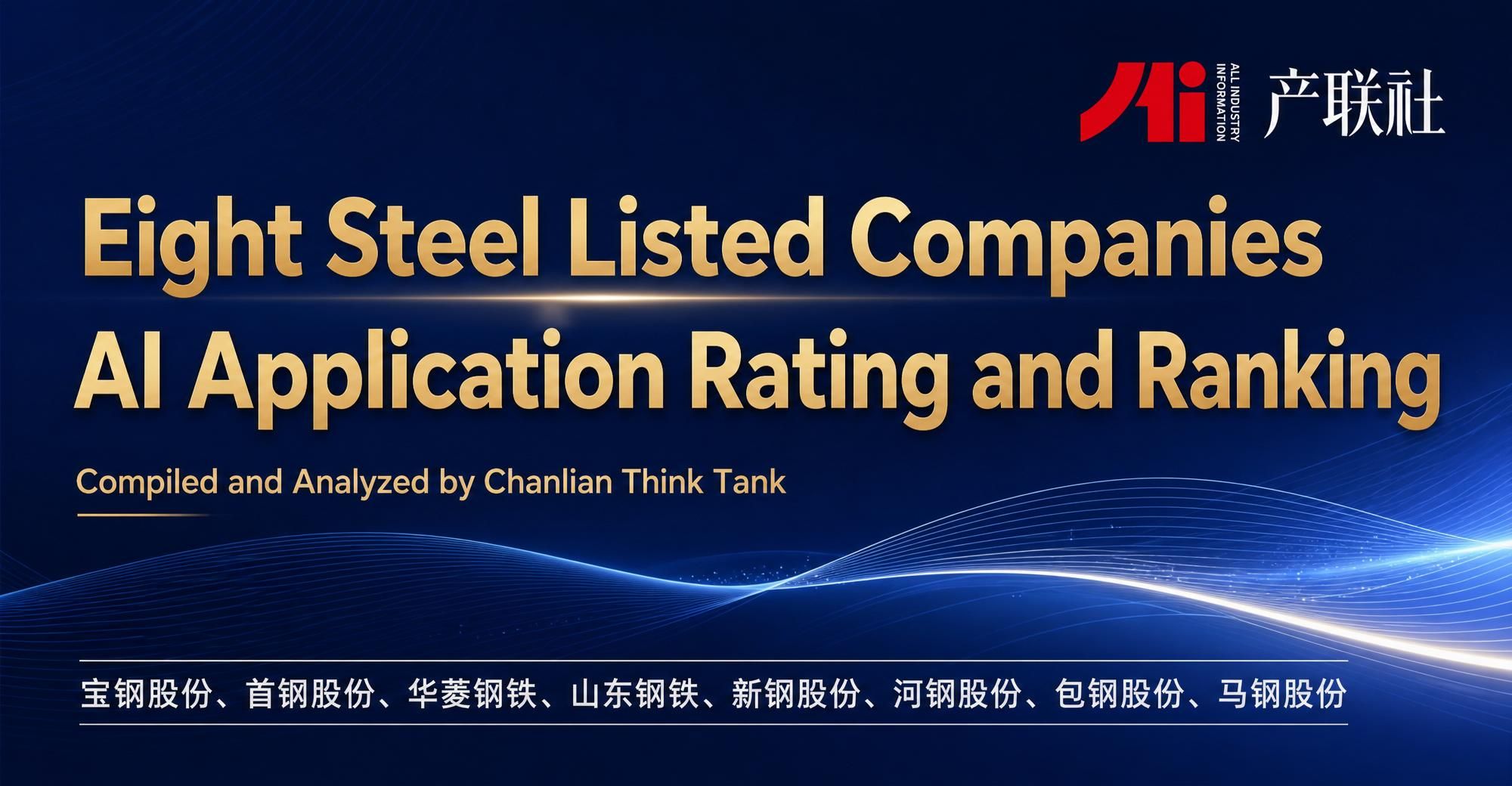
Analysis covers eight major Chinese listed steel companies.
Why It Matters
This analysis helps investors and practitioners identify which industrial players are successfully leveraging AI for operational efficiency versus those lagging behind.
What To Do Next
Review the specific AI implementation case studies in the 2025 reports of top-performing steel firms to identify scalable industrial use cases.
Key Points
- •Analysis covers eight major Chinese listed steel companies.
- •Distinguishes between scaled AI deployment and marketing rhetoric.
- •Provides a benchmark for assessing real-world AI integration in heavy industry.
🧠 Deep Insight
Background and context from public sources — not the original article. 13 sources cited.
🔑 Enhanced Key Takeaways
- •China has implemented national-level "AI + Manufacturing" and "AI + Steel" initiatives, including a "Three-Year Action Plan for the Digital Transformation Project of the Steel Industry" starting in 2025, providing significant policy guidance and financial support for intelligent upgrades across the sector.
- •Leading Chinese steel companies, in collaboration with tech giants like Huawei, are deploying specialized large AI models (e.g., Pangu, Xuantie, Baoliandeng) to optimize complex processes like blast furnace operations, steelmaking, and logistics, moving beyond general automation to intelligent decision-making.
- •Real-world AI implementations have demonstrated significant benefits, including production efficiency increases of 8.5% to over 20%, reduction in crude steel production costs by approximately 5 yuan per ton, and a 35% reduction in product defects.
- •The industry is adapting to a structural change where steel demand from manufacturing surpassed construction in 2025 for the first time in China's history, driving a focus on high-end, customized materials for advanced sectors like new energy vehicles and aerospace, facilitated by AI-driven precision manufacturing.
- •China has established a four-tier smart factory system (Basic, Advanced, Excellence, Leading), with AI application capabilities now a mandatory assessment criterion for higher-tier factories, indicating a systematic approach to scaling intelligent manufacturing across heavy industry.
🛠️ Technical Deep Dive
- AI Models: Huawei's Pangu foundation models serve as a base for domain-specific models like the Xuantie Steel Model, while Baosteel utilizes a blast furnace large language model for real-time smelting parameter optimization.
- Key Applications:
- Intelligent Molten Iron Transport System: Integrates industrial internet, 5G, and AI for autonomous planning, dispatching, and driverless locomotives equipped with sensors (cameras, radars) and BeiDou positioning.
- Hot Rolling Microstructure and Performance Prediction Model: Operates online continuously in real-time, leveraging extensive historical production data and human insights for high-fidelity material microstructure evolution prediction.
- Intelligent Blast Furnace System: Combines big data, AI, metallurgical principles, and experiential knowledge to address challenges in data governance, condition monitoring, trend forecasting, and optimization decision-making in ironmaking.
- AI Cloud Surface Inspection System: Achieves 96% accuracy in spotting critical material flaws and reduces missed inspections by 35%.
- Intelligent Steelmaking Scheduling Model: Enhances collaborative capabilities, leading to improved production efficiency.
- Intelligent Plate Nesting Algorithm: Can compute optimal plate nesting solutions for over 1,000 orders within minutes, significantly improving raw material utilization.
- Flame Monitoring by AI: Uses high-definition cameras and AI algorithms to analyze flame characteristics inside furnaces, providing real-time guidance for steelmaking.
- Predictive Maintenance: AI systems are capable of issuing status warnings 8-12 hours before potential equipment issues arise.
- Infrastructure & Integration: AI deployments are supported by the integration of industrial internet, 5G, IoT sensors, cloud computing, and big data, with dedicated AI computing centers being established.
- Hybrid Human-Machine Intelligence (HI with AIGC): Research centers are focusing on seamlessly fusing human expertise with AI to develop advanced models and systems.
🔮 Future ImplicationsAI analysis grounded in cited sources
⏳ Timeline
📎 Sources (13)
Factual claims are grounded in the sources below. Forward-looking analysis is AI-generated interpretation.
Weekly AI Recap
Read this week's curated digest of top AI events →
👉Related Updates

AI-curated news aggregator. All content rights belong to original publishers.
Original source: Pandaily ↗
This is a summary, not the original. Read the source, or get the weekly briefing.
The weekly digest
One email a week. Unsubscribe anytime.