EV Repair Crisis: Proprietary Keys Lock Out Independent Shops
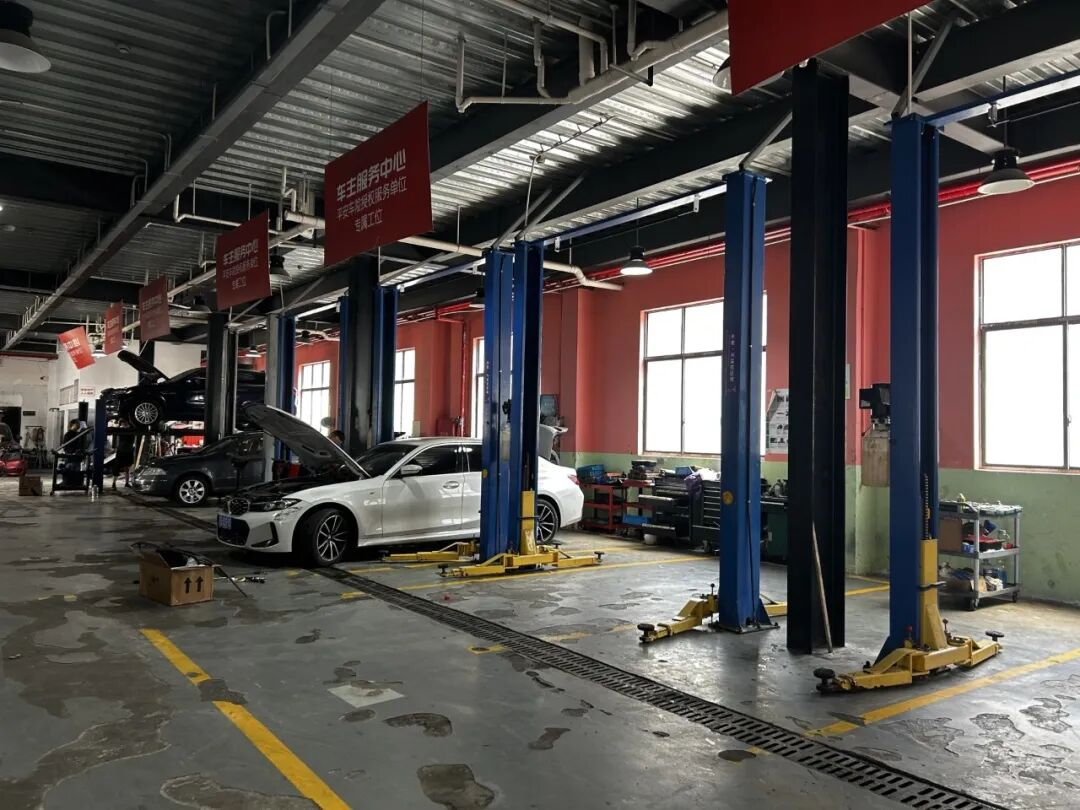
Understand the 'digital wall' in EV maintenance and its impact on long-term ownership costs.
30-Second TL;DR
What Changed
Manufacturers use 'diagnostic locks' and 'component keys' to restrict third-party repairs.
Why It Matters
The closed-loop repair ecosystem is creating a bottleneck for EV adoption and increasing the total cost of ownership, prompting regulatory intervention.
What To Do Next
If building automotive-related software, consider the long-term implications of proprietary encryption on your product's lifecycle and user trust.
Key Points
- •Manufacturers use 'diagnostic locks' and 'component keys' to restrict third-party repairs.
- •EV repair costs are approximately 40% higher than traditional vehicles.
- •Independent shops lack access to proprietary diagnostic data and cloud-based authentication.
- •New regulations are emerging to mandate data access for battery repairs.
Deep Insight
Background and context from public sources — not the original article. 29 sources cited.
Enhanced Key Takeaways
- •EV repair costs are not only higher on average (ranging from 25% to 50% more than ICE vehicles) but are also significantly driven by the increased cost of parts, which can be 48% more expensive, and a higher reliance on original equipment manufacturer (OEM) parts compared to traditional vehicles.
- •The increasing use of telematics in modern EVs allows manufacturers to receive vehicle data wirelessly, acting as gatekeepers who control access and potentially enabling remote control over vehicle functions, further complicating independent repair.
- •In the United States, bipartisan legislation like the REPAIR Act and SAFE Repair Act has been introduced in Congress to mandate that automakers provide independent repair facilities and vehicle owners with access to diagnostic data, tools, and software necessary for maintenance and repairs.
- •The European Union has implemented the Data Act (effective September 2025) and is amending Type Approval rules to ensure fair and transparent access to vehicle-generated data, including a tiered access model and the Secure Repair and Maintenance Information (SERMI) scheme for anti-theft and safety-critical functions.
- •Automakers often justify repair restrictions by citing cybersecurity and safety concerns, leading to a complex balance where legislative efforts aim to ensure data access while also incorporating protections for vehicle safety and cybersecurity, as highlighted by NHTSA's support for authentication and access control for safety-critical systems.
Technical Deep Dive
- Proprietary Diagnostic Gateways: Automakers route essential repair information directly into their dealer systems, creating a controlled environment for diagnostics and repairs.
- Encrypted Engine Control Units (ECUs): Some modern EVs, such as post-2020 BMW models, feature encrypted ECUs that restrict full access even for authorized dealers, often requiring specialized third-party services for unlocking.
- Parts Pairing and VIN-Locking: Manufacturers implement digital restrictions that link specific components to a vehicle's VIN, rendering even genuine replacement parts inoperable without proprietary software authorization from the OEM.
- Over-the-Air (OTA) Updates: These updates can be utilized by manufacturers to modify vehicle software, potentially disabling or complicating independent repair attempts.
- Telematics Platforms: EVs are equipped with telematics systems that continuously transmit operational data to OEM cloud servers, establishing a manufacturer-controlled data stream and enabling remote diagnostics and control.
- High-Voltage Systems: EV repair necessitates specialized insulated tools and extensive training due to the inherent dangers of high-voltage electrical components, including the battery pack and electric motor.
- Battery Management Systems (BMS): These critical systems monitor and manage the health, performance, and safety of the EV battery pack, often operating with proprietary software interfaces.
- Vehicle Control Unit (VCU): Functioning as the central 'brain' of the EV, the VCU coordinates various sensors and systems, communicating with other control units like the BMS to ensure efficient and safe vehicle operation.
- Cloud-Based Software Architecture: Modern EVs increasingly rely on cloud-based software for features like OTA updates, remote diagnostics, and predictive maintenance, centralizing control over vehicle functionalities.
- Cryptographic Authentication: Secure communication within EVs and with charging infrastructure often employs cryptographic protocols such as Public Key Infrastructure (PKI) and Identity-Based Cryptography for authentication and data integrity.
Future ImplicationsAI analysis grounded in cited sources
Timeline
- 2001First 'Right to Repair' bill introduced at the federal level in the United States.
- 2012Massachusetts enacts the first statewide automotive Right to Repair law.
- 2014Automotive Aftermarket Industry Association, Coalition for Auto Repair Equality, Alliance of Automobile Manufacturers, and Association for Global Automakers sign a memorandum of understanding to extend Massachusetts' law requirements nationwide.
- 2020Massachusetts voters approve an initiative to expand the Right to Repair law to include telematics data, which subsequently faced legal challenges from automakers.
- 2023-10The EU's Court of Justice clarifies that vehicle manufacturers must grant independent operators comprehensive access to repair and diagnostic data, including direct vehicle data streams, and prohibits additional technical access restrictions.
- 2024-05The European Union passes the Right to Repair Directive, requiring manufacturers to provide spare parts and publish repair information, though concerns remain about enforcement mechanisms for automotive software locks.
- 2025-09The EU Data Act comes into force, establishing fundamental principles for sharing and accessing data generated by IoT devices, including specific guidelines for the automotive industry to ensure fair access to vehicle-generated data.
Sources (29)
Factual claims are grounded in the sources below. Forward-looking analysis is AI-generated interpretation.
Weekly AI Recap
Read this week's curated digest of top AI events →
AI-curated news aggregator. All content rights belong to original publishers.
Original source: 虎嗅 ↗
This is a summary, not the original. Read the source, or get the weekly briefing.
The weekly digest
One email a week. Unsubscribe anytime.