EV demand boosts European market; Chinese brands gain share
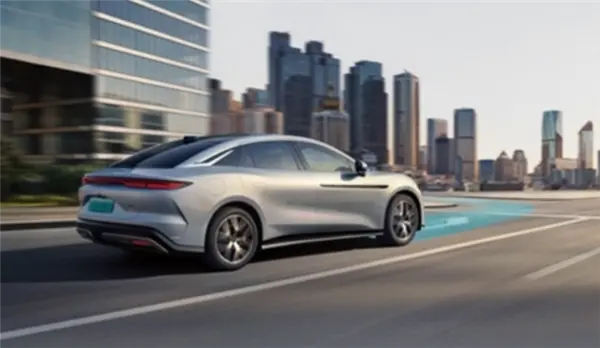
Monitor the European EV market shift to identify new integration opportunities for AI-powered automotive software.
30-Second TL;DR
What Changed
Electric vehicle adoption is offsetting the decline in traditional internal combustion engine vehicle sales.
Why It Matters
The shift toward EVs in Europe creates new opportunities for AI-integrated automotive software and autonomous driving tech providers.
What To Do Next
If building automotive AI software, prioritize partnerships with emerging EV brands expanding into the European market.
Key Points
- •Electric vehicle adoption is offsetting the decline in traditional internal combustion engine vehicle sales.
- •Chinese automotive brands are successfully penetrating the European market through electrification.
- •ACEA data confirms a shift in consumer preference toward electrified vehicles in Europe.
Deep Insight
AI-generated analysis for this event — not the original article.
Enhanced Key Takeaways
- •European Union regulatory pressure, specifically the 2035 zero-emission mandate, remains the primary driver forcing legacy automakers to accelerate EV transitions, creating a vacuum that Chinese OEMs are filling [1].
- •Chinese manufacturers are increasingly utilizing 'local-for-local' production strategies, such as BYD's Hungary plant and Chery's joint venture in Spain, to circumvent potential EU tariffs [1].
- •The market share gain by Chinese brands is heavily concentrated in the entry-level and mid-range EV segments, where European manufacturers have historically struggled to maintain price competitiveness [1].
- •Data indicates that Chinese EVs exported to Europe often feature higher levels of standard software integration and connectivity features compared to similarly priced European models [1].
- •The European Commission's ongoing anti-subsidy investigations into Chinese EVs have created a volatile pricing environment, leading some Chinese brands to prioritize market share over immediate profit margins [1].
Competitor Analysis
- Chinese EV Brands (e.g., BYD, MG)
- Aggressive, value-oriented
- Legacy European Brands (VW, Stellantis)
- Premium, margin-focused
- Chinese EV Brands (e.g., BYD, MG)
- High (In-house battery production)
- Legacy European Brands (VW, Stellantis)
- Moderate (Reliance on suppliers)
- Chinese EV Brands (e.g., BYD, MG)
- High (OTA, advanced infotainment)
- Legacy European Brands (VW, Stellantis)
- Variable (Legacy architecture challenges)
- Chinese EV Brands (e.g., BYD, MG)
- Rapidly expanding mass-market
- Legacy European Brands (VW, Stellantis)
- Defensive, transitioning legacy base
| Feature/Metric | Chinese EV Brands (e.g., BYD, MG) | Legacy European Brands (VW, Stellantis) |
|---|---|---|
| Pricing Strategy | Aggressive, value-oriented | Premium, margin-focused |
| Vertical Integration | High (In-house battery production) | Moderate (Reliance on suppliers) |
| Software Maturity | High (OTA, advanced infotainment) | Variable (Legacy architecture challenges) |
| Market Positioning | Rapidly expanding mass-market | Defensive, transitioning legacy base |
Technical Deep Dive
- Battery Chemistry: Chinese OEMs are heavily deploying Lithium Iron Phosphate (LFP) battery packs, which offer lower costs and higher cycle life compared to the Nickel Manganese Cobalt (NMC) chemistries favored by many European manufacturers.
- Platform Architecture: Many Chinese entrants utilize dedicated EV platforms (e.g., BYD e-Platform 3.0) that allow for 800V charging architectures, enabling faster charging speeds than many current European mass-market EV platforms.
- Software-Defined Vehicle (SDV) Approach: Chinese models are designed with centralized electronic control units (ECUs) and high-performance computing chips, facilitating seamless over-the-air (OTA) updates for powertrain and cabin features.
Future ImplicationsAI analysis grounded in cited sources
Timeline
- 2023-10European Commission launches anti-subsidy investigation into Chinese EVs.
- 2024-07EU imposes provisional countervailing duties on Chinese-made electric vehicles.
- 2025-02BYD announces construction of its first European passenger car factory in Hungary.
- 2026-04ACEA reports record-high market share for non-European brands in the EV segment.
Weekly AI Recap
Read this week's curated digest of top AI events →
Related Updates


AI-curated news aggregator. All content rights belong to original publishers.
Original source: cnBeta (Full RSS) ↗
This is a summary, not the original. Read the source, or get the weekly briefing.
The weekly digest
One email a week. Unsubscribe anytime.