Europe's Struggle in the Global Physical AI Space Race
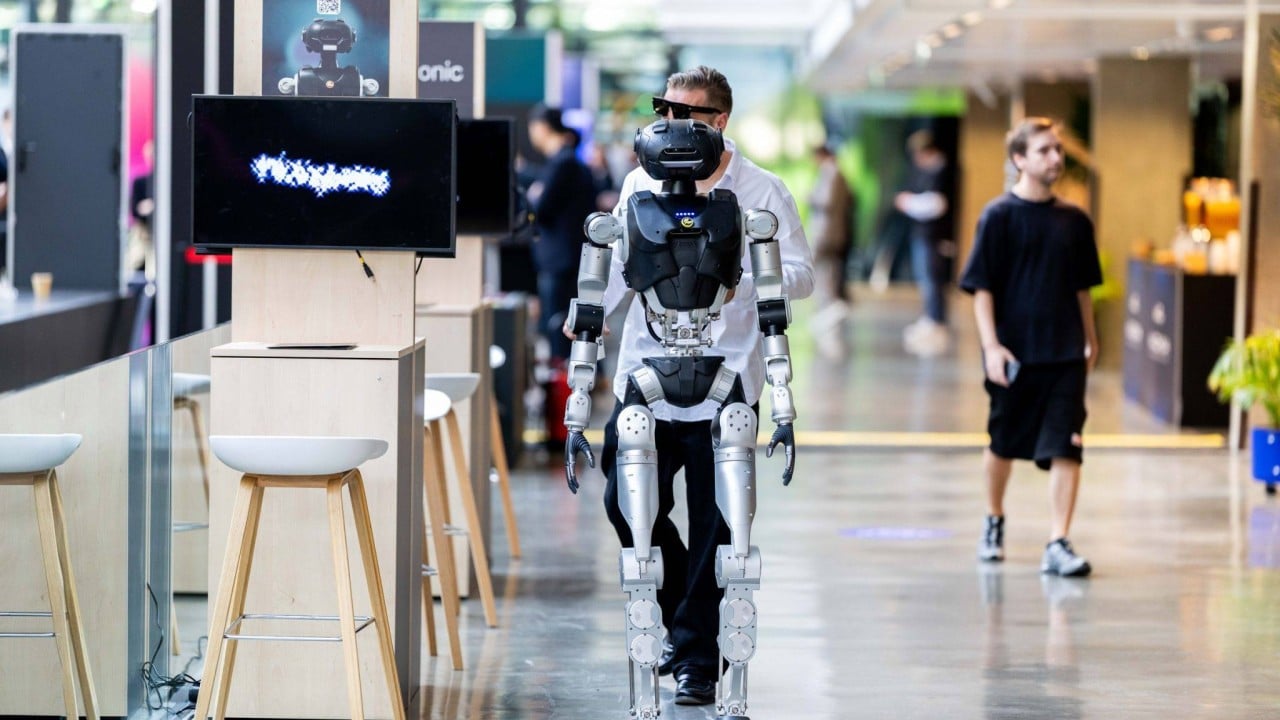
💡Understand the geopolitical shift in robotics and how physical AI is reshaping global industrial competitiveness.
⚡ 30-Second TL;DR
What Changed
Physical AI integrates advanced AI models into robotics and industrial machinery.
Why It Matters
The outcome of this competition will dictate the future of global manufacturing and industrial automation standards. European companies may need to pivot toward specialized robotics niches to remain relevant against US and Chinese scale.
What To Do Next
Analyze the current hardware-software integration stack of your robotics projects to identify dependencies on non-European supply chains.
Key Points
- •Physical AI integrates advanced AI models into robotics and industrial machinery.
- •China and the US currently hold a significant lead in the humanoid robotics market.
- •European industry leaders fear economic decline if they fail to scale domestic robotics capabilities.
- •The sector is viewed as a strategic 'space race' for future industrial competitiveness.
🧠 Deep Insight
AI-generated analysis for this event — not the original article.
🔑 Enhanced Key Takeaways
- •The European Commission's 'AI Act' has been criticized by industry leaders for creating a complex regulatory environment that slows the deployment of physical AI compared to the more permissive US and Chinese frameworks.
- •European robotics firms are increasingly pivoting toward 'human-centric' collaborative robots (cobots) as a niche strategy to differentiate from the mass-market humanoid focus of US and Chinese competitors.
- •The European Investment Bank (EIB) has launched a dedicated funding initiative specifically targeting deep-tech robotics startups to mitigate the 'scale-up gap' that often forces European firms to seek acquisition by foreign entities.
- •Supply chain dependencies for critical components like high-torque actuators and specialized semiconductors remain a major bottleneck for European physical AI, with over 70% of these parts currently imported from Asia.
- •Leading European automotive manufacturers are forming cross-border consortia to standardize software stacks for industrial robots, aiming to create an interoperable ecosystem that can compete with proprietary US platforms.
📊 Competitor Analysis▸ Show
| Feature | European Robotics (Consortiums) | US (Big Tech/Startups) | China (State-Backed/Private) |
|---|---|---|---|
| Primary Focus | Industrial/Cobots | General Purpose Humanoids | Mass Production/Scale |
| Regulatory Stance | High Compliance (AI Act) | Innovation-First | State-Directed Growth |
| Key Advantage | Precision Engineering | Software/LLM Integration | Supply Chain/Cost |
| Market Strategy | Niche/Specialized | Ecosystem/Platform | Volume/Infrastructure |
🛠️ Technical Deep Dive
- Physical AI architectures in Europe are shifting toward 'Embodied Foundation Models' that utilize transformer-based architectures to process multi-modal sensor data (LiDAR, tactile, vision) in real-time.
- Implementation often involves 'Sim-to-Real' transfer learning, where robots are trained in high-fidelity digital twins (using NVIDIA Omniverse or similar frameworks) before deployment in physical factories.
- Edge computing is prioritized over cloud-based processing to reduce latency in industrial environments, requiring specialized NPU (Neural Processing Unit) integration directly into robotic controllers.
- Safety protocols are being integrated at the firmware level to comply with ISO 10218 standards, ensuring human-robot interaction remains within defined force and speed limits.
🔮 Future ImplicationsAI analysis grounded in cited sources
⏳ Timeline
Weekly AI Recap
Read this week's curated digest of top AI events →
👉Related Updates


AI-curated news aggregator. All content rights belong to original publishers.
Original source: SCMP Technology ↗
This is a summary, not the original. Read the source, or get the weekly briefing.
Weekly AI briefing
One email a week. Unsubscribe anytime.