European heatwaves expose climate-driven cooling infrastructure gaps
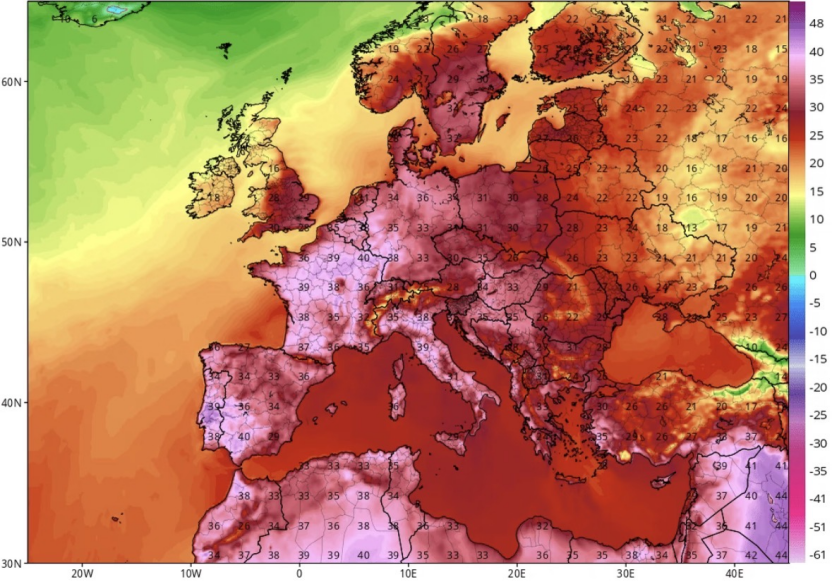
Examine the infrastructure and regulatory challenges in Europe that create a unique market for smart cooling tech.
30-Second TL;DR
What Changed
Only about 20% of European households have cooling equipment, with significantly lower rates in the UK and Germany.
Why It Matters
The lack of cooling infrastructure in Europe presents a massive market opportunity for HVAC companies and smart home energy management solutions.
What To Do Next
If you are an AI/IoT startup, consider developing energy-efficient, easy-to-install smart cooling controllers tailored for European building constraints.
Key Points
- •Only about 20% of European households have cooling equipment, with significantly lower rates in the UK and Germany.
- •Strict urban planning regulations and homeowner association rules make installing split-system AC units difficult.
- •High installation costs, often exceeding the price of the unit itself, limit widespread adoption.
- •Extreme temperatures have led to public health crises, including excess mortality and school closures.
Deep Insight
AI-generated analysis for this event — not the original article.
Enhanced Key Takeaways
- •The European Union's F-gas Regulation (Regulation (EU) 2024/573) is accelerating the phase-down of hydrofluorocarbons (HFCs), forcing manufacturers to transition to lower GWP (Global Warming Potential) refrigerants like R-290 (propane) for residential cooling systems.
- •Energy poverty is a significant barrier, as the 'split' incentive problem—where landlords bear the cost of infrastructure upgrades while tenants pay the energy bills—prevents widespread adoption of energy-efficient heat pumps.
- •District cooling networks, such as those in Paris and Vienna, are being expanded as a strategic alternative to individual AC units, utilizing cold water from rivers or deep-lake water cooling to reduce urban heat island effects.
- •Building codes in many European nations are historically optimized for heat retention (insulation) to combat winter cold, creating a 'thermal trap' effect that makes passive cooling strategies like external shading and natural ventilation increasingly ineffective during prolonged heatwaves.
- •The European Heat Pump Association (EHPA) reports that while heat pump sales surged in 2022-2023, the market faced a contraction in 2024-2025 due to fluctuating energy prices and policy uncertainty regarding fossil fuel boiler bans.
Technical Deep Dive
- Modern residential cooling in Europe is shifting toward reversible heat pumps (air-to-air or air-to-water) which provide both heating and cooling, utilizing inverter-driven compressors to modulate capacity based on real-time thermal load.
- Implementation of R-290 (propane) as a refrigerant requires specialized safety protocols due to its flammability, necessitating hermetically sealed circuits and specific installation clearances.
- Smart grid integration is becoming a technical requirement, allowing cooling systems to participate in demand-response programs to prevent grid overload during peak heat events.
- Passive cooling technologies, such as phase-change materials (PCMs) integrated into building envelopes, are being piloted to absorb thermal energy during the day and release it at night.
Future ImplicationsAI analysis grounded in cited sources
Timeline
- 2022-07Record-breaking heatwaves across Western Europe trigger unprecedented public debate on cooling infrastructure.
- 2023-05The European Commission proposes the 'REPowerEU' plan, emphasizing heat pump deployment for both heating and cooling efficiency.
- 2024-02The European Parliament adopts the revised F-gas Regulation, setting a strict trajectory for the phase-out of high-GWP refrigerants.
- 2024-12Final adoption of the recast Energy Performance of Buildings Directive (EPBD) mandates higher energy efficiency standards for cooling systems.
Weekly AI Recap
Read this week's curated digest of top AI events →
AI-curated news aggregator. All content rights belong to original publishers.
Original source: 虎嗅 ↗
This is a summary, not the original. Read the source, or get the weekly briefing.
The weekly digest
One email a week. Unsubscribe anytime.